The Enigmatic Figure: Lady Dorothea Harrison
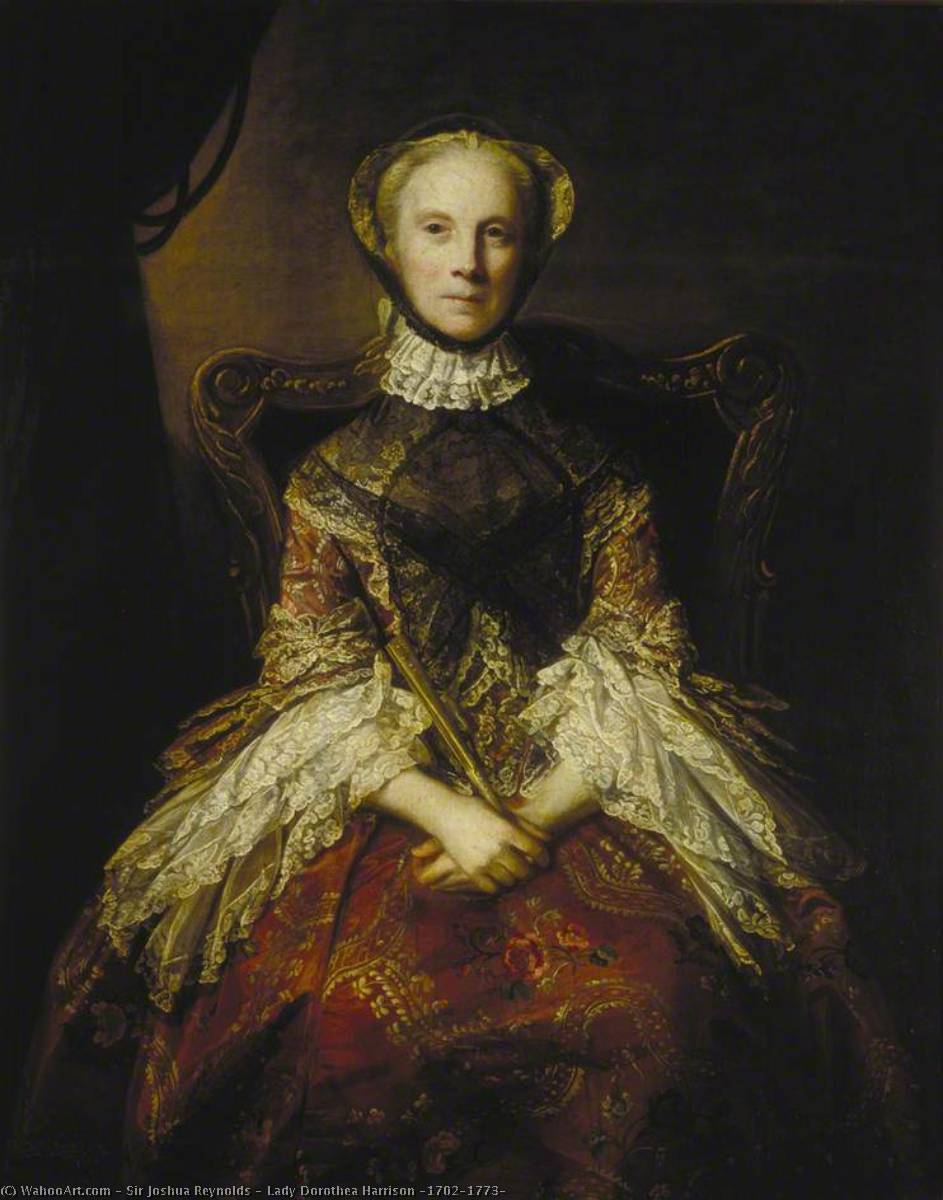
Joshua Reynolds’s “Lady Dorothea Harrison (1702-1773)” is more than a mere portrait; it's a carefully constructed tableau of social standing, restrained emotion, and the subtle power dynamics inherent in 18th-century English aristocracy. Painted in 1758, this remarkable work captures a woman poised between formality and quiet dignity – a testament to Reynolds’s mastery of capturing not just likeness but also character and atmosphere. The subject herself, Lady Dorothea Harrison, was a prominent figure within her social circle, known for her intelligence and influence, yet the painting resists easy categorization, inviting viewers to contemplate her inner life.

Image courtesy of Art UK
The Grand Style and Reynolds’s Technique
Reynolds, a leading figure in the “Grand Style” of portraiture, eschewed the Rococo frivolity prevalent at the time. Instead, he favored a more classical approach, emphasizing idealized beauty, balanced composition, and meticulous detail. “Lady Dorothea Harrison” exemplifies this perfectly. Note the carefully rendered fabrics – the luxurious velvet of her gown, the delicate lace collar—each element meticulously painted to convey texture and wealth. Reynolds’s use of light is particularly striking; it illuminates her face, highlighting her features with a subtle glow while simultaneously creating a sense of depth within the shadowed recesses of the room. The artist's mastery of sfumato – that hazy, atmospheric effect – softens the edges and contributes to the painting’s overall air of sophistication.
The composition itself is carefully orchestrated. Lady Dorothea sits in an armchair, her hands folded gracefully in her lap—a gesture of composure and control. The chair, a symbol of status and comfort, anchors her within the scene. Behind her, a richly draped curtain suggests a private space, hinting at the secrets and conversations that might have unfolded within those walls.
A Window into 18th-Century Society
To understand “Lady Dorothea Harrison,” it’s crucial to consider the social context in which it was created. The mid-18th century was a period of immense change and upheaval in England, marked by the rise of the middle class and the increasing influence of patronage. Portraiture during this era served not only as a means of commemorating individuals but also as a powerful tool for projecting status and reinforcing social hierarchies. Reynolds understood this implicitly, crafting portraits that were both flattering to his subjects and subtly indicative of their position within society.
The painting’s restraint—the lack of overt displays of emotion or luxury—reflects the prevailing values of the time. Lady Dorothea's expression is serene, almost melancholic, suggesting a woman accustomed to navigating the complexities of her social world with quiet dignity. The subtle details – the pearl necklace, the delicate embroidery—speak volumes about her wealth and refinement.
Symbolism and Emotional Resonance
Beyond its surface beauty, “Lady Dorothea Harrison” is rich in symbolism. The muted color palette—dominated by creams, browns, and golds—evokes a sense of timelessness and gravitas. The carefully chosen objects within the room – the books, the writing desk—suggest Lady Dorothea’s intellectual pursuits and her role as a woman of culture. Her posture, with hands folded in her lap, conveys both self-possession and a hint of vulnerability.
Ultimately, “Lady Dorothea Harrison” is a portrait that transcends the limitations of its time. It offers a glimpse into the lives of England’s elite, revealing not only their material wealth but also their inner complexities and the subtle power dynamics that shaped their world. It remains a captivating work of art, inviting viewers to contemplate the enduring mysteries of human nature.