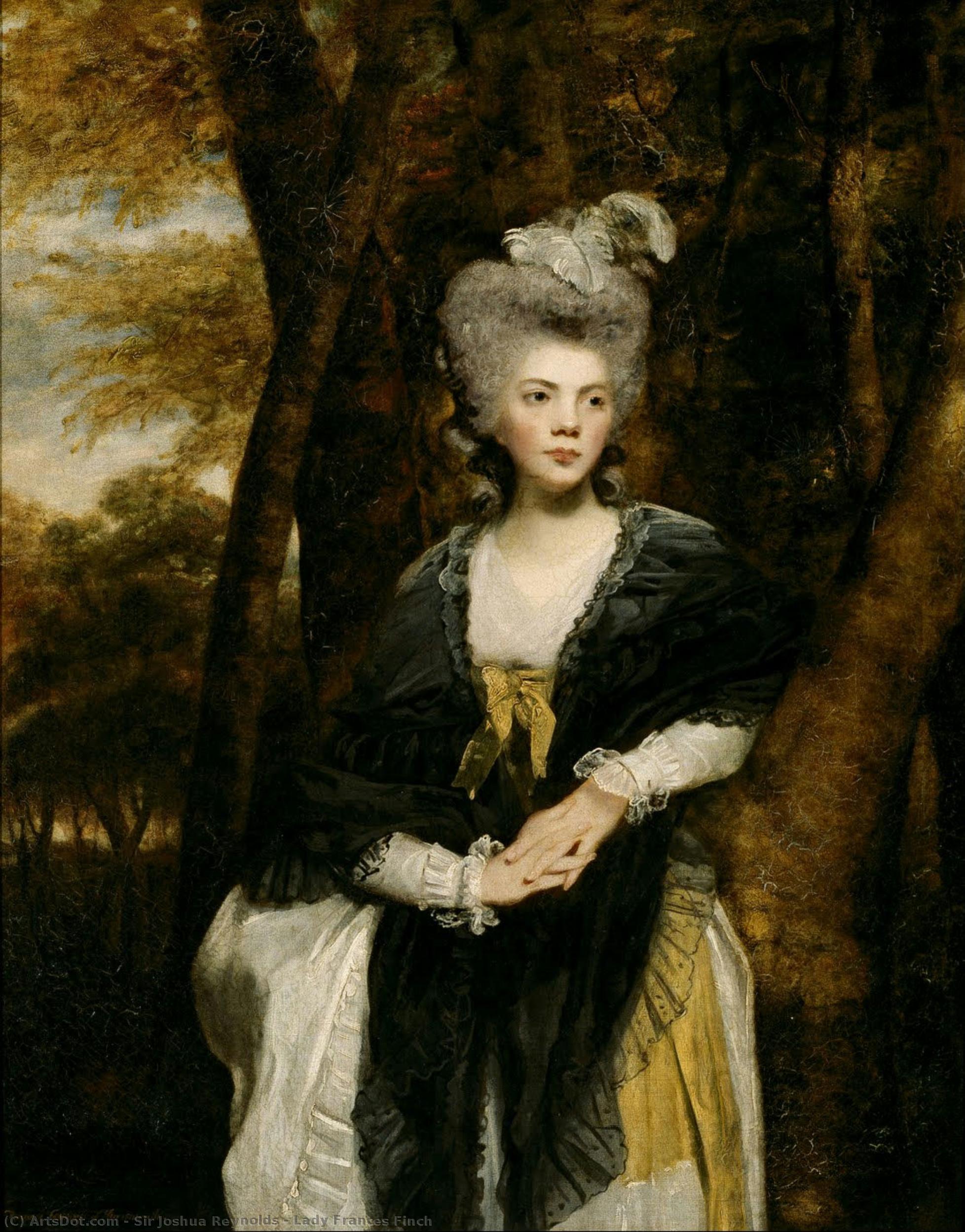
Sir Joshua Reynolds' "Lady Frances Finch" (1782) is a captivating portrait showcasing elegance and naturalism. Admire the refined pose, woodland setting, and masterful brushwork of this iconic British masterpiece.
The Genesis of a Masterpiece – 1782 and the Return to London
Sir Joshua Reynolds’s “Lady Frances Finch,” completed in 1782, isn't merely a portrait; it’s a distillation of experience. Following a transformative six-week sojourn through Holland and Flanders—a deliberate pilgrimage inspired by the monumental legacy of Rubens—Reynolds returned to his London studio profoundly altered. This journey wasn’t simply a quest for technical skill; it was a deep immersion into the principles of naturalism, a philosophy that would fundamentally reshape his artistic approach. The painting itself represents a conscious departure from the heavily stylized and often theatrical portraiture prevalent at the time, embracing instead a newfound sense of relaxed observation and an appreciation for the subtle nuances of human expression. The very act of returning to London signified a shift – a grounding in the familiar while simultaneously carrying the weight of rediscovered artistic ideals.

A Study in Light and Texture – The ‘Grand Style’ Unveiled
Reynolds's mastery is immediately evident in the painting’s luminous quality. He employs his signature “Grand Style,” a technique characterized by rich, layered brushstrokes and an almost sculptural manipulation of light and shadow. Notice how the light catches the folds of Lady Frances’s gown, creating a sense of depth and volume that draws the eye into the scene. The artist skillfully utilizes chiaroscuro – the dramatic contrast between light and dark – to sculpt the sitter's form and imbue the landscape with an ethereal glow. The texture of the fabrics is rendered with remarkable detail, from the delicate lace at her neck to the subtle sheen of her dress. This meticulous attention to surface quality elevates the portrait beyond a simple likeness, transforming it into a tangible experience for the viewer.
- Technique: Oil on canvas – Reynolds’s signature layering and blending create an illusion of three-dimensionality.
- Light & Shadow (Chiaroscuro): Used to sculpt form and evoke atmosphere.
- Brushwork: Loose, expressive strokes contribute to the painting's dynamism.
A Lady of Her Time – Context and Symbolism
Lady Frances Finch, born in 1761, was a woman of considerable social standing—the daughter of the 3rd Earl of Aylesford. The portrait captures her at twenty-one, a pivotal moment in her life as she prepared for marriage to George Legge, Lord Lewisham (later the 3rd Earl of Dartmouth). The setting itself is significant: a wooded landscape reminiscent of Capability Brown’s meticulously designed estates—a deliberate nod to the fashionable ideals of the time, associating Lady Frances with nature, virtue, and refined sensibility. The inclusion of a ribbon around her neck subtly references her aristocratic lineage, while the relaxed pose suggests an ease and confidence that belies the formality of the era. The painting speaks not just of beauty but also of social status and the expectations placed upon women within the British aristocracy.
Emotional Resonance – A Portrait Beyond Likeness
“Lady Frances Finch” transcends a simple depiction of a woman; it’s an exploration of character and mood. Reynolds captures Lady Frances's contemplative gaze, inviting the viewer to share in her quiet moment of reflection. The subtle blush on her cheeks—a detail often interpreted as indicative of virtue and modesty—adds a layer of emotional depth to the portrait. The painting’s enduring appeal lies not only in its technical brilliance but also in its ability to evoke a sense of intimacy and connection, transporting us back to a specific moment in time and offering a glimpse into the life of a remarkable woman. It's a testament to Reynolds's skill as a storyteller—a master of capturing not just appearances but the very essence of his subjects.