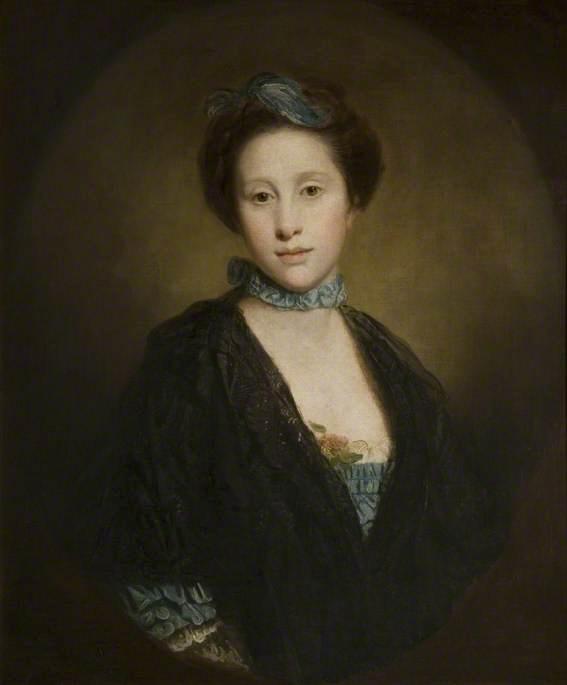
Louisa, Lady Bagot: A Portrait of Grace Amidst Victorian Refinement
Joshua Reynolds’s “Louisa, Lady Bagot,” completed in 1770, stands as an exemplar of the Grand Style—a technique championed by Reynolds himself and profoundly influential on British portraiture during the Enlightenment. More than just a likeness, it's a carefully constructed illusion designed to convey not merely appearance but character and social standing.
- Subject Matter: The painting depicts Louisa Bagot (née Symonds), wife of Sir Thomas Bagot, 3rd Baron Bagot—a prominent figure in Derbyshire society. Reynolds skillfully captured her serene gaze and elegant posture, reflecting the ideal beauty considered appropriate for aristocratic women during this period.
- Style & Technique: Reynolds’s masterful use of chiaroscuro – dramatic contrasts between light and shadow – creates a palpable sense of depth and atmosphere. He employed glazing techniques, applying thin layers of translucent paint over thicker underlayers to achieve luminous skin tones and subtle gradations of color. This meticulous approach ensured that every detail contributed to the overall impression of grandeur.
- Historical Context: Painted at the height of Georgian England, “Louisa, Lady Bagot” embodies the values of restraint, dignity, and refined taste prevalent in aristocratic circles. Reynolds’s work reflects a broader fascination with classical ideals and an aspiration to elevate portraiture beyond mere representation into a form of artistic contemplation.
- Symbolism: The subtle inclusion of a blue ribbon—a symbol of honor and achievement—highlights Louisa Bagot's status as a woman of distinction. Reynolds’s careful composition directs the viewer’s eye towards her face, emphasizing her inner beauty and conveying an aura of composure and grace.
- Emotional Impact: The painting evokes feelings of tranquility and admiration for its subject. It serves as a testament to Reynolds's ability to capture not just physical likeness but also the essence of human character—a feat that continues to resonate with audiences today.
Currently residing at Birmingham Museums And Art Gallery, “Louisa, Lady Bagot” remains a captivating masterpiece—a window into a bygone era and an enduring celebration of artistic excellence. Its luminous colors and masterful execution exemplify the pinnacle of Grand Style portraiture, cementing Reynolds’s legacy as one of Britain's greatest painters.
About Sir Joshua Reynolds
Sir Joshua Reynolds (1723-1792) was arguably the foremost British painter of his time and the inaugural president of the Royal Academy. Born in Plymouth, Devon, he benefited from a privileged upbringing instilled with an appreciation for scholarship and artistic pursuits.
His apprenticeship under Thomas Hudson exposed him to the demands of aristocratic patronage—a formative experience that shaped not only his technique but also his understanding of the social landscape he depicted so eloquently. Reynolds’s unwavering commitment to idealism—expressed through his meticulous attention to detail and masterful use of chiaroscuro—established him as a pioneer of the Grand Style, influencing generations of artists.
Reynolds's influence extended beyond painting; he championed classical ideals and advocated for artistic education, shaping the intellectual climate of Enlightenment Britain. His enduring legacy is enshrined in iconic portraits like “Louisa, Lady Bagot,” demonstrating his unparalleled ability to capture both beauty and character—a testament to his genius as a painter and humanist.
Additional Research
Resources for Further Exploration
To immerse yourself in Reynolds's artistic world, consider visiting Birmingham Museums And Art Gallery to witness “Louisa, Lady Bagot” firsthand. Explore Georges Keating’s masterful engraving after Reynolds—a testament to the enduring power of visual art. Furthermore, delve into scholarly articles examining Reynolds’s influence on British painting and his role as a champion of classical ideals.