A Portrait of Innocence: Decoding Sir Joshua Reynolds’ ‘Master Hare’
Sir Joshua Reynolds, born in 1723 amidst the burgeoning intellectual fervor of Plymouth, England, stands as a cornerstone of Enlightenment portraiture. His formative years were shaped by a father deeply invested in scholarly pursuits – a grounding that paradoxically fueled his innate artistic passion. Following an apprenticeship with Thomas Hudson in London at seventeen, Reynolds immersed himself within the vibrant social circles of fashionable society, gaining invaluable experience navigating the expectations and patronage demands of aristocratic clients. This early exposure profoundly influenced not only his technical prowess but also his astute understanding of the cultural milieu he would subsequently immortalize on canvas. It wasn’t merely about replicating appearance; it was about crafting an idealized representation—a distillation of virtue and classical ideals—that resonated with the sensibilities of his time.
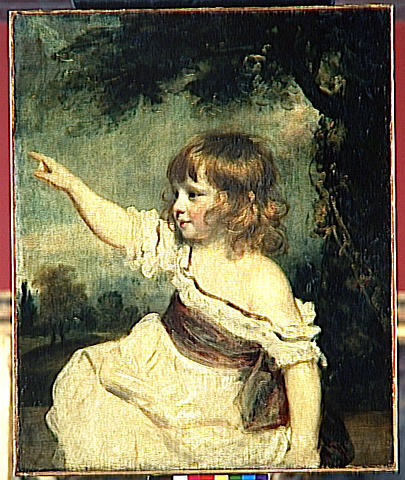
- Subject Matter & Composition: Reynolds' ‘Master Hare,’ depicting a young boy, exemplifies Grand Manner portraiture. The central figure occupies a slightly off-center position, directing the viewer’s gaze towards an unseen element beyond the frame—a subtle gesture that invites contemplation and suggests boundless curiosity.
- Style & Technique: Reynolds championed loose brushwork and blended pigments to achieve a luminous effect, prioritizing expressive nuance over meticulous detail. The painting utilizes impasto in certain areas – notably on the foliage – creating textural richness and conveying a sense of immediacy.
The artwork’s color palette—dominated by muted earth tones—reflects the prevailing aesthetic preferences of the era. Creams, browns, greens, and delicate hints of red coalesce to illuminate the boy's skin tone, which possesses a rosy hue that speaks to youthful vitality. The clothing – a white dress adorned with ruffled sleeves and accented by a reddish-brown sash – adheres to conventions of aristocratic fashion, reinforcing the portrait’s status as an emblem of social prestige. Reynolds skillfully employs diffused lighting, casting soft shadows and highlighting facial features—a technique characteristic of his meticulous observation and artistic sensitivity.
- Historical Context: Produced during the Enlightenment, ‘Master Hare’ embodies the movement's fascination with reason, beauty, and classical antiquity. Reynolds consciously drew inspiration from sculptural models and idealized depictions of human form, aligning his work with broader intellectual currents.
- Symbolism & Emotional Impact: The title itself – ‘Master Hare’ – hints at familial heritage or heraldic significance—a deliberate choice designed to imbue the portrait with symbolic depth. Reynolds' masterful rendering captures not just likeness but also an aura of innocence and wonder, conveying a profound appreciation for human potential.
Reynolds’ meticulous attention to detail—combined with his expressive brushwork—creates a captivating visual experience that transcends mere representation. The resulting artwork serves as a testament to the artist's enduring legacy as a champion of artistic excellence and a conduit for conveying timeless ideals. Its soft luminescence and textured surface invite viewers into a moment frozen in time, prompting reflection on themes of childhood, virtue, and the pursuit of knowledge—themes that continue to resonate powerfully today.