A Vision of Enlightenment Grace
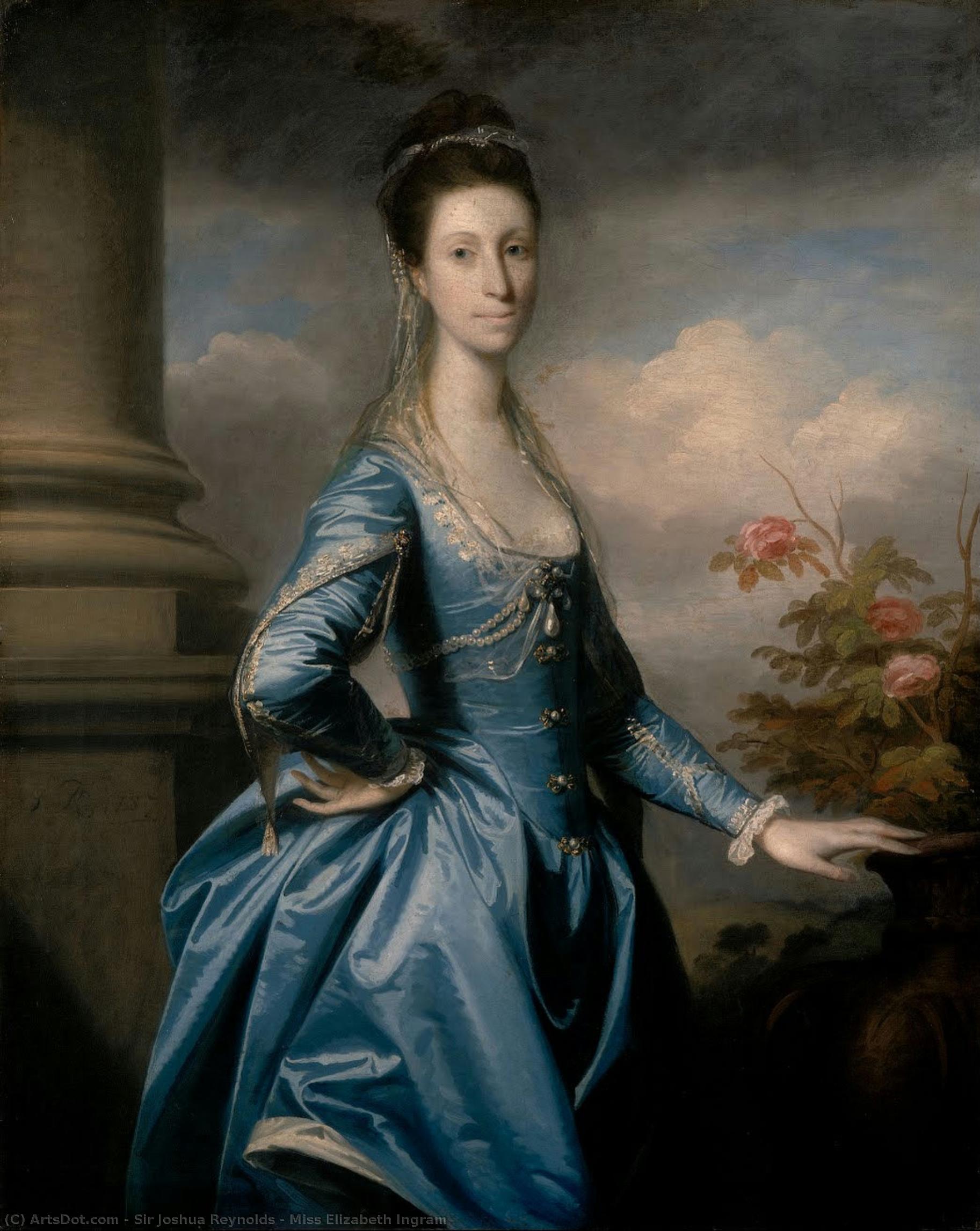
In the soft, luminous glow of Sir Joshua Reynolds’ 1757 masterpiece, Miss Elizabeth Ingram, we encounter more than just a portrait; we step into the very heart of the British Enlightenment. This monumental oil on canvas, held within the prestigious Walker Art Gallery, serves as a breathtaking window into an era defined by intellectual awakening and a profound reverence for classical ideals. Reynolds, a luminary of his age, does not merely document the features of a young woman from Lincolnshire; he orchestrates a visual symphony of virtue and burgeoning femininity. As the viewer’s eye meets the serene gaze of Miss Ingram, there is an immediate sense of being transported to a time when every brushstroke was intended to elevate the human spirit toward the sublime.
The composition is a masterclass in deliberate symbolism. Positioned beside a potted plant adorned with vibrant red flowers, Miss Ingram becomes part of a larger narrative of growth and refinement. This botanical element acts as a poignant metaphor for the blossoming of youth and the cultivation of character—themes that were central to the Enlightenment's focus on education and moral development. The way the light dances across her blue attire, contrasted against the organic textures of the flora, creates a sense of life that feels both eternal and fleeting, making it an ideal centerpiece for any collection seeking to evoke a sense of timeless elegance.
The Mastery of Light and Texture
To behold Miss Elizabeth Ingram is to witness Reynolds at the height of his technical prowess. The artist employs the dramatic technique of chiaroscuro, utilizing profound contrasts between deep shadows and radiant highlights to sculpt the figure with a near-statuesque presence. This interplay of light lends an ethereal, almost otherworldly glow to the subject's skin, imbuing the portrait with a sense of depth that invites prolonged contemplation. Through the meticulous application of glazing—layering thin, translucent washes of color over his underpainting—Reynolds achieves a remarkable luminosity that seems to emanate from within the canvas itself.
For the discerning collector or interior designer, the technical brilliance of this work offers unparalleled aesthetic value. The richness of the blue pigments and the delicate rendering of the gold necklace provide a sophisticated palette that can anchor a room with grandeur. Reynolds’ ability to balance the heavy, sculptural elements of the composition with the delicate, airy quality of the light ensures that the painting possesses a dynamic energy. It is a work that commands attention through its complexity, offering a tactile richness that rewards the eye with every new perspective.
A Legacy of Elegance for the Modern Interior
Beyond its historical significance, Miss Elizabeth Ingram carries an emotional resonance that transcends the centuries. There is a profound stillness in her pose, a quiet dignity that provides a sense of calm and sophistication to any environment. In an age of rapid change, the "Grand Style" championed by Reynolds offers a sanctuary of stability and classical beauty. Whether placed in a sunlit library or a formal dining hall, a high-quality reproduction of this work brings with it the prestige of the 18th-century British aristocracy.
Integrating such a piece into a contemporary space allows for a beautiful dialogue between history and modernity. It serves as an inspiration for those who appreciate the intersection of art, philosophy, and decor. By choosing to feature this masterpiece, one is not simply decorating a wall; one is curating an atmosphere of intellectual curiosity and refined taste, ensuring that the legacy of the Enlightenment continues to breathe within the modern home.