Theatrical Grace: Sir Joshua Reynolds and the Age of Wit
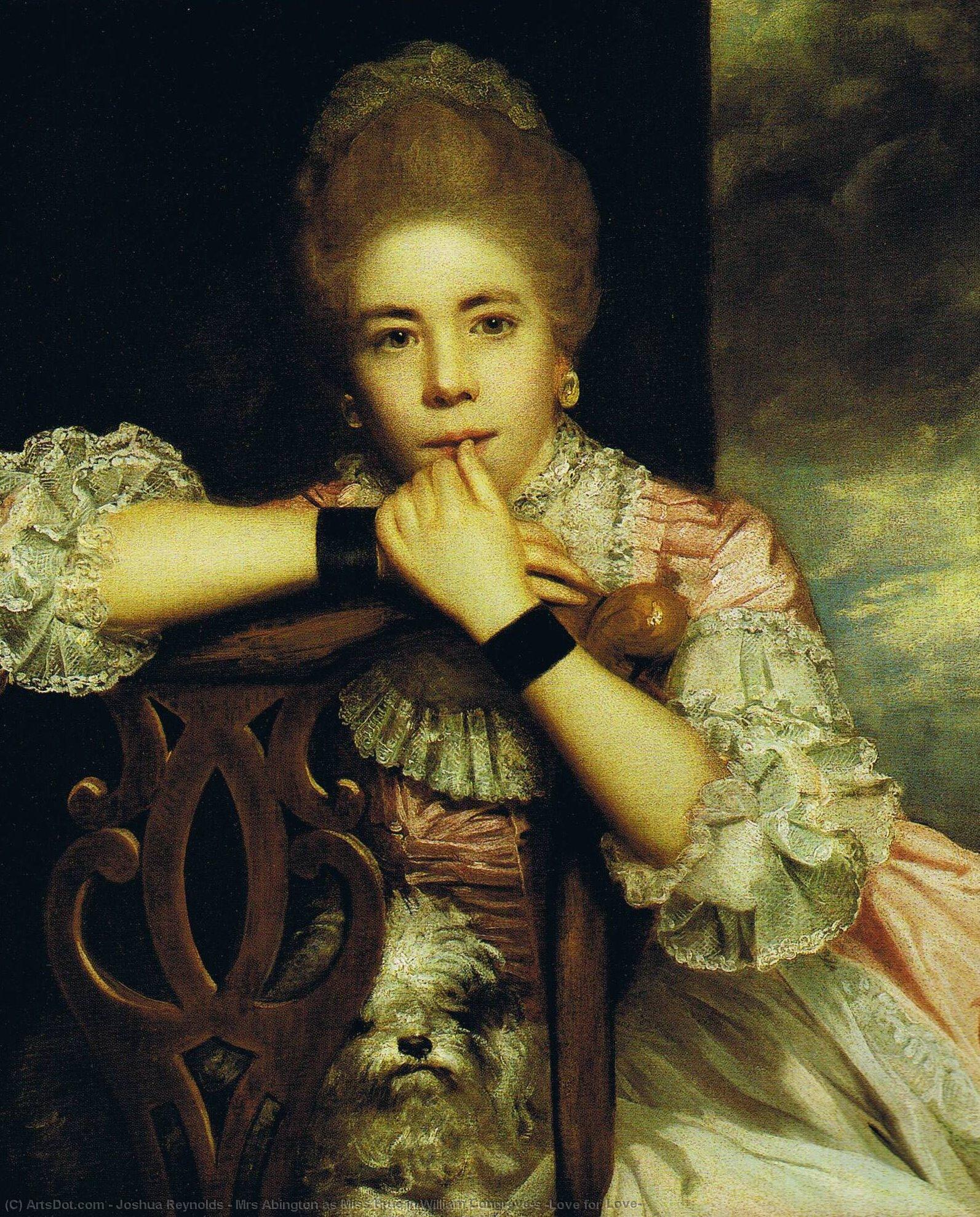
Sir Joshua Reynolds' “Mrs. Abington as Miss Prue in William Congreve’s ‘Love for Love’” is more than a mere portrait; it’s a vibrant snapshot of 18th-century London society, brimming with theatricality, wit, and the burgeoning spirit of the Enlightenment. Painted in 1771, this captivating work captures Frances Abington, a celebrated actress known for her dazzling performances at Drury Lane Theatre, as she embodies the mischievous Miss Prue from Congreve’s witty comedy. Reynolds masterfully blends realism with idealized elegance, creating an image that is both strikingly individual and representative of its time.
The painting immediately draws the eye to Mrs. Abington herself. Her posture, a subtle tilt of her head and hand resting thoughtfully on her chin, exudes confidence and intelligence. The delicate lace of her pink dress, the shimmering embellishments of her necklace and earrings – all speak to the fashionable sensibilities of the era. Yet, Reynolds doesn’t simply depict a likeness; he imbues her with an inner life, a sense of playful contemplation that hints at the character she embodies on stage. The lighting is particularly masterful, highlighting her features and creating a soft, flattering glow that elevates the portrait beyond a simple representation.
- Style: Grand Style – Reynolds’ signature approach emphasizing idealized beauty, balanced composition, and careful attention to detail.
- Technique: Oil on canvas, executed with meticulous brushwork and a sophisticated understanding of light and shadow. Notice the subtle gradations in tone that create depth and volume.
- Color Palette: Dominated by soft pinks, creams, and golds, reflecting the opulence and refinement of the aristocratic circles Reynolds frequented.
A Stage Within a Portrait
The inclusion of the dog in the foreground is not merely decorative; it’s a deliberate element that adds layers of meaning to the composition. The dog's intense gaze, seemingly fixed on something beyond the frame, suggests an awareness of the theatrical world surrounding Mrs. Abington – perhaps a metaphor for the audience observing her performance. It also subtly introduces a touch of domesticity and companionship into this otherwise formal portrait.
Crucially, “Mrs. Abington as Miss Prue” is inextricably linked to William Congreve’s play ‘Love for Love.’ The character of Miss Prue is a spirited young woman known for her cleverness and mischievous wit. Reynolds captures this essence perfectly, portraying Mrs. Abington not just as an actress but as a person brimming with intelligence and charm. The painting effectively translates the spirit of the comedy into visual form, inviting viewers to imagine the lively dialogue and comedic situations that unfolded on stage.
Context: The Enlightenment and the Rise of the Actress
To fully appreciate this portrait, it’s essential to understand the social and cultural context in which it was created. The 18th century was a period of immense intellectual ferment – the Age of Enlightenment – characterized by reason, scientific inquiry, and a renewed interest in classical art and literature. Portraiture during this era served as more than just a means of recording likeness; it was often used to project an image of status, wealth, and refinement.
Furthermore, the role of women in society was undergoing significant transformation. While still largely confined to domestic roles, actresses like Mrs. Abington were increasingly recognized for their talent and intelligence. They became celebrated figures, admired for their beauty, wit, and dramatic skills. Reynolds’ portrait celebrates this burgeoning recognition of female agency and artistic achievement.
Symbolism and Emotional Resonance
Beyond its historical and social significance, “Mrs. Abington as Miss Prue” possesses a powerful emotional resonance. The actress's thoughtful expression invites viewers to contemplate her inner world – her ambitions, her vulnerabilities, and her connection to the stage. The painting’s overall sense of grace and sophistication speaks to the ideals of beauty and refinement that were prized during the Enlightenment. It is a testament to Reynolds’ skill as a portraitist and his ability to capture not just a likeness but also the essence of his subject.