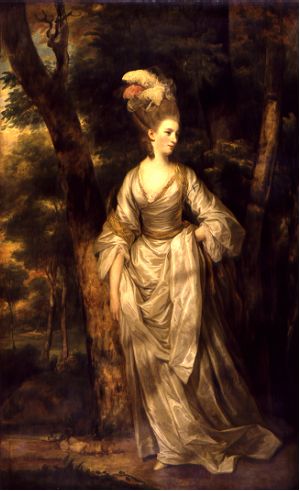
Mrs Elizabeth Carnac: A Glimpse into Rococo Elegance
The artwork, "Mrs Elizabeth Carnac" by Sir Joshua Reynolds, stands as a testament to the opulence and refinement of 18th-century English portraiture. Created in 1775, this full-length painting captures the essence of a woman embodying the aristocratic ideals of her time. Housed within the esteemed Wallace Collection in London, it offers viewers a window into the world of wealth, fashion, and social standing during the Rococo period.
Composition and Technique
Reynolds masterfully employs oil on canvas to depict Mrs. Elizabeth Carnac amidst a natural setting. The composition is vertically oriented, emphasizing her stature and drawing the eye upwards towards her elaborate headdress. Her attire—a voluminous gown adorned with lace and ribbons—is characteristic of Rococo fashion, showcasing intricate detail and luxurious fabrics. Noticeable are the subtle details of her corset beneath the dress, highlighting Reynolds' attention to realism. The background features a dense forest rendered in varying shades of green and brown, creating depth and suggesting an outdoor setting. Two birds add a touch of whimsy to the scene. Reynolds’ technique is evident in the soft, pastel colors used to create a sense of calmness and the exquisite portrayal of textures.
Historical Context and Symbolism
“Mrs Elizabeth Carnac” was painted during a period of significant social and economic change in England. The Rococo style, prevalent at the time, emphasized elegance, ornamentation, and a celebration of aristocratic life. Mrs. Carnac’s portrait reflects this aesthetic perfectly. Her clothing—particularly the luxurious silk gown and feathered hat—symbolizes her wealth and status within society. The natural setting, while idealized, suggests an appreciation for nature and leisure enjoyed by the upper classes. The painting also subtly alludes to the growing influence of colonial trade; John Carnac, Mrs. Carnac's husband, had amassed considerable fortune through his involvement with the East India Company.
Emotional Impact and Reynolds’ Legacy
Beyond its aesthetic beauty, "Mrs Elizabeth Carnac" evokes a sense of quiet contemplation and refined elegance. The subject’s slightly turned pose and gentle expression convey a feeling of grace and composure. Sir Joshua Reynolds (1723-1792) was a pivotal figure in 18th-century English art, renowned for his portraits that captured not only physical likeness but also the character and social standing of his subjects. As founder and first president of the Royal Academy of Arts, he championed the "Grand Style," advocating for idealization and grandeur in portraiture. His influence on subsequent generations of artists is undeniable, solidifying his place as one of Britain's most celebrated painters.
Further Exploration