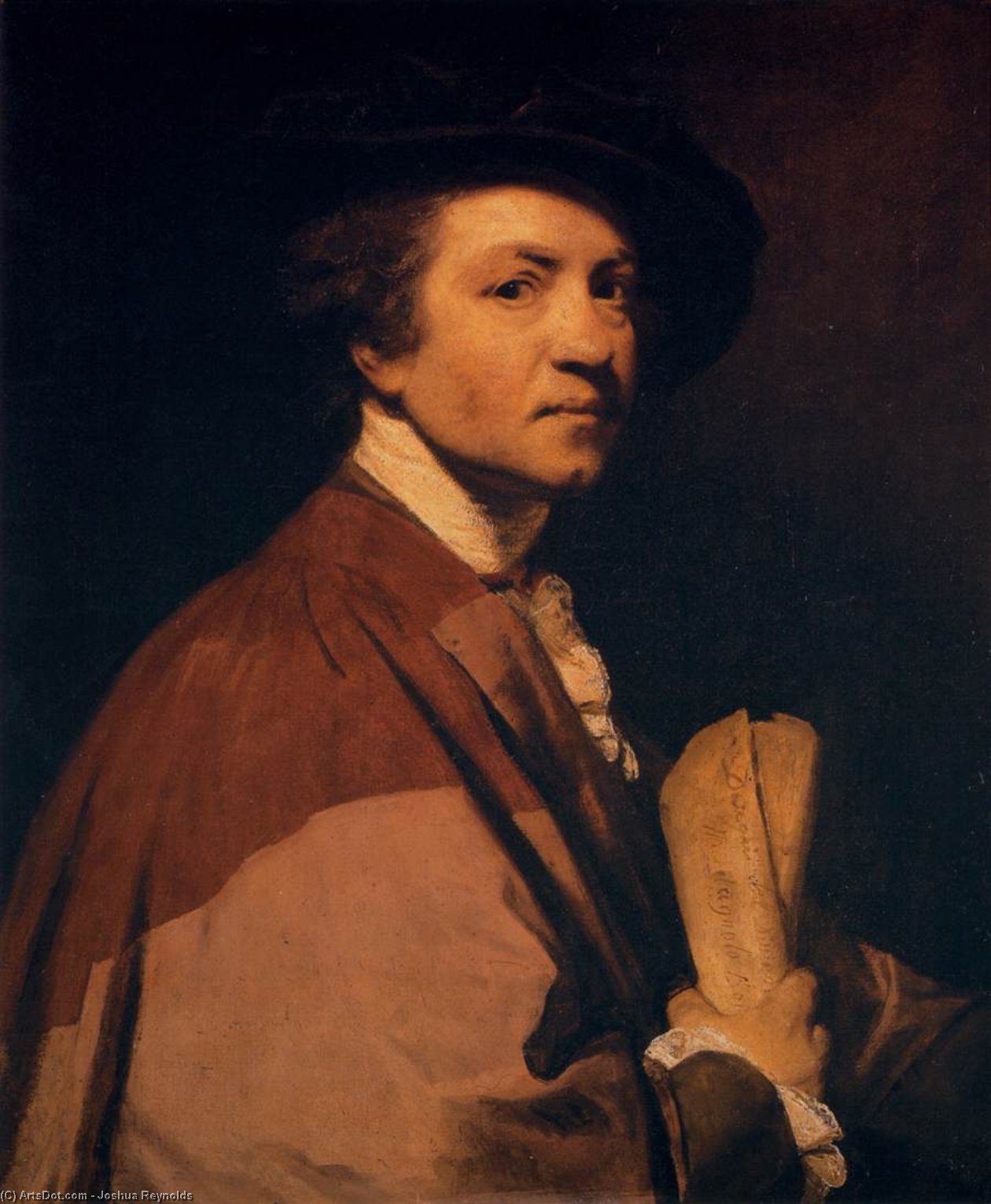
This captivating portrait by Sir Joshua Reynolds embodies neoclassical elegance—a masterful depiction of intellect and refinement during the Enlightenment era. Reynolds’ meticulous brushstrokes capture a contemplative gaze amidst rich fabrics and scholarly pursuits, inviting viewers to explore this iconic masterpiece.
Sir Joshua Reynolds (1723-1792): Leading British portrait painter of the 18th century & first Royal Academy President. Master of the 'Grand Style', he elegantly captured nobility and shaped British art.
Step into the Renaissance heart of Florence at the Uffizi Gallery! Explore masterpieces by Botticelli, Leonardo da Vinci & Michelangelo – an unforgettable art experience.
A Window Into Enlightenment Thought
The moment one encounters Sir Joshua Reynolds’s 1775 Self-Portrait, there is an immediate sense of being observed by a mind deeply engaged with the world. This is not merely a likeness; it is a carefully constructed manifesto of intellect and status. The central figure, draped in a striking scarlet coat accented by elegant black trim, commands the viewer's attention through a gaze that is both intimate and authoritative. Reynolds utilizes his own image to bridge the gap between the artist and the observer, establishing a profound connection that transcends the centuries. Every element of his attire serves as a deliberate nod to the wealth and aristocratic refinement of the era, presenting a persona that is as much about social standing as it is about personal identity.
Mastery of Neoclassical Technique
In this masterpiece, Reynolds exemplifies the grandeur of the Neoclassical style, a movement dedicated to reviving the balanced proportions and clarity of Greek and Roman antiquity. The composition is anchored by strict geometric principles, ensuring a sense of stability and poise that avoids the chaotic energy of the preceding Baroque period. To achieve such luminous depth, the artist employed a sophisticated oil painting technique characterized by meticulous layering. Through the expert use of glazing—the application of thin, translucent layers of pigment—Reynolds achieved subtle tonal variations and a radiant glow that breathes life into the fabric of the scarlet coat and the soft textures of the skin. The canvas itself, a sturdy linen stretched taut over wood, provides the perfect foundation for this interplay of light and shadow, ensuring the artwork's enduring brilliance.
Symbolism and the Spirit of an Age
Beyond the surface of the portrait lies a rich tapestry of Enlightenment symbolism. As London’s intellectual landscape buzzed with the debates of philosophers like Voltaire and Rousseau, Reynolds captured the very essence of this era through subtle visual cues. The inclusion of a book held within his grasp is far from incidental; it serves as a powerful emblem of erudition, knowledge, and a commitment to humanist ideals. This portrait captures a man caught in the tension between reason and emotion, reflecting a broader societal preoccupation with moral virtue and social responsibility. For the collector or the interior designer, this piece offers more than mere decoration; it provides a profound sense of historical gravity and intellectual depth, making it an exquisite centerpiece for any space dedicated to culture, reflection, and the timeless pursuit of wisdom.