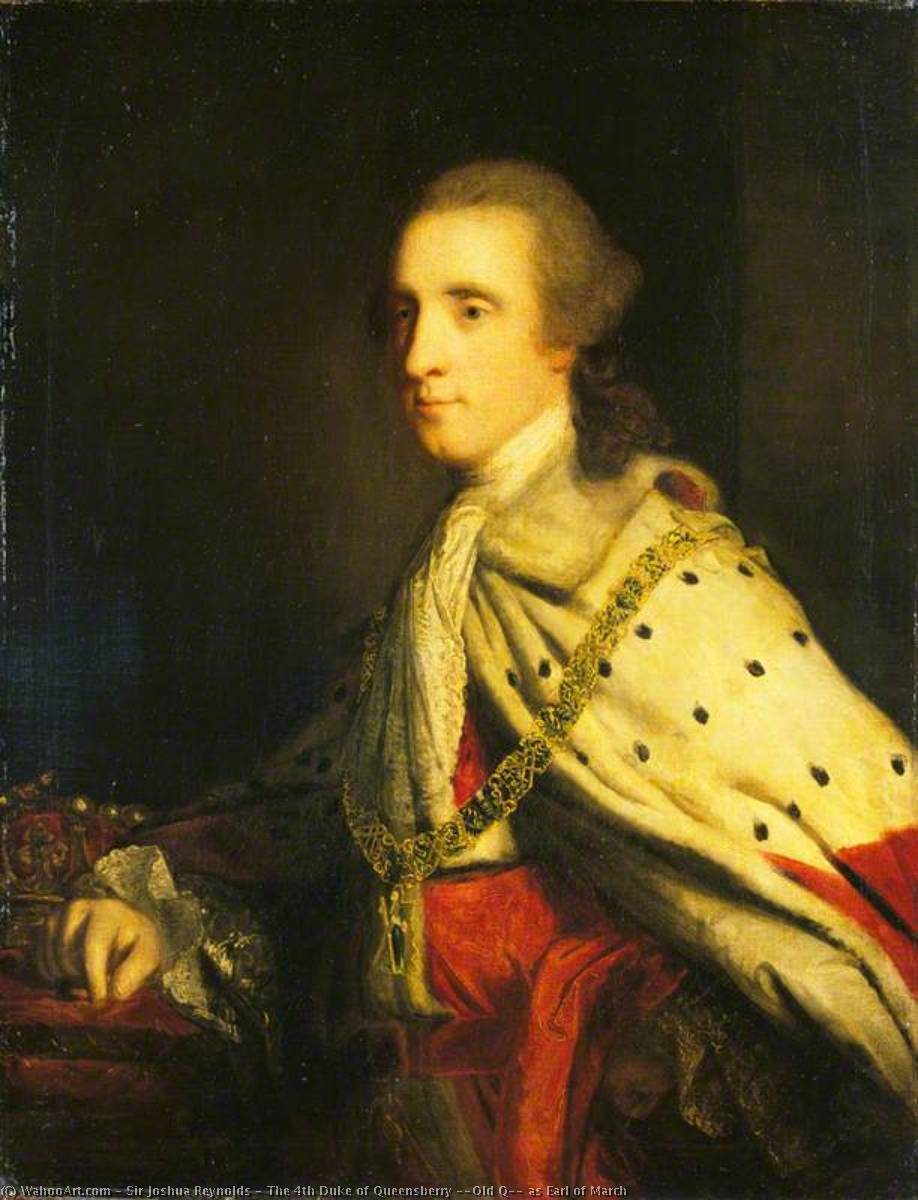
Admire Joshua Reynolds' masterful depiction of William Douglas, 4th Duke of Queensberry as Earl of March—a regal portrait showcasing aristocratic grandeur and capturing the essence of Georgian England.
Sir Joshua Reynolds (1723-1792): Leading British portrait painter of the 18th century & first Royal Academy President. Master of the 'Grand Style', he elegantly captured nobility and shaped British art.
Step back to Georgian elegance at The Wallace Collection! Explore stunning French art, exquisite furniture & arms in a historic townhouse – a jewel box of 18th-century London.
The Legacy of Reynolds: Capturing Nobility in ‘Old Q’
Sir Joshua Reynolds (1723–1792) stands as one of the titans of British art, primarily recognized for his masterful portraits that defined the “Grand Style” during the Enlightenment. His ability to imbue his subjects with psychological depth and elegance cemented his reputation as the first President of the Royal Academy—a position he held until his death in 1792—and profoundly influenced generations of artists who followed. This stunning depiction of William Douglas, 4th Duke of Queensberry (“Old Q”), exemplifies Reynolds’s signature approach to portraiture, offering a glimpse into both the aristocratic world of the era and the artist's unparalleled skill.
A Portrait Steeped in Context: The Duke and His Era
Painted in 1759–60, “The 4th Duke of Queensberry (‘Old Q’) as Earl of March” emerged from a period marked by considerable social upheaval and intellectual ferment. William Douglas, nicknamed ‘Old Q’ due to the flamboyant letter emblazoned on his carriage door—a testament to his extravagant lifestyle—was a figure of considerable notoriety. He was celebrated for his daring exploits and scandalous affairs, yet simultaneously revered as a shrewd financier and influential landowner. Reynolds skillfully captured this duality, reflecting the complexities of aristocratic society during George III's reign – an era obsessed with appearances and driven by ambition. The Duke’s patronage of artists like John Opie further underscores the interconnectedness of artistic circles and social prestige.
Reynolds’ Technique: Mastering Light and Texture
Reynolds employed a technique characterized by meticulous observation and painstaking layering—a hallmark of his Grand Style. He began by establishing a dark background, strategically positioned to heighten the luminosity of the Duke's figure and drapery. This masterful use of chiaroscuro – dramatic contrasts between light and shadow – immediately draws the viewer’s eye towards the subject’s face and regal attire. Reynolds skillfully applied thin glazes of pigment—primarily red lake for the skin tone—allowing underlying layers to subtly influence the final hue, resulting in a rich, nuanced surface texture. The drapery was meticulously rendered with meticulous attention to detail, demonstrating Reynolds's mastery of color and form. Assistants expertly painted the fabric in pink-grey before Reynolds applied red lake and made final adjustments, ensuring that every fold and shimmer conveyed an impression of opulent grandeur.
Symbolism Within Elegance: Crowns, Scepters, and Regal Attire
Beyond mere likeness, Reynolds imbued “Old Q” with symbolic significance. The Duke wears a crown—a potent emblem of sovereignty—and holds a scepter—representing authority and power—visually reinforcing his noble status. His scarlet coat and white cravat further emphasize his aristocratic identity, reflecting the prevailing fashions of the time and conveying an aura of confidence and refinement. The inclusion of the Order of the Thistle—a Scottish honor bestowed upon Douglas in 1763—adds another layer of symbolism, signifying loyalty to the Crown and highlighting the Duke’s connections to royal patronage. These elements collectively communicate a narrative of aristocratic privilege and accomplishment.
A Timeless Masterpiece: Emotional Resonance and Artistic Legacy
“The 4th Duke of Queensberry (‘Old Q’) as Earl of March” transcends its historical context, continuing to captivate audiences with its exquisite beauty and psychological insight. Reynolds’s ability to convey the subject's inner character—his gaze conveying both dignity and contemplation—demonstrates his profound understanding of human emotion. The painting’s enduring appeal lies in its masterful execution and its reflection of a pivotal moment in British art history, securing Reynolds’s place as one of the most influential portrait painters of all time. Its current residence at the Wallace Collection ensures that this masterpiece remains accessible to admirers worldwide.