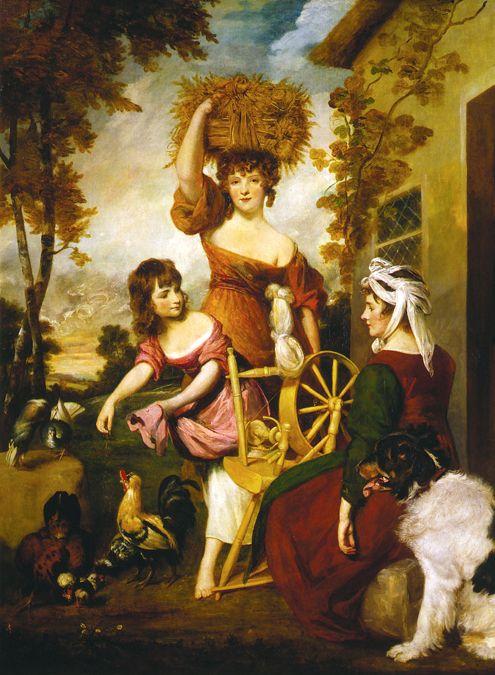
Sir Joshua Reynolds’ "The Cottagers" (1788) captures aristocratic dignity in a stunning Grand Style portrait of Elizabeth Wrottesley amidst rural Cornish life. Admire the masterful light and texture, reflecting Enlightenment ideals – discover or own this iconic artwork.
A Vision of Rural Dignity: The Soul of The Cottagers
In the quietude of the late eighteenth century, Sir Joshua Reynolds captured more than just a moment in time; he immortalized an ideal. The Cottagers, painted in 1788, serves as a profound testament to the Grand Style of portraiture that defined the British Enlightenment. At first glance, the viewer is greeted by a scene of pastoral grace, yet beneath the surface lies a meticulously constructed narrative of character and virtue. The painting features Elizabeth Wrottesley, positioned with a quiet strength that transcends her humble surroundings. Reynolds does not merely present a likeness; he crafts an image where the textures of the countryside and the dignity of the human spirit converge, offering a window into an era that sought to find the sublime within the everyday.
The composition is a masterclass in classical balance, utilizing a pyramidal structure that draws the eye upward toward the central figure. Reynolds employs chiaroscuro with breathtaking precision, allowing soft, diffused light to filter through the windows of Roseland Cottage, illuminating Wrottesley’s features and the delicate folds of her attire. This interplay of light and shadow creates a sense of depth and atmosphere, making the scene feel both intimate and monumental. The artist's technique—layering thin, translucent glazes over a detailed underpainting—allows for an extraordinary rendering of texture, from the soft plumage of the chickens scattered throughout the foreground to the rugged, earthy elements of the Cornish landscape. For the discerning collector, this technical mastery translates into a piece that possesses a luminous, living quality, perfect for adding a sense of historical weight and sophisticated warmth to any interior.
Symbolism and the Enlightenment Spirit
Beyond its aesthetic brilliance, The Cottagers is steeped in the symbolic language of the 1780s. The choice of a rustic setting was a deliberate departure from the opulent, gilded halls often frequented by Reynolds' aristocratic patrons. By placing his subject within a humble cottage, Reynolds subtly champions the Enlightenment values of domestic tranquility, moral integrity, and the beauty of a simple life. Every element in the frame serves a purpose: the presence of chickens acts as a symbol of fertility and prosperity, while the inclusion of a watchful dog adds a layer of loyalty and protection to the domestic tableau. This careful curation of symbols allows the painting to function as both a portrait and a moral allegory.
For interior designers and art enthusiasts alike, this work offers an unparalleled emotional resonance. It evokes a sense of nostalgia for a lost pastoral innocence while maintaining a level of sophistication that commands attention in a modern setting. Whether placed in a sunlit library or a grand dining hall, a high-quality reproduction of The Cottagers brings with it the prestige of the Royal Academy's first president and the enduring elegance of British art history. It is not merely a decoration; it is an invitation to contemplate the timeless connection between humanity and the natural world.