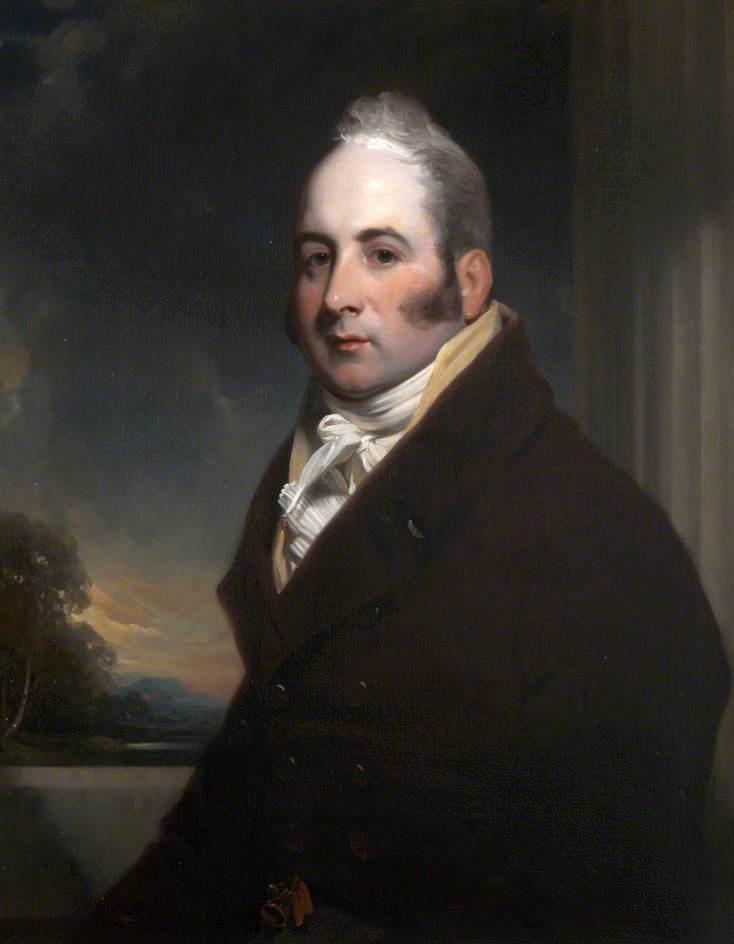
A Portrait of Dignified Resolve: Sir Martin Archer Shee’s George Cary IV
Sir Martin Archer Shee's portrait of George Cary IV stands as a testament to the elegance and intellectual fervor of early 19th-century British art. Executed in oil on canvas, this piece transcends mere likeness; it embodies the ideals of Neoclassicism—a movement striving for clarity, restraint, and an idealized representation of human form rooted in classical antiquity.
- Subject Matter: The painting depicts George Cary IV, a prominent figure in British society during his time. Cary’s dignified gaze and carefully posed posture convey wealth and status, reflecting the societal values prevalent at the period.
- Style & Technique: Shee's approach aligns perfectly with Neoclassicism. Precise lines delineate facial contours and clothing folds, creating a sense of sculptural form. Loose brushstrokes contribute to an atmospheric landscape background, emphasizing depth and perspective—a hallmark of the style. The artist skillfully blends colors to achieve subtle gradations of tone, enhancing realism while maintaining a refined aesthetic.
The muted color palette – dominated by browns, greys, and subdued greens – contributes to an atmosphere of solemn contemplation. This deliberate choice underscores Cary’s character as a man of intellect and moral fortitude. The landscape serves not merely as decorative backdrop but symbolically represents the broader context of Cary's life—a connection to tradition and stability amidst the turbulent currents of change.
- Historical Context: Painted circa 1820, this portrait reflects the Royal Academy’s commitment to portraying influential individuals with dignity and seriousness. Shee’s work aligns with a broader artistic trend toward reviving classical ideals after the Romantic era's emphasis on emotion and imagination.
More than just an image of Cary IV, Shee’s masterpiece speaks to enduring themes of honor, composure, and intellectual pursuits. It invites viewers to contemplate the virtues considered essential for leadership and social standing—qualities that continue to resonate today. A reproduction of this artwork would undoubtedly bring a touch of understated grandeur into any interior space.