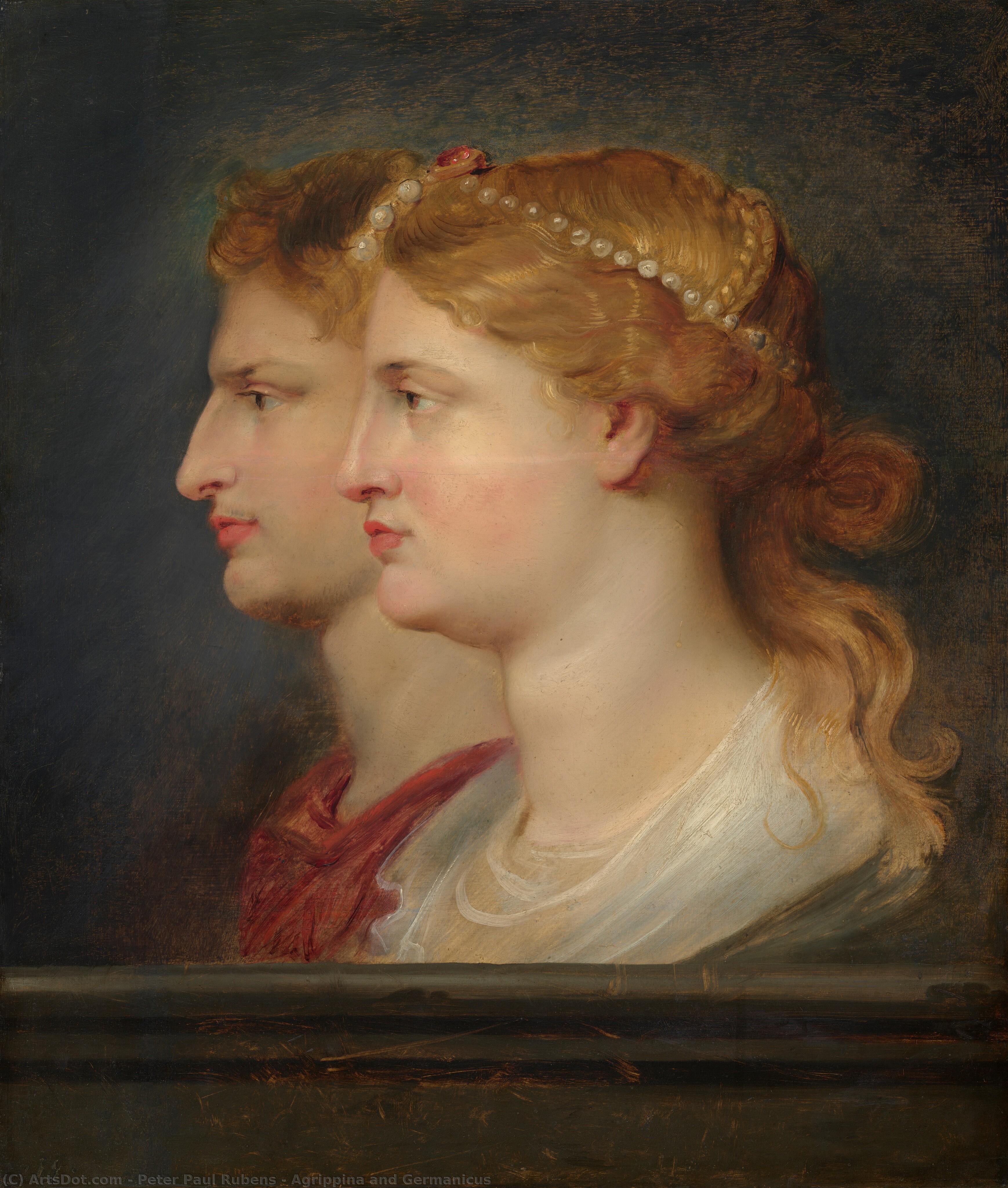
Experience the dramatic Baroque style of Sir Peter Paul Rubens's "Agrippina and Germanicus," a captivating portrait featuring a woman with pearls and a man in crimson robes, rendered in exquisite detail at 95 x 86 cm. Discover this stunning artwork and elevate your space.
Agrippina and Germanicus: A Baroque Portrait of Power and Emotion
Sir Peter Paul Rubens’s “Agrippina and Germanicus,” completed in 1614, is more than just a portrait; it's a meticulously crafted tableau brimming with the drama and emotional intensity that defined the artist’s signature Baroque style. This vertical composition, measuring 95 x 86 cm, captures two figures – Agrippina the Younger and her son, Germanicus – in a moment of quiet contemplation, rendered with an astonishing level of realism and psychological depth. The painting's immediate impact stems from its masterful use of light and shadow, creating a halo-like effect around the subjects that elevates them to a near-mythic status against the backdrop of a deep midnight blue.
- Subject Matter: The scene depicts Agrippina and Germanicus, members of the Roman imperial family. Their relationship—a mother and son—is subtly imbued with layers of political intrigue and familial devotion, reflecting the turbulent power dynamics of the era.
- Composition & Technique: Rubens’s characteristic technique is immediately apparent – a dynamic use of color, rich textures, and dramatic foreshortening. The figures are presented in profile, creating a sense of depth and movement while simultaneously emphasizing their individual characteristics. Note the careful layering of fabrics, particularly the gossamer white drapery that clings to Agrippina's neck, adding to the luxurious feel of the piece.
A Window into the Baroque Era
Painted during Rubens’s peak creative period, “Agrippina and Germanicus” exemplifies the artistic trends of the early 17th century. The Baroque era was characterized by a rejection of Renaissance restraint in favor of exuberant emotion, dramatic narratives, and opulent detail. Rubens, deeply influenced by Caravaggio's use of tenebrism (the dramatic contrast between light and dark), employed this technique to heighten the emotional impact of the portrait. The painting’s setting – a shallow space behind a stone ledge – further contributes to its theatrical quality, reminiscent of grand stage sets.
- Historical Context: The painting likely reflects the political climate of the time, with Agrippina holding significant influence within the Roman court. Her role as a powerful figurehead underscores the importance of familial alliances and strategic marriages in securing imperial power.
- Rubens’s Patronage: Rubens worked for numerous prominent patrons throughout his career, including the Spanish Crown. This commission likely reflects the artist's ability to capture the grandeur and authority associated with high-ranking figures.
Symbolism and Artistic Detail
The details within the painting are laden with symbolic meaning. Agrippina’s attire – a flowing gown adorned with pearls and a jeweled forehead ornament – signifies her status and wealth, while her closed lips suggest a reserved demeanor. The reddish-gold hair, braided and knotted with pearls, adds to her regal appearance. Germanicus, behind her, is depicted in more subdued tones, reflecting his position as subordinate to his mother. The auburn-brown hair and burgundy robe further distinguish him from Agrippina. Even the ‘19’ painted in the lower left corner could be a reference to the year of its creation or perhaps a subtle nod to Roman numerals.
- Color Palette: The rich color palette – deep reds, golds, blues, and browns – contributes significantly to the painting's dramatic effect.
- Facial Expressions: Rubens’s masterful rendering of facial expressions conveys a sense of quiet contemplation and dignified composure.
A Timeless Masterpiece
"Agrippina and Germanicus" remains a testament to Sir Peter Paul Rubens's artistic genius, showcasing his unparalleled ability to capture both the physical likeness and psychological depth of his subjects. This hand-painted reproduction offers an exceptional opportunity to own a piece of Baroque history, bringing this captivating portrait into your home or office. Its scale (95 x 86 cm) makes it suitable for a variety of interior design settings, while its timeless beauty ensures that it will remain a treasured addition to any art collection.