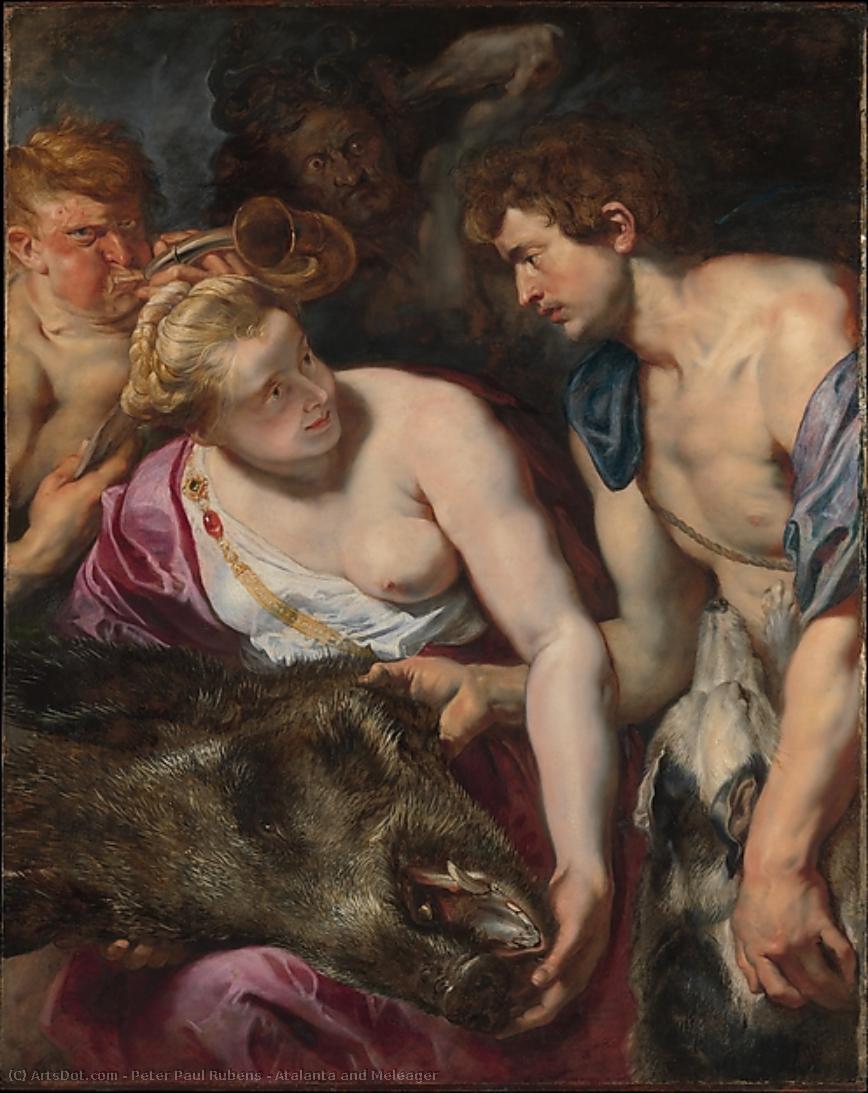
Experience the Baroque dynamism of Sir Peter Paul Rubens’s "Atalanta and Meleager," a dramatic depiction of Greek mythology featuring fleshy figures and a menacing Fury. This 1616 masterpiece captures love, conflict, and divine retribution – discover or own this stunning reproduction.
A Dramatic Encounter: Atalanta and Meleager by Sir Peter Paul Rubens
Sir Peter Paul Rubens’s “Atalanta and Meleager,” painted in 1616, is not merely a depiction of a classical myth; it's an explosion of Baroque fervor – a testament to the artist’s mastery of color, anatomy, and dramatic storytelling. This monumental canvas, measuring 133 x 107 cm, captures a pivotal moment from Ovid’s *Metamorphoses*, where Meleager, having slain a monstrous boar, proudly presents its head to his beloved Atalanta. Yet, the scene is far from simple celebration; it's laced with foreboding and the unsettling presence of divine retribution.
- The Narrative Core: The story itself is steeped in tragedy. Meleager’s inheritance is challenged by his uncle Pelorus, fueled by jealousy, leading to a devastating conflict that ultimately results in Meleager's premature death. Rubens subtly foreshadows this doom with the inclusion of the snake-haired Fury – a terrifying embodiment of vengeance and divine displeasure – lurking in the background.
- Rubens’s Baroque Vision: This work exemplifies Rubens’s signature style, characterized by dynamic composition, voluminous figures, and an intense use of color. The artist's meticulous attention to anatomical detail is immediately apparent, rendering Meleager’s muscular physique and Atalanta’s graceful form with breathtaking realism.
Technical Brilliance and Artistic Process
Rubens was renowned for his innovative painting technique, particularly his use of *alla prima* – painting directly onto the canvas without underdrawings – which allowed him to capture fleeting moments of emotion and movement with remarkable immediacy. The rich, saturated colors—deep reds, blues, and golds—were achieved through layering thin glazes of oil paint, a process that created a luminous effect and enhanced the sense of depth within the composition. Notably, the drapery over Meleager’s right shoulder has been meticulously reconstructed based on a workshop copy, reflecting the challenges inherent in preserving and restoring such a complex Baroque masterpiece.
- Color Palette: The dominant hues – crimson, gold, and deep blues – evoke a sense of power, wealth, and divine wrath.
- Brushwork: Rubens’s characteristic energetic brushstrokes contribute to the painting's dynamism and heighten its emotional impact.
Symbolism and Historical Context
“Atalanta and Meleager” transcends a simple mythological tale; it speaks to themes of love, jealousy, fate, and divine intervention – all central concerns within the Baroque period. The boar itself represents both power and danger, while the Fury symbolizes the unpredictable nature of justice. Painted in 1616, during a time of significant political and religious upheaval in Europe, the work reflects the anxieties and uncertainties of the era. Rubens himself was deeply involved in diplomatic affairs, and his art often served as a vehicle for conveying complex ideas and asserting power.
- Baroque Ideals: The painting embodies the Baroque emphasis on emotional intensity, dramatic spectacle, and the glorification of heroic figures.
- Political Significance: Rubens’s patronage by prominent European courts underscored the importance of art as a tool for diplomacy and propaganda.
A Timeless Masterpiece – Recreated for Today
ArtsDot.com is proud to offer a meticulously crafted hand-painted reproduction of “Atalanta and Meleager,” capturing the essence of Rubens’s genius. This faithful recreation allows you to experience the drama, beauty, and historical significance of this iconic artwork in stunning detail. Perfect for adorning grand interiors or adding a touch of Baroque splendor to any space, this reproduction is more than just an image; it's a window into the world of one of history’s greatest artists.