A Baroque Masterpiece of Faith and Suffering
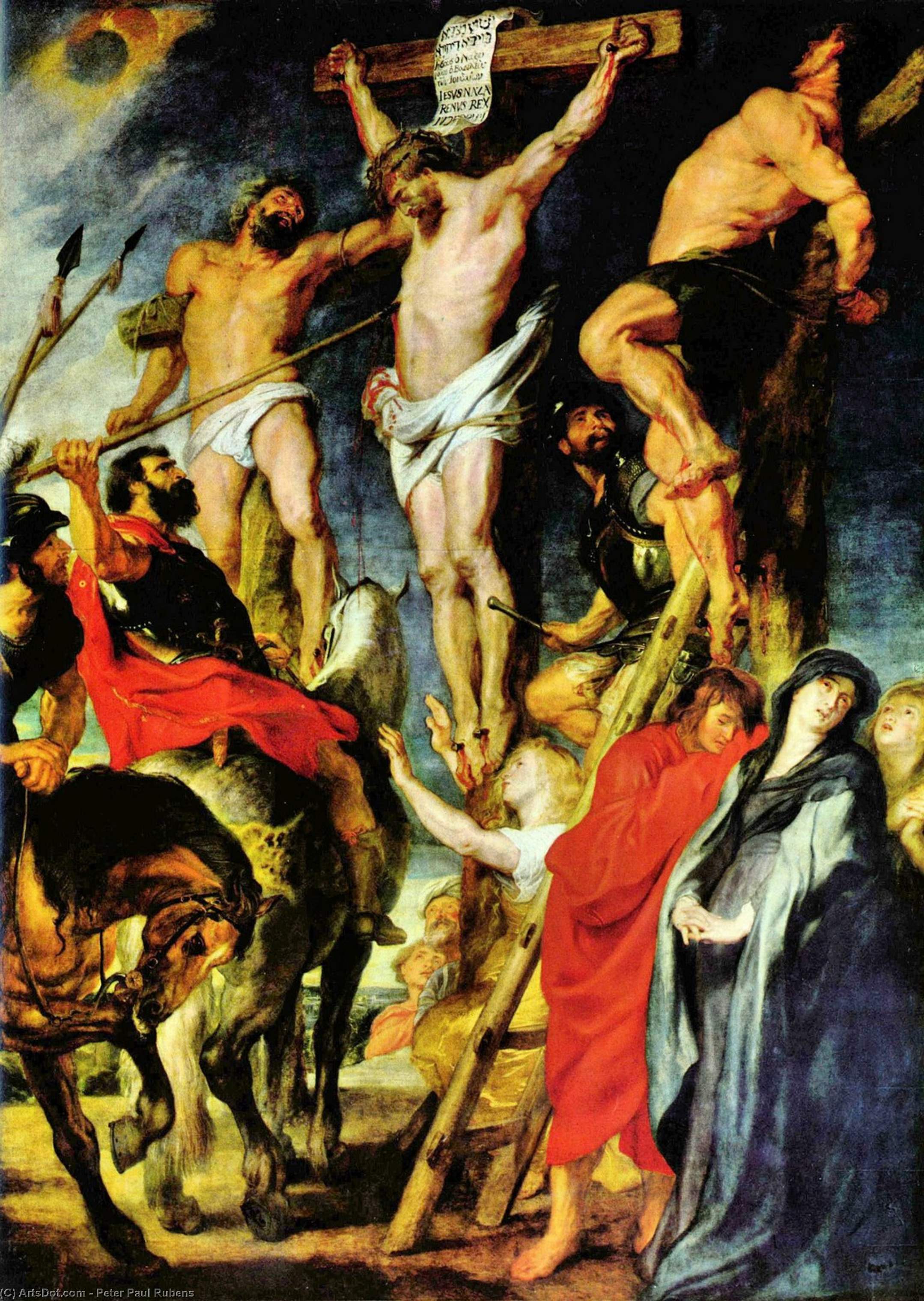
Peter Paul Rubens’ *Christ on the Cross*, painted in 1627, is a profoundly moving depiction of one of the most pivotal moments in Christian history. This oil-on-panel painting, measuring 51 x 38 cm, isn't merely a representation of an event; it’s an immersive experience crafted through Rubens’ masterful command of Baroque aesthetics and deeply felt religious sensibility.
Composition and Dramatic Intensity
The composition is dynamically arranged around the central figure of Christ, suspended on the cross. Rubens skillfully populates the scene with a multitude of figures – Roman soldiers enacting the crucifixion, grieving onlookers witnessing the sacrifice, and even angelic beings bearing witness to this solemn event. The artist employs a strong diagonal thrust, drawing the viewer’s eye upwards towards Christ's suffering form. This creates a sense of unrest and emotional turmoil, mirroring the chaos surrounding the crucifixion itself. The crowding of figures isn’t accidental; it emphasizes the public nature of this agonizing act and the collective weight of human sin.
Rubens’ Baroque Style: Color, Movement & Sensuality
This work exemplifies Rubens' signature Baroque style.
Movement is achieved through swirling drapery, dynamic poses, and a palpable sense of energy radiating from the scene. The artist’s use of
color is particularly striking; the predominantly red hues – in Christ’s garment and on the cross itself – immediately draw attention to the focal point, symbolizing both sacrifice and divine love. Rubens doesn't shy away from
sensuality, even within this somber subject matter. The figures are rendered with a robust physicality, their expressions conveying raw emotion and human vulnerability. His brushwork is loose and expressive, contributing to the overall sense of drama and immediacy.
Historical Context: The Counter-Reformation & Rubens’ Role
Rubens created this painting during the height of the Counter-Reformation, a period when the Catholic Church sought to reaffirm its doctrines and inspire religious fervor through art. *Christ on the Cross* served as a powerful visual tool for conveying faith and devotion. Rubens himself was a devout Catholic and a skilled diplomat, navigating the complex political and religious landscape of 17th-century Europe. His ability to blend classical influences with Christian iconography made his work incredibly popular among both church officials and wealthy patrons. He wasn’t simply an artist; he was a cultural ambassador, shaping artistic trends across the continent.
Symbolism & Emotional Resonance
The painting is rich in symbolism. The cross itself represents redemption through suffering. The figures surrounding Christ embody different responses to his sacrifice: grief, remorse, indifference, and cruelty. Even the lighting plays a symbolic role, with dramatic contrasts between light and shadow highlighting key figures and emphasizing the emotional weight of the scene.
The overall effect is one of profound pathos, inviting viewers to contemplate the meaning of Christ’s death and its implications for humanity. The painting evokes feelings of sorrow, compassion, and ultimately, hope.
A Timeless Masterpiece for Your Collection
*Christ on the Cross* remains a testament to Rubens' genius and a cornerstone of Baroque art. Its enduring power lies in its ability to connect with viewers on an emotional level, transcending time and cultural boundaries. Owning a high-quality reproduction allows you to bring this masterpiece into your home or office, adding a touch of historical grandeur and spiritual depth to any space. Consider it not just as artwork but as a window into the heart of faith, artistry, and human experience.
Explore More Works by Peter Paul Rubens
- The Meeting of Abraham and Melchizedek
- Christ on the Cross
- Saint Gregory with Saints Domitilla, Maurus, and Papianus