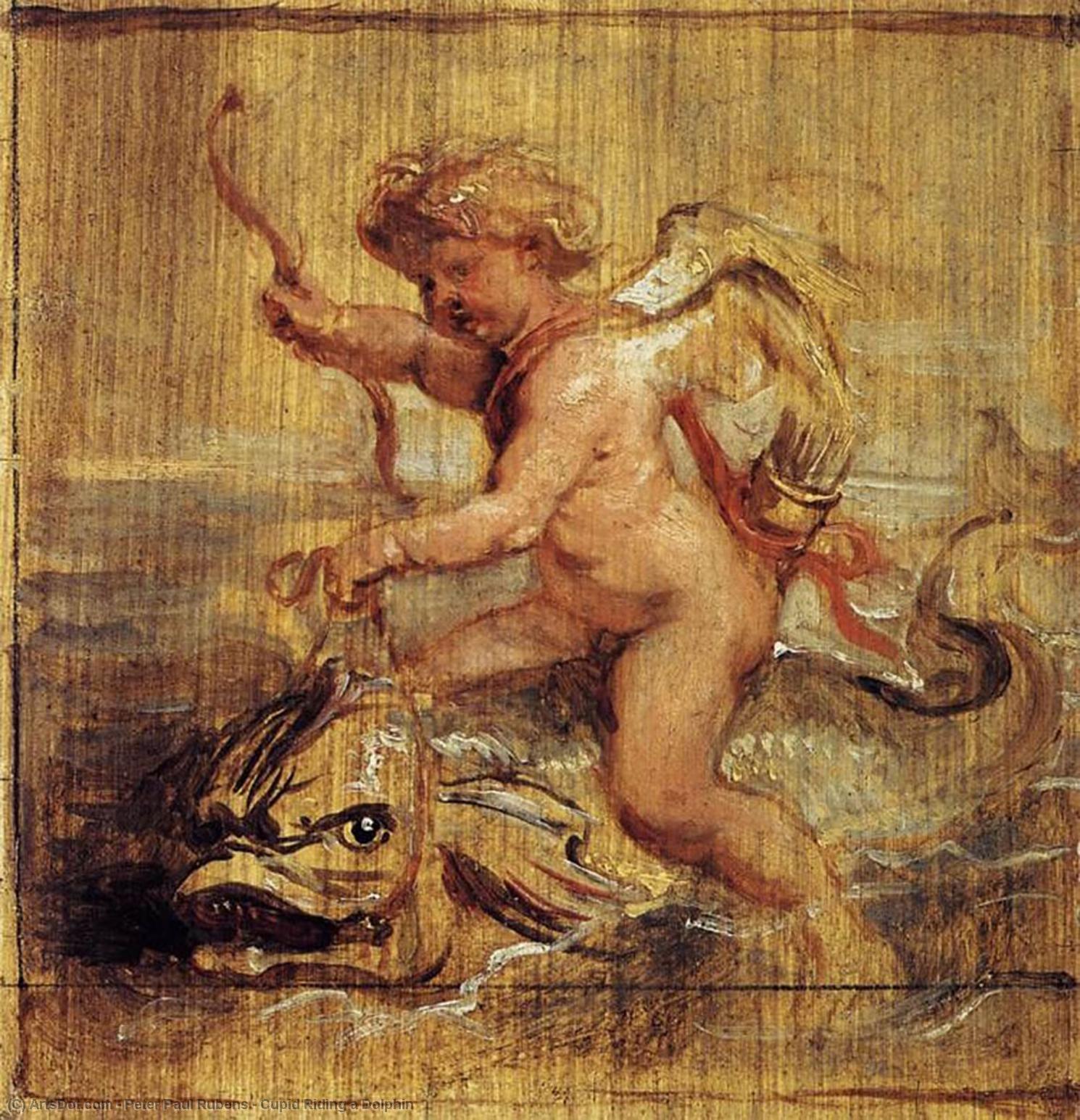
Cupid Riding a Dolphin: A Baroque Delight by Peter Paul Rubens
Peter Paul Rubens' "Cupid Riding a Dolphin," painted in 1636, is a captivating work of art that exemplifies the exuberance and dynamism characteristic of the Baroque period. This small but powerful oil on canvas (measuring just 14 x 13 cm) transports viewers to a world of mythological charm and artistic mastery.
Composition and Narrative
The painting depicts Cupid, the Roman god of love, playfully riding atop a dolphin through shimmering waters. Cupid holds a bow and arrow, poised as if ready to unleash his affections upon the world. A figure is visible on the left side of the composition, seemingly observing or participating in this whimsical scene. Above them, a bird soars through the air, adding a sense of movement and life to the artwork. The dolphin itself is rendered with remarkable detail, exhibiting fish-like features such as fins and scales, seamlessly integrated into the overall narrative.
Baroque Style and Technique
Rubens' masterful use of oil on canvas allows for rich colors and textures that bring the scene to life. The Baroque style is evident in the dynamic composition, characterized by a sense of movement and drama. Rubens skillfully employs light and shadow to create depth and highlight key elements within the painting. The vibrant color palette further enhances the emotional impact, evoking feelings of joy, playfulness, and sensuality – hallmarks of the Baroque aesthetic. His brushwork is loose yet controlled, conveying both spontaneity and precision.
Historical Context and Symbolism
Created during a period of artistic flourishing in Flanders, "Cupid Riding a Dolphin" reflects Rubens' deep engagement with classical mythology and his role as a leading figure in the Flemish Baroque tradition. The painting was part of a larger series of sketches commissioned by Philip IV of Spain for the Torre de la Parada, a hunting lodge near Madrid. The subject matter—mythological scenes featuring animals—was intended to create an atmosphere of bucolic entertainment suitable for a country residence. Cupid, as the god of love, symbolizes desire and affection, while the dolphin, often associated with Venus (the Roman goddess of love), represents grace, agility, and divine guidance. The combination of these symbols creates a powerful image of love's playful and irresistible force.
Emotional Impact and Legacy
"Cupid Riding a Dolphin" is more than just a depiction of mythology; it’s an embodiment of Baroque exuberance and artistic skill. The painting evokes feelings of joy, lightness, and wonder, inviting viewers to immerse themselves in its enchanting world. Rubens' ability to capture movement, emotion, and detail within such a small canvas demonstrates his exceptional talent as an artist. Today, the artwork resides in the esteemed collection of the Gemäldegalerie Donaueschingen in Germany, continuing to inspire art enthusiasts and collectors alike.