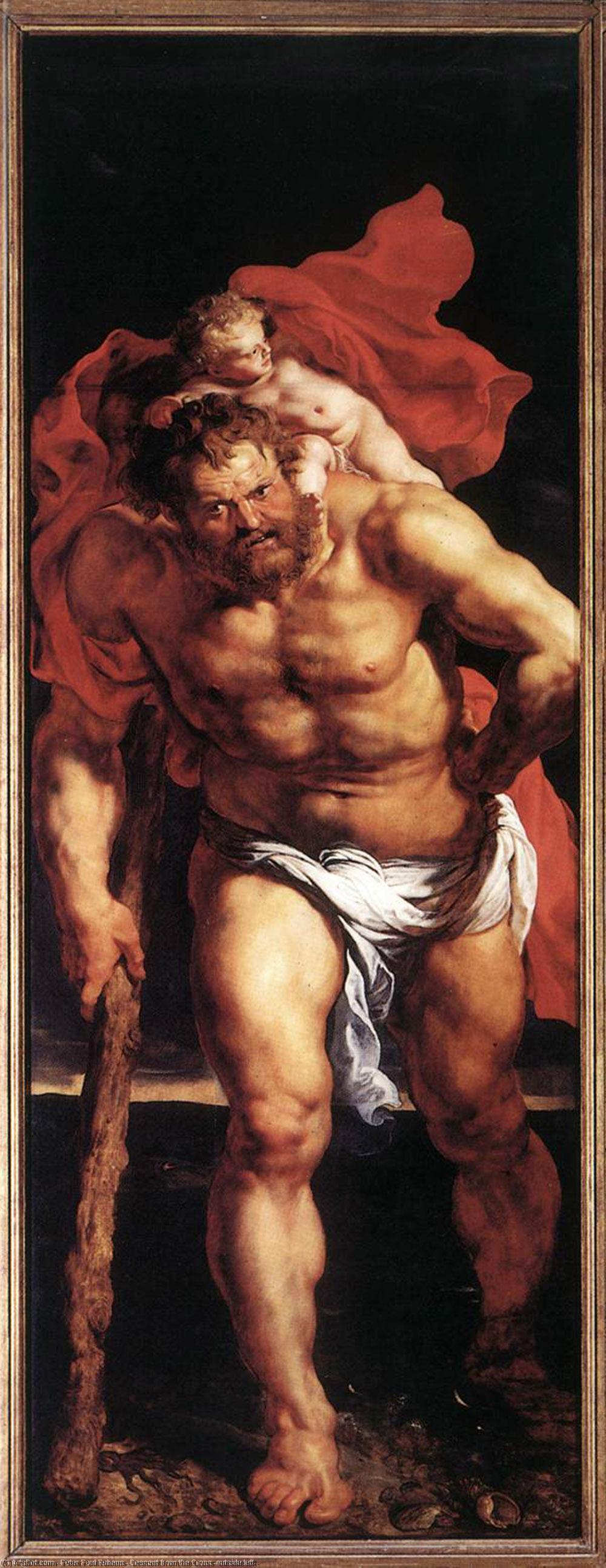
A Baroque Symphony of Sorrow and Light
To stand before Peter Paul Rubens’s Descent from the Cross is to be swept into a whirlwind of divine drama and human vulnerability. This particular panel, the outside left of his monumental triptych, serves as a profound prelude to the central spectacle of Christ's body being lowered from the cross. Rubens, the undisputed titan of the Flemish Baroque, does not merely paint a scene; he engineers an emotional experience. The composition is a masterclass in tension and release, where the heavy weight of mortality meets the ethereal glow of spiritual significance. As the eye wanders through the frame, one is struck by the palpable sense of movement—a characteristic "motion" that defines Rubens’s genius—where every limb and fold of fabric seems to pulse with a life of its and its own.
The artist employs a breathtaking technique of layering thin, translucent glazes over a meticulous underpainting, a method that grants the skin tones an inner luminosity. This creates a sensory experience where the flesh appears warm and breathing, even in the shadow of death. The use of chiaroscuro—the dramatic interplay between deep, enveloping shadows and piercing highlights—serves to direct the viewer's gaze with surgical precision. In this panel, the light does not just illuminate; it sanctifies, catching the edges of drapery and the contours of muscular forms to amplify the scene’s inherent theatricality.
The Weight of Devotion and History
Beyond its technical brilliance, the painting is deeply rooted in the turbulent atmosphere of 17th-century Antwerp. Created between 1612 and 1614, during a period of intense religious reformation and Spanish Habsburg influence, the work embodies the spiritual anxieties and triumphant assertions of the Counter-Reformation. Rubens utilizes a palette of vibrant, soulful hues—deep crimsons, celestial blues, and regal golds—to evoke a sense of grandeur that was intended to inspire awe in the faithful. The figures within the composition are not mere bystanders; they are vessels of profound emotion, reflecting the collective grief and steadfast devotion of an era grappling with faith and persecution.
The symbolism embedded within the work invites deep contemplation for the discerning collector or art enthusiast. The physical descent of Christ symbolizes the bridge between the divine and the earthly, a moment where the sacred enters the realm of human suffering. For interior designers and curators, this piece offers more than just visual splendor; it provides a focal point of intellectual and emotional depth. A high-quality reproduction of this masterpiece brings with it a sense of historical gravity and an atmosphere of timeless elegance, making it an incomparable addition to any space dedicated to the appreciation of fine art and the enduring power of the human spirit.