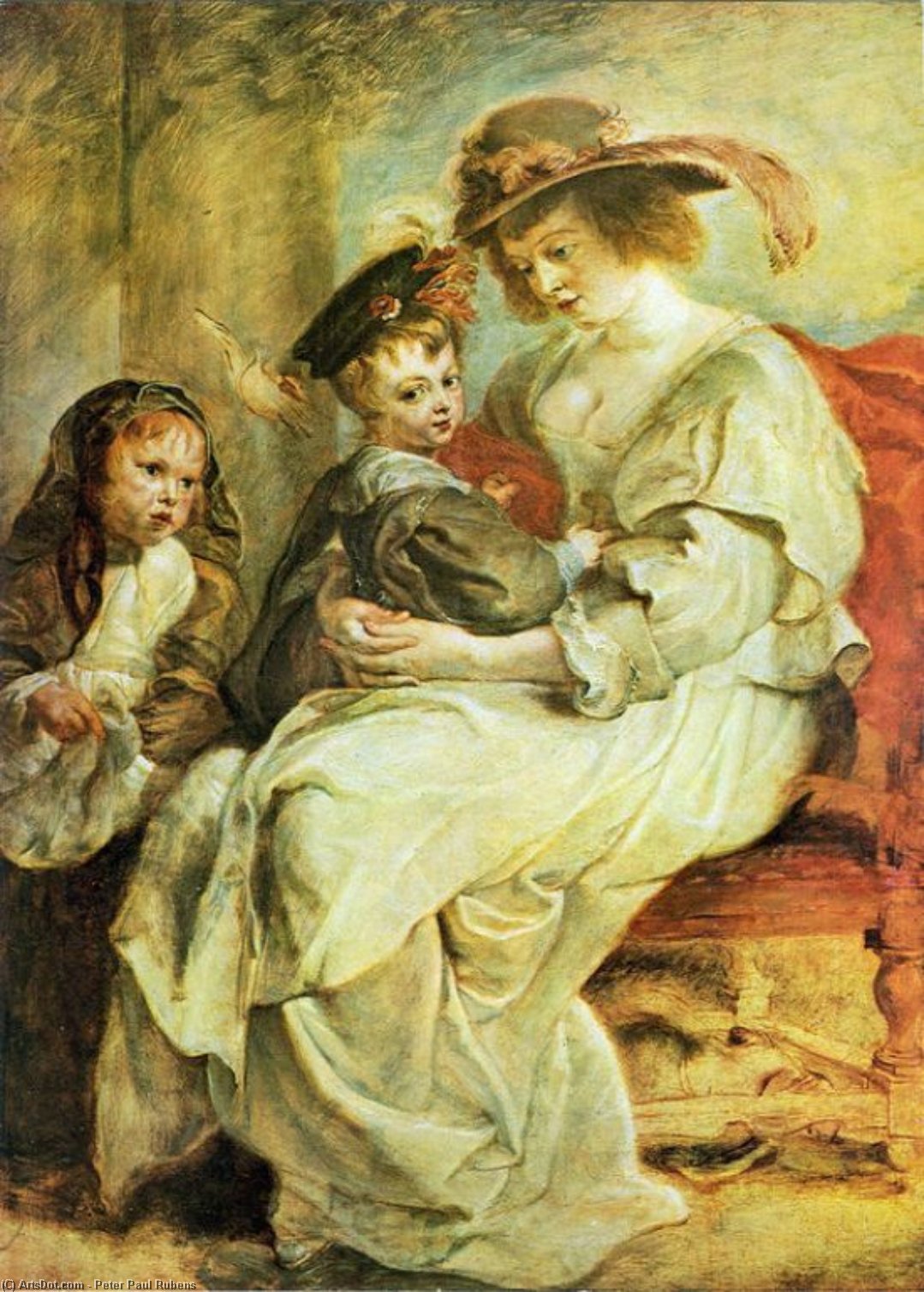
A Glimpse of Domestic Bliss: Helene Fourment with Her Children by Peter Paul Rubens
Peter Paul Rubens’s “Helene Fourment with her Children,” housed within the hallowed halls of the Musée du Louvre in Paris, is more than just a portrait; it's a vibrant tableau of 17th-century life, imbued with the artist’s signature dynamism and profound understanding of human emotion. Completed around 1636, this oil on panel painting offers a rare and intimate window into the world of Rubens’s second wife, Helena Fourment, and their young children, Frans and Clara Johanna. The work immediately captivates with its rich palette – deep reds, vibrant blues, and luminous golds—a testament to Rubens' mastery of color theory and his ability to create an atmosphere of warmth and opulence. It’s a scene brimming with familial affection, yet subtly layered with the complexities of Renaissance portraiture.
Rubens, one of the most influential figures of the Flemish Baroque, was renowned for his dramatic compositions that frequently drew upon classical and Christian narratives. However, “Helene Fourment with her Children” stands apart through its remarkable focus on domesticity—a departure from many of his grand historical or mythological works. This shift reflects a growing interest in portraying everyday life and human relationships, qualities that resonated deeply with the Counter-Reformation’s emphasis on piety and moral virtue. The painting isn't merely documenting a family; it’s celebrating the sanctity of domesticity, presenting a scene of quiet dignity and profound connection.
The Anatomy of a Masterpiece: Technique and Composition
Examining the technical details reveals Rubens’s extraordinary skill. He employs a technique known as *sfumato*, subtly blurring lines and edges to create an atmospheric effect, particularly evident in the folds of the fabrics and the soft lighting that illuminates the family. The composition is carefully balanced—Helene sits centrally, her posture radiating composure and grace, while her children are arranged around her with a naturalness that feels utterly genuine. Note the way Rubens uses diagonal lines – the chair’s back, the children's positions – to create movement and visual interest within the frame. The inclusion of the small bird in the upper corner adds an unexpected element of lightness and perhaps even a hint of symbolism—a fleeting moment of beauty amidst the everyday.
Rubens’s use of light is particularly noteworthy. He masterfully employs *chiaroscuro*, contrasting areas of bright illumination with deep shadows, to sculpt the figures and create a sense of three-dimensionality. The warm glow emanating from Helene's face draws the viewer's eye directly to her, while the darker tones in the background subtly emphasize the intimacy of the scene. The details of their clothing—the elaborate lace collars, the richly embroidered fabrics—are rendered with meticulous precision, reflecting the wealth and status of the family.
A Portrait of a Time: Historical Context and Symbolism
“Helene Fourment with her Children” provides a valuable glimpse into 17th-century life in Antwerp. The clothing worn by Helene and her children—a testament to the fashion trends of the era—reflects the wealth and status of the family, highlighting their position within society. The presence of the three additional figures on the left and right sides of the painting adds another layer of complexity, suggesting a broader social context. Some art historians believe these figures represent members of Helene’s family or servants, further enriching the narrative.
Beyond its historical significance, the painting is rich in symbolism. The tender interaction between Helene and her children—her gentle touch as she holds Frans, her watchful gaze upon Clara Johanna—evokes a sense of warmth, love, and familial devotion. It’s a powerful reminder of the importance of family bonds, a theme that resonated deeply with Rubens himself, who was a devoted husband and father. The painting subtly celebrates the virtues of motherhood and domesticity – values highly prized during the Counter-Reformation.
A Legacy of Beauty: Reproductions and Beyond
ArtsDot is proud to offer meticulously crafted hand-painted reproductions of “Helene Fourment with her Children,” allowing art enthusiasts worldwide to experience the beauty and emotional depth of this masterpiece. Our skilled artists replicate Rubens’s technique and color palette with exceptional accuracy, creating a faithful representation that captures the essence of the original painting. Whether you're seeking an authentic work of art for your home or office, or simply wishing to connect with one of history’s greatest artistic achievements, our reproductions provide a stunning opportunity to own a piece of Rubens’s legacy.
For further exploration, we encourage you to visit the Musée du Louvre in Paris and delve deeper into the world of Peter Paul Rubens. You can also consult the resources provided below for additional information about the artist, his work, and the historical context surrounding “Helene Fourment with her Children.”