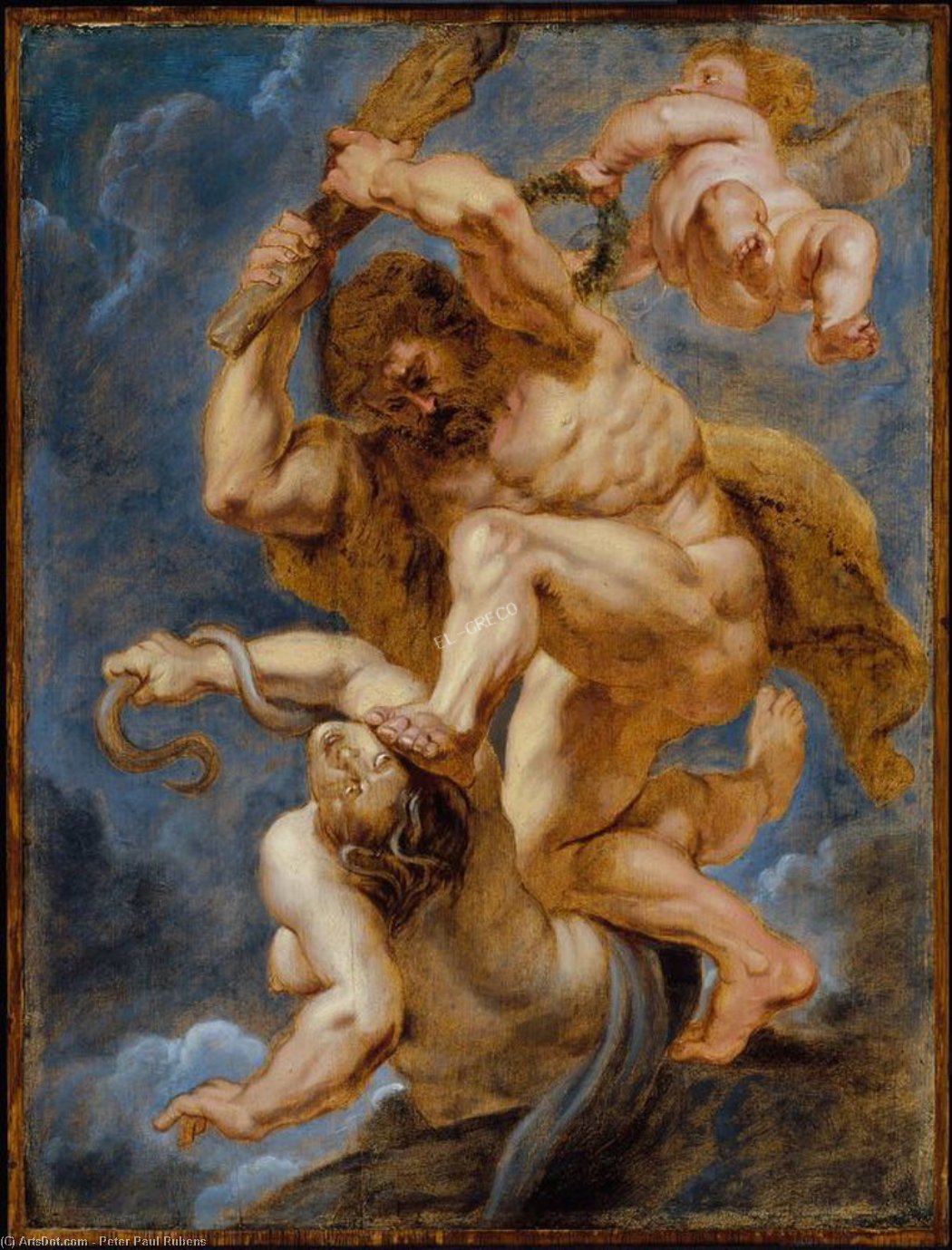
The Dramatic Triumph of Virtue: Peter Paul Rubens’ ‘Hercules as Heroic Virtue Overcoming Discord’
Within the realm of 17th-century art, few paintings possess the sheer dynamism and profound symbolic weight of Peter Paul Rubens' ‘Hercules as Heroic Virtue Overcoming Discord.’ Completed in 1632 and now residing within the esteemed Museum of Fine Arts in Boston, this oil on panel work is more than just a mythological scene; it’s a meticulously crafted allegory of moral struggle, rendered with Rubens’ signature brilliance. The painting immediately commands attention – not merely for its scale (measuring 64 x 49 cm), but for the palpable energy radiating from every figure and brushstroke. It's a testament to Rubens’ mastery of capturing movement, color, and emotion, hallmarks that cemented his place as one of the most influential artists of the Baroque period.
Rubens, deeply rooted in the classical traditions yet infused with the fervor of the Counter-Reformation, sought to elevate art beyond mere representation. He aimed to instruct and inspire, weaving narratives from mythology and Christian history into powerful visual statements. ‘Hercules as Heroic Virtue Overcoming Discord’ exemplifies this ambition perfectly. The central drama unfolds between Hercules, a symbol of strength, virtue, and righteous action, locked in combat with Discord – personified by a swirling mass of chaotic figures representing strife, deceit, and disorder. The composition is meticulously balanced: the muscular form of Hercules dominates the right side, while the turbulent energy of Discord fills the left, creating a visual tension that mirrors the struggle between good and evil.
A Symphony of Color and Movement
Rubens’ technique is nothing short of breathtaking. He employs a vibrant palette – deep blues contrasting with fiery reds, earthy browns, and shimmering golds – to create an intensely dramatic effect. The use of *tenebrism*, borrowed from Caravaggio, intensifies the shadows and highlights, drawing the viewer's eye directly to the key figures and emphasizing their emotional states. Notice how the light catches Hercules’ muscles, highlighting his heroic stature, while the surrounding chaos is shrouded in darkness. The brushwork itself is remarkably loose and expressive, contributing significantly to the painting’s sense of movement. Rubens wasn’t interested in precise detail; he prioritized capturing the *feeling* of action – the clash of weapons, the straining muscles, the swirling vortex of Discord.
Beyond the figures themselves, the background contributes significantly to the overall impact. The azure sky, rendered with a remarkable sense of depth and atmospheric perspective, provides a dramatic backdrop for the unfolding drama. The subtle hints of angels observing from above further reinforce the allegorical nature of the scene, suggesting divine intervention in the ongoing battle between virtue and vice. It’s a carefully orchestrated composition where every element – color, form, and gesture – works together to convey a complex and layered message.
Symbolism and Historical Context
‘Hercules as Heroic Virtue Overcoming Discord’ is not simply a depiction of a mythological tale; it's an embodiment of moral principles. Hercules, as the Roman god of strength and virtue, represents the triumph of righteousness over adversity. His victory over Discord symbolizes the importance of resisting temptation, upholding justice, and maintaining order in both the individual soul and society at large. The painting was likely commissioned during a period when the Catholic Church sought to utilize art as a tool for moral instruction – particularly following the Protestant Reformation. Rubens’ work aligns perfectly with this goal, offering a visually compelling argument for the virtues of faith and obedience.
Furthermore, it's important to consider Rubens’ own life and career. Born in Siegen, Germany, he spent formative years in Italy, immersing himself in the artistic traditions of the Renaissance. His time in Antwerp, a thriving center of commerce and art, allowed him to develop his unique style – a blend of classical influences with Baroque flair. His influence extended far beyond this single painting; Rubens’ work profoundly shaped the course of Flemish art and inspired generations of artists, including Sir Anthony van Dyck and Rembrandt van Rijn, whose own paintings demonstrate the lasting impact of Rubens' innovative approach.
A Timeless Masterpiece – Perfect for Reproduction
‘Hercules as Heroic Virtue Overcoming Discord’ remains a powerfully evocative work of art centuries after its creation. ArtsDot offers meticulously crafted hand-painted reproductions that capture the essence of this masterpiece, allowing you to bring its drama and symbolism into your home or office. Whether you're an art enthusiast, a collector, or simply seeking a stunning piece of décor, our reproduction provides an authentic representation of Rubens’ genius – a timeless reminder of the enduring power of virtue and the triumph of good over evil.