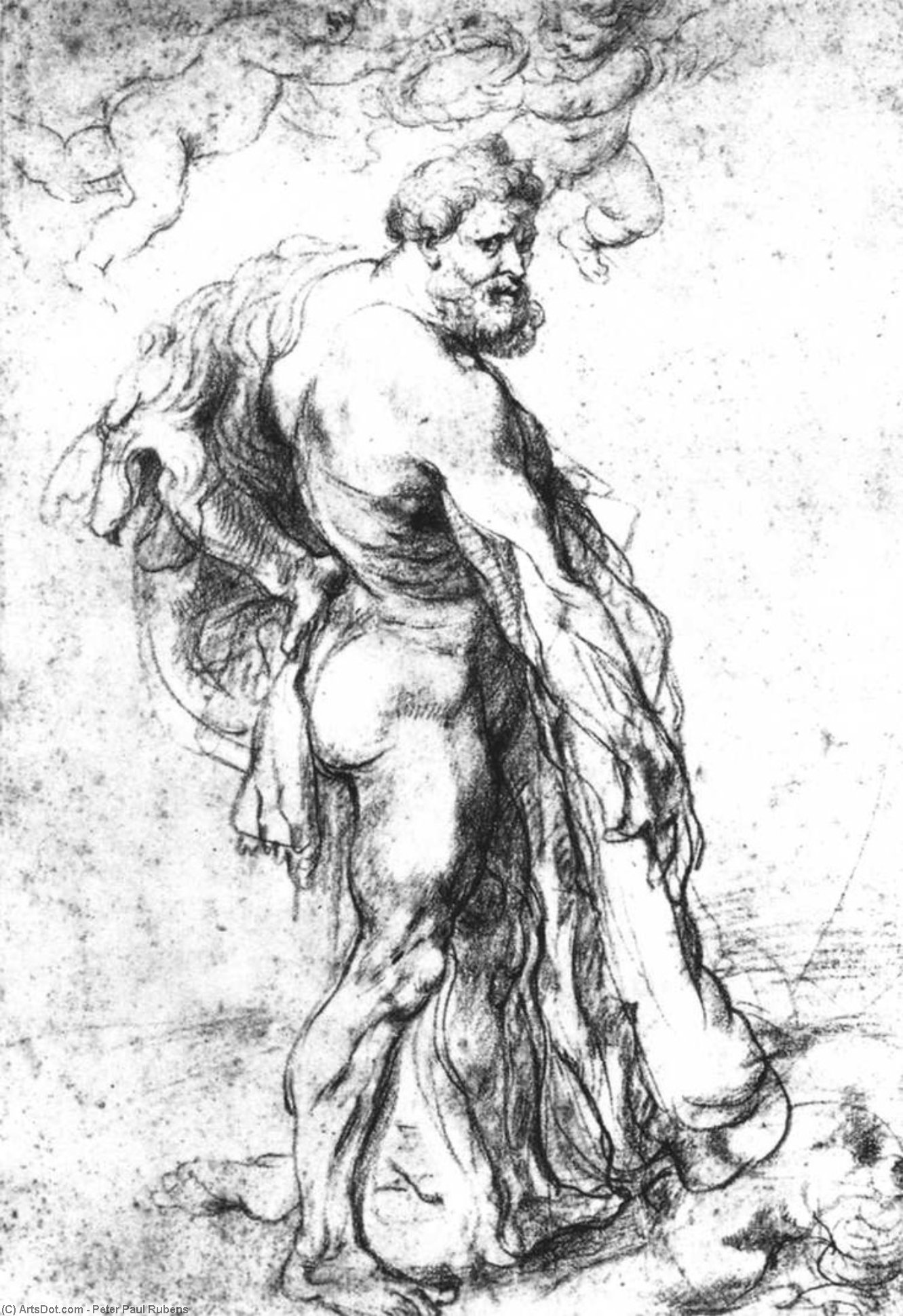
This preparatory drawing showcases Sir Peter Paul Rubens’ masterful technique—pen and ink with subtle shading—depicting Hercules receiving his crown from genii. Its dynamic composition, rich textural details, and chiaroscuro lighting exemplify Baroque artistry. Currently residing in the British Museum, this artwork embodies Rubens' signature style and celebrates mythological grandeur.
A Vision of Mythic Grandeur
In the realm of Baroque mastery, few sketches capture the raw, kinetic energy of heroism quite like Peter Paul Rubens’ “Hercules Crowned by Genii.” Created around 1621, this evocative drawing serves as a profound window into the creative mind of one of history's most influential painters. Rather than a static portrait, the work presents a dramatic tableau of mythic triumph, where the legendary strength of Hercules is caught in a moment of divine recognition. The composition vibrates with an asymmetrical dynamism; Hercules dominates the frame, his powerful physique positioned to suggest a forward momentum that pulls the viewer into his orbit. Through the masterful use of light and shadow, Rubens transforms a simple preparatory study into a monumental narrative of resilience and glory.
The artistry lies in the meticulous application of hatching and cross-hatching, techniques that allow Rubens to sculpt the human form with breathtaking precision. Every muscle, every sinew, and every ripple of the cascading drapery is defined by varying pressures of pen and ink, creating a sense of three-dimensional weight and textural richness. The monochromatic palette, far from being limiting, enhances the dramatic tension; the interplay of deep blacks and luminous whites emphasizes the musculature of the hero, suggesting a figure carved from light and shadow itself. This technique does more than just define shape—it breathes life into the stone-like strength of the subject, making the mythological figure feel palpably present.
The Spirit of the Baroque Era
To understand this work is to understand the fervent atmosphere of the 17th-century Counter-Reformation. Rubens, a titan of the Baroque period, operated in an era where art was a powerful tool for emotional and spiritual persuasion. While “Hercules Crowned by Genii” focuses on a classical mythological subject, it embodies the broader Baroque ambition to inspire awe through movement, scale, and intensity. The swirling, cloudy sky behind the hero adds a layer of atmospheric drama, suggesting a world in flux, where the divine and the mortal intersect. This sense of turbulent energy is mirrored in the loose, expressive lines that characterize Rubens’ preparatory style—a style that prioritates the capture of essence and motion over the sterile perfection of finished oil paintings.
For the discerning collector or interior designer, this piece offers more than mere decoration; it provides a focal point of intellectual and aesthetic depth. The symbolism of Hercules—representing strength, endurance, and the triumph of virtue—resonates with a timeless emotional power. Whether displayed as a sophisticated study in a contemporary gallery setting or as a soulful accent in a classical study, the drawing invites contemplation. It is an invitation to witness the moment where human effort meets divine grace, rendered through the hand of a master who understood that true beauty lies in the balance of power and poetic movement.