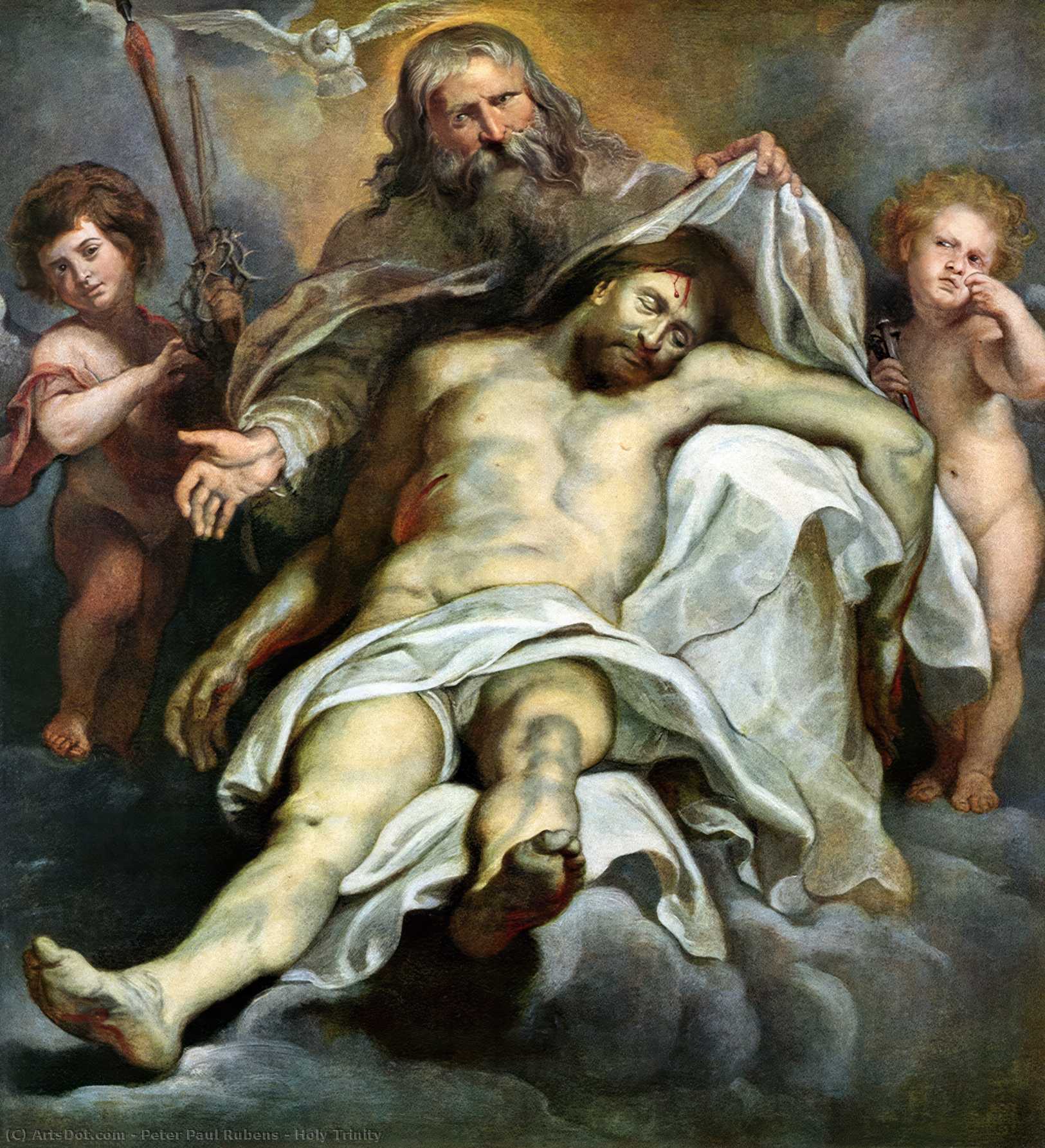
Holy Trinity: A Masterpiece by Peter Paul Rubens
- Artist: peter paul rubens
- Birth Year: 1577
- Death Year: 1640
- Birth City: Siegen
- Birth Country: Germany
Subject and Composition
The "Holy Trinity" painting, created by the renowned Flemish artist Peter Paul Rubens, is a testament to his skill in capturing the essence of religious devotion. This artwork depicts Jesus lying on a bed, surrounded by his mother Mary and John the Baptist. Two angels are positioned on either side of Jesus, adding a sense of serenity to the scene. In the background, another figure is visible, possibly an attendant or someone who witnessed this moment. The composition emphasizes the tender connection between these religious figures, highlighting their love and care for one another.
Artistic Style and Technique
Rubens' use of oil on canvas creates a rich, vibrant atmosphere in the painting. His mastery of chiaroscuro is evident in the way light and shadow are used to draw attention to the central figures. The soft, gentle expressions on their faces evoke a sense of peace and tranquility. The technique employed is oil painting on canvas, evident in the rich textures and luminous colors. His pigments were ground in linseed oil, applied to a prepared canvas.
Historical Context
The "Holy Trinity" is part of a larger collection of artworks housed in the Museum Redentore in Venice, Italy. This museum is known for its impressive array of Italian art from various periods and styles. The painting reflects the Baroque period's emphasis on drama, emotion, and realism.
Symbolism and Emotional Impact
The scene conveys themes of grief, sacrifice, and divine compassion. Symbolically, it represents humanity’s need for redemption and the profound sorrow associated with Christ's death. The pyramidal structure of the composition creates stability and draws the viewer's eye to the central figures. The use of light and shadow enhances the emotional impact, creating a sense of intimacy and reverence.