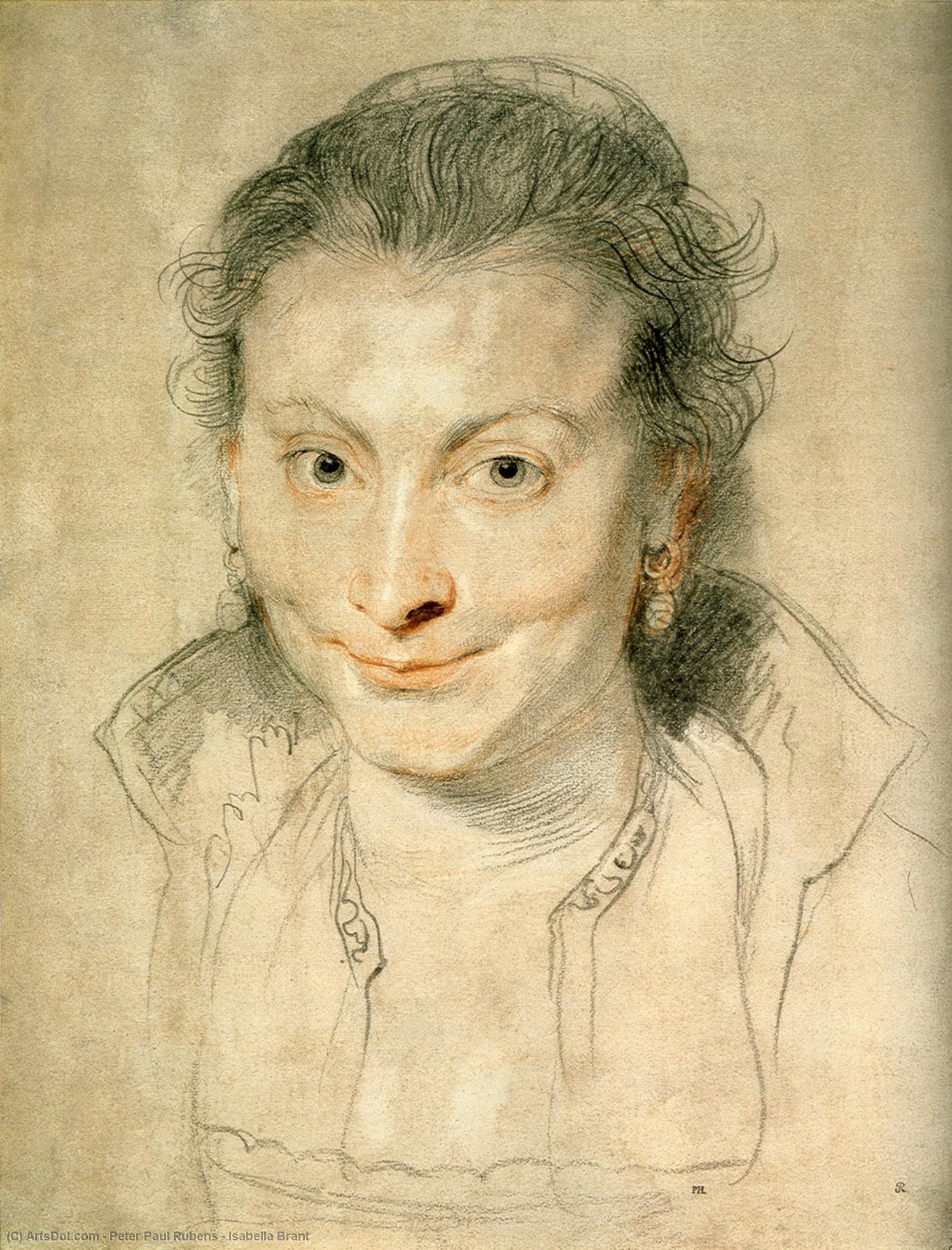
Rubens’ masterful Trois crayons technique captures Isabella Brant's radiant beauty in this intimate portrait from 1621 Baroque Antwerp—a stunning reproduction by ArtsDot.com invites you to experience the legacy of Flemish art.
Sir Peter Paul Rubens: A Baroque master! Known for dynamic compositions, vibrant colors & iconic works like 'The Massacre of the Innocents.' Explore his life & art.
A Portrait Steeped in Emotion: Isabella Brant by Peter Paul Rubens
Rubens’ “Isabella Brant” transcends mere representation; it embodies the spirit of the Flemish Baroque, capturing not just a likeness but also the profound intimacy of marital life during a turbulent era. Painted around 1621, shortly before Isabella Brant's tragic demise at 35, this portrait stands as a poignant testament to Rubens’ artistic prowess and his personal connection with his beloved wife. The artwork resides within the esteemed Department of Prints and Drawings at the British Museum, having undergone extensive scholarly investigation and garnering admiration for its exquisite beauty and historical significance.
Technique and Style: The Trio Crayons Method
Rubens employed a revolutionary technique known as trois crayons – three colors of chalk – primarily red, black, and white – to achieve unparalleled detail and luminosity. This method allowed him to sculpt light and shadow with remarkable precision, creating an illusionistic depth that distinguishes itself from traditional oil painting. Unlike many contemporaries who favored smoother surfaces, Rubens deliberately layered pigment onto the canvas, resulting in a textured surface that enhances the visual experience and conveys a palpable sense of movement. The careful application of chalk contributes significantly to the portrait’s expressive quality, mirroring the artist's commitment to capturing not just physical appearance but also psychological nuance.
Historical Context: Marriage Amidst Political Intrigue
The painting reflects the complex political landscape of Antwerp during Rubens’ time – a city grappling with Spanish dominance and simmering religious tensions. Isabella Brant belonged to a prominent aristocratic family, adding another layer of significance to the portrait. Her marriage to Rubens was fraught with challenges, including infertility and considerable social disapproval. Yet, Rubens relentlessly pursued his idealized vision of domestic harmony, evident in the serene composure conveyed by Isabella’s gaze and posture. The artwork serves as a window into the anxieties and aspirations of the era, reflecting broader societal concerns about lineage and prosperity.
Symbolism: Warm Palette and Expressive Brushstrokes
The palette employed in “Isabella Brant” is dominated by warm hues – reds and golds – symbolizing passion, vitality, and familial devotion. These colors are juxtaposed with cooler tones to create visual balance and accentuate Isabella’s delicate features. Rubens' brushstrokes are characterized by their fluidity and dynamism, capturing the subtle nuances of emotion. The artist skillfully renders Isabella’s facial expressions, conveying a quiet confidence mingled with tenderness—a masterful depiction of feminine grace under pressure. These expressive gestures underscore Rubens’ belief that art should resonate emotionally as well as aesthetically.
Emotional Impact: A Legacy of Beauty and Remembrance
“Isabella Brant” continues to captivate viewers centuries after its creation. Its enduring appeal stems from Rubens' ability to distill the essence of human experience into a single image—a portrait imbued with both beauty and melancholy. The artwork serves as a poignant reminder of love, loss, and the fleeting nature of life, prompting contemplation on themes of mortality and remembrance. At ArtsDot.com, we offer meticulously crafted oil painting reproductions that allow collectors and interior designers alike to experience the sublime artistry of Rubens firsthand—a chance to own a piece of history illuminated by masterful technique and profound emotional resonance.