A Queen Transformed: Unveiling Rubens’ “Marie de Medicis as Bellona”
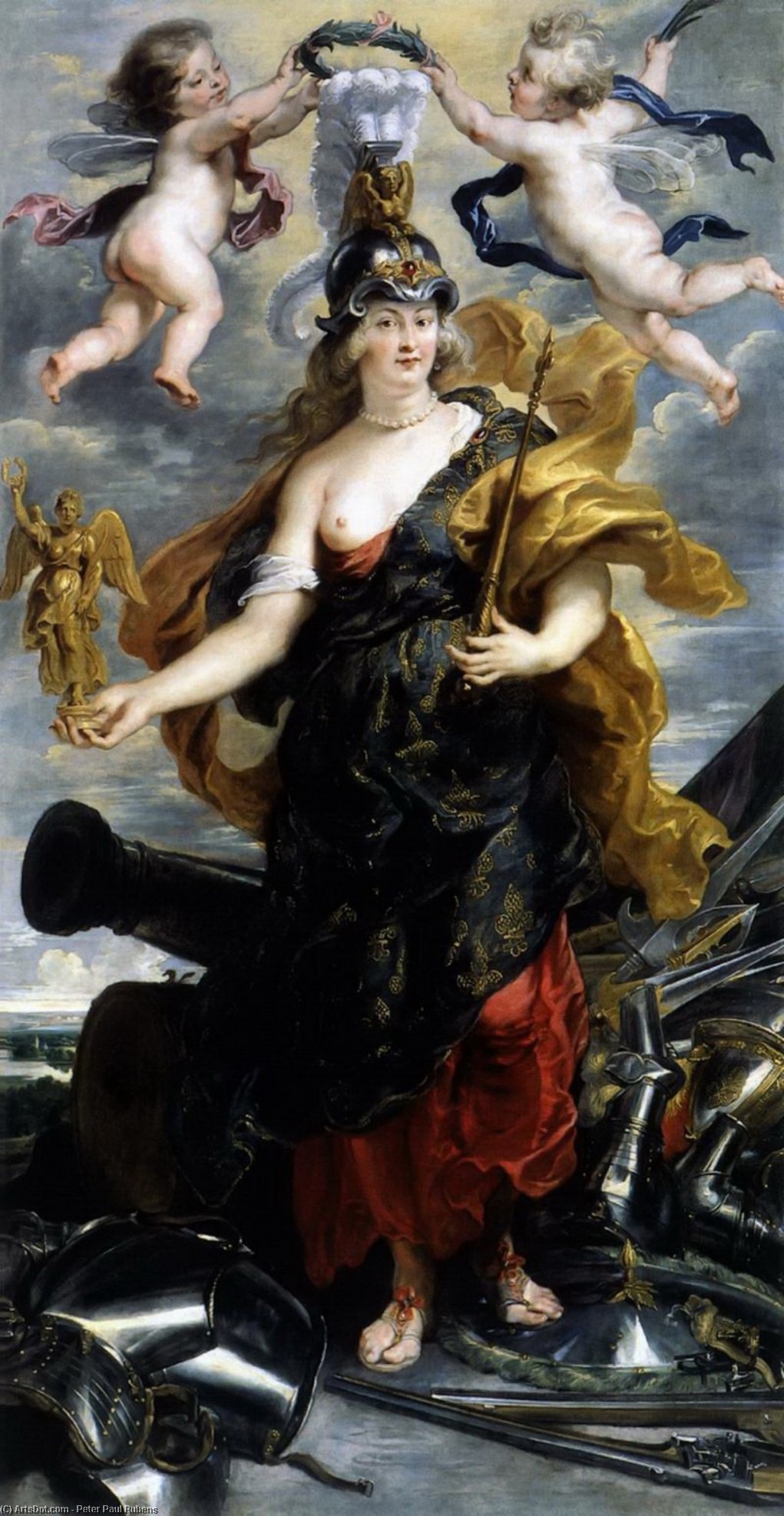
Peter Paul Rubens's magnificent "Marie de Medicis as Bellona," completed in 1625, is a powerful statement of regal authority and feminine strength rendered with the dynamism characteristic of the Baroque period. This large-scale oil on canvas (276 x 149 cm), currently residing at the
Musée du Louvre in Paris, isn’t merely a portrait; it's an allegorical embodiment of power, resilience, and divine favor.
The Allegory: A Queen as Goddess of War
The painting depicts Marie de Medicis, Queen Consort of France (1600-1610) and later Regent, transformed into Bellona, the Roman goddess of war. This isn’t a depiction of literal warfare, but rather an assertion of Marie's political acumen and her ability to navigate the turbulent landscape of 17th-century European politics. She is not *waging* war, but embodies its strength and strategic prowess. Dressed in elaborate classical armor – polished to a gleaming sheen – she holds a shield bearing the Medici coat of arms, signifying protection and dominion. A laurel wreath crowns her head, symbolizing victory and honor. The composition deliberately elevates Marie beyond a mere mortal ruler, presenting her as a figure imbued with divine qualities.
Rubens’ Baroque Mastery: Technique & Style
Rubens's technical brilliance is on full display here. His signature style – characterized by vibrant color palettes, dramatic lighting (tenebrism), and dynamic compositions – creates a sense of movement and energy that captivates the viewer. The artist employs loose, expressive brushstrokes to render the textures of fabric, metal, and flesh, lending a palpable realism to the scene.
The use of impasto—thickly applied paint—adds depth and dimension, particularly in the highlights on Marie’s armor and drapery. Surrounding her are cherubic figures (putti) who offer garlands and symbols of peace, subtly contrasting with Bellona's martial persona and hinting at a desire for lasting stability.
Historical Context: The Medici Cycle
“Marie de Medicis as Bellona” is one of twenty-four paintings commissioned by Marie herself to decorate the Luxembourg Palace in Paris. This ambitious project, known as the *Marie de’ Medici cycle*, aimed to immortalize her life and reign, presenting a carefully curated narrative of her achievements and virtues. Rubens was chosen for his exceptional skill in capturing both physical likeness and psychological depth. The series served not only as artistic decoration but also as powerful political propaganda, reinforcing Marie's legitimacy and authority after periods of upheaval and exile. Other notable works from the cycle, such as “The Meeting of Marie de’ Medici and Henry IV at Lyons” and "The Fate Spinning Maries Destiny," further illuminate her life story.
Symbolism & Emotional Impact
Beyond the obvious allegory, the painting is rich in symbolic meaning. The armor represents not just military strength but also protection against enemies – both internal and external. The presence of angels suggests divine approval and guidance. Even the turbulent sky hints at the challenges Marie faced during her life.
Rubens masterfully conveys a sense of dignified power, blending vulnerability with unwavering resolve. The painting evokes feelings of awe, respect, and perhaps even a touch of intimidation – reflecting the formidable personality of the queen it portrays.
For Collectors & Interior Designers
“Marie de Medicis as Bellona” is an exceptional example of Baroque art that would make a stunning focal point in any collection or interior space. Its grand scale and dramatic composition demand attention, while its rich colors and intricate details offer endless visual interest. A high-quality reproduction captures the essence of Rubens’s masterpiece, bringing a touch of regal splendor and historical significance to your home or office. The painting's powerful imagery lends itself well to both traditional and contemporary settings, adding a layer of sophistication and intellectual depth.
- Style: Baroque
- Subject: Allegorical Portraiture
- Materials: Oil on Canvas
- Dimensions: 276 x 149 cm
- Current Location: Musée du Louvre, Paris