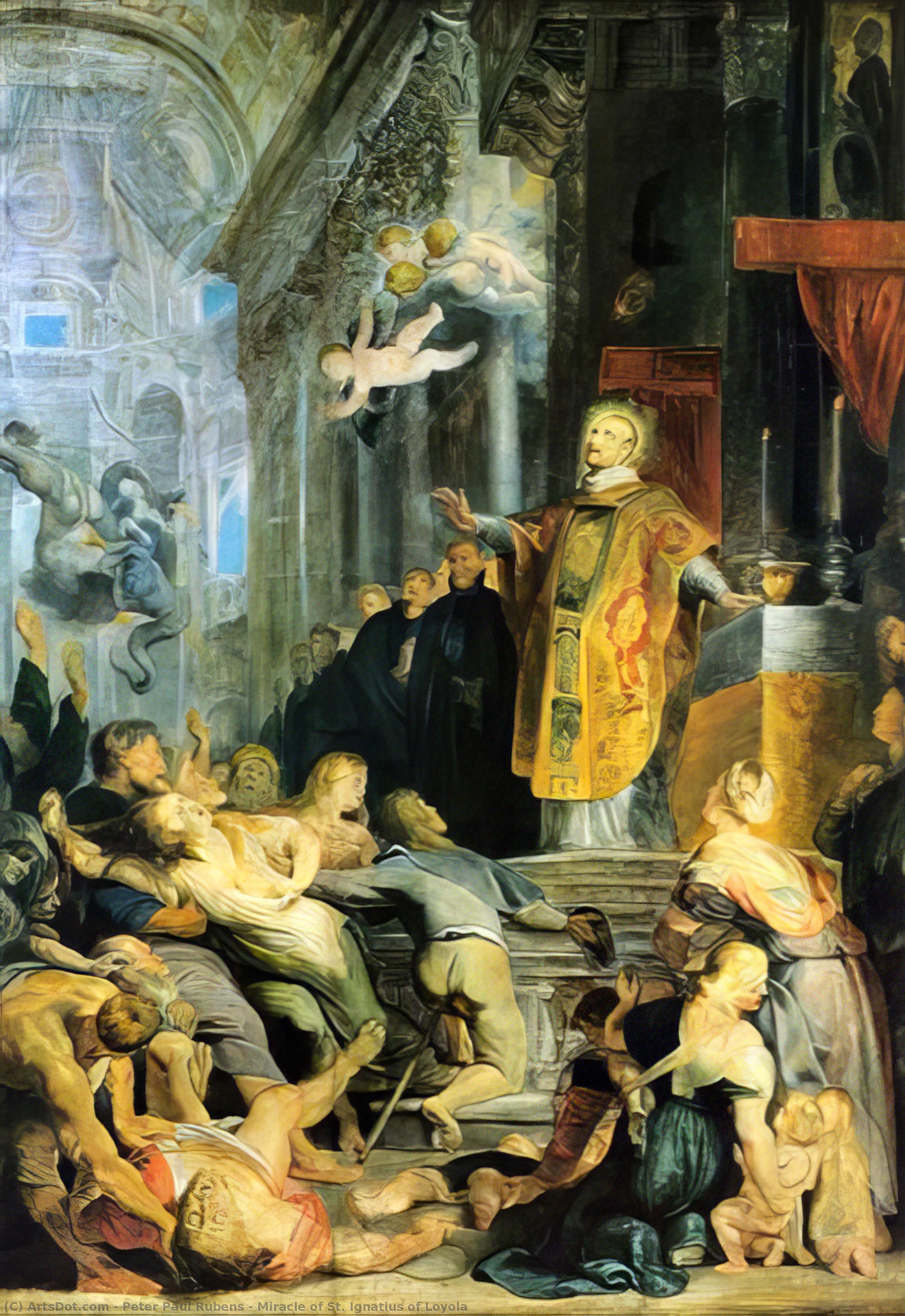
The Miracle of St. Ignatius of Loyola: A Baroque Masterpiece
Immerse yourself in the dramatic and spiritual world of Peter Paul Rubens' "Miracle of St. Ignatius of Loyola," a captivating Baroque masterpiece that brings to life a moment of divine intervention. This extraordinary painting, created in 1618, is a testament to Rubens' mastery of composition, color, and emotional expression.
Subject and Historical Context
The painting depicts a miraculous event involving St. Ignatius of Loyola, the founder of the Jesuit order. Commissioned by the Jesuits in Antwerp for their church, now known as the St. Charles Borromeo Church, this altarpiece was part of a larger series of religious works aimed at reinforcing Catholic doctrine during the Counter-Reformation.
Rubens' work is deeply rooted in the religious fervor of the time, serving as both a devotional piece and a powerful propaganda tool to bolster faith and promote the canonization of saints. The painting was later acquired by the Austrian Empress Maria Theresa and now resides in the Kunsthistorisches Museum in Vienna.
Style and Technique
Rubens' Baroque style is characterized by its dynamic movement, rich colors, and dramatic use of light and shadow. In "Miracle of St. Ignatius of Loyola," he employs bold, flowing lines to depict the chaos and reverence of the scene. The composition is structured around the central figure of St. Ignatius, who stands elevated on a platform, drawing the viewer's eye immediately.
The painting features a warm and earthy color palette dominated by gold, red, brown, and cream tones. These colors highlight the central figure's robes and the intricate architectural details, creating a sense of importance and divinity. The cooler blues and whites in the background provide contrast and depth, enhancing the overall impact of the scene.
Symbolism and Emotional Impact
The subject matter appears to be a religious miracle or exorcism, with St. Ignatius performing a ritual or blessing. The people around him are depicted in various states of distress, possibly representing the afflicted or possessed. The architectural setting symbolizes the sacred space where such events might occur.
Rubens' use of dramatic lighting creates a halo effect around the central figure, emphasizing his divine nature. The emotional elements are intense, conveying a sense of urgency and devotion that resonates with viewers. The chaotic yet reverent gathering of people adds a sense of movement and emotion to the scene, making it a powerful representation of a religious event.
Why This Artwork Stands Out
"Miracle of St. Ignatius of Loyola" is not just a historical artifact but a timeless piece that continues to inspire awe and admiration. Its rich detail, vibrant colors, and dynamic composition make it a standout choice for art lovers, collectors, and interior designers seeking to add a touch of grandeur and spiritual depth to their spaces.
Whether you are drawn to the artistic brilliance of Rubens or the profound religious symbolism of the scene, this painting offers a unique opportunity to bring a piece of Baroque masterpiece into your home or collection. Experience the emotional impact and historical significance of "Miracle of St. Ignatius of Loyola" and let it transform your space into a sanctuary of art and devotion.