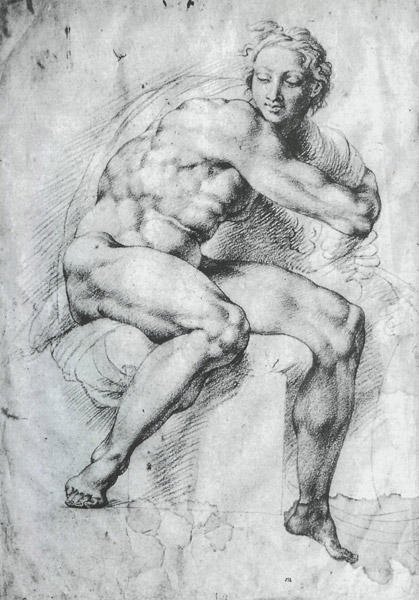
A Study in Classical Form: Peter Paul Rubens’ Naked Young Man
Peter Paul Rubens's “Naked Young Man” stands as a cornerstone of Baroque art, embodying the movement’s fascination with idealized beauty and anatomical precision. Executed around 1609-10 during his prolific period in Antwerp—a city grappling with religious upheaval and artistic innovation—this drawing transcends mere representation; it delves into themes of contemplation and masculine strength, reflecting Rubens's broader engagement with humanist ideals.
- Composition & Anatomy: The artwork’s central focus is a seated male figure positioned slightly off-center, creating visual dynamism. Rubens meticulously rendered the musculature of the torso and limbs, adhering to classical anatomical principles—a deliberate choice mirroring the influence of Greek sculpture on Baroque aesthetics. The pose itself conveys repose yet exudes latent power, accentuated by the arm resting across his lap and supporting his head.
- Monochromatic Palette & Line Work: Dominating the image is a strikingly restrained color palette—primarily shades of gray, white, and black—a hallmark of Rubens’s preparatory drawings. However, it's the masterful use of hatching and crosshatching that truly elevates this piece. These techniques generate tonal variations and imbue the drawing with texture, simulating skin surface and muscle contours. Lines are not merely delineating form; they are conveying emotion and dynamism.
- Symbolism & Emotional Resonance: Beyond its anatomical accuracy, “Naked Young Man” carries subtle symbolic weight. The contemplative posture suggests introspection—a characteristic trait of Rubens’s oeuvre—while the draped fabric hints at modesty or vulnerability. These elements contribute to a mood of quiet solemnity, inviting viewers to contemplate the human condition.
- Technique & Materials: Created with charcoal on paper, Rubens employed rapid sketching techniques—characteristic of his workshop—demonstrating unparalleled draughtsmanship. The artist’s meticulous attention to detail and expressive line work underscores the drawing's significance as a precursor to Rubens’s monumental paintings, showcasing his mastery of capturing essential forms and proportions.
This remarkable reproduction captures the essence of Rubens’s artistic vision—a testament to both technical skill and profound humanist contemplation. It serves as an exceptional choice for enriching any interior space or inspiring collectors seeking a connection with Baroque art history.