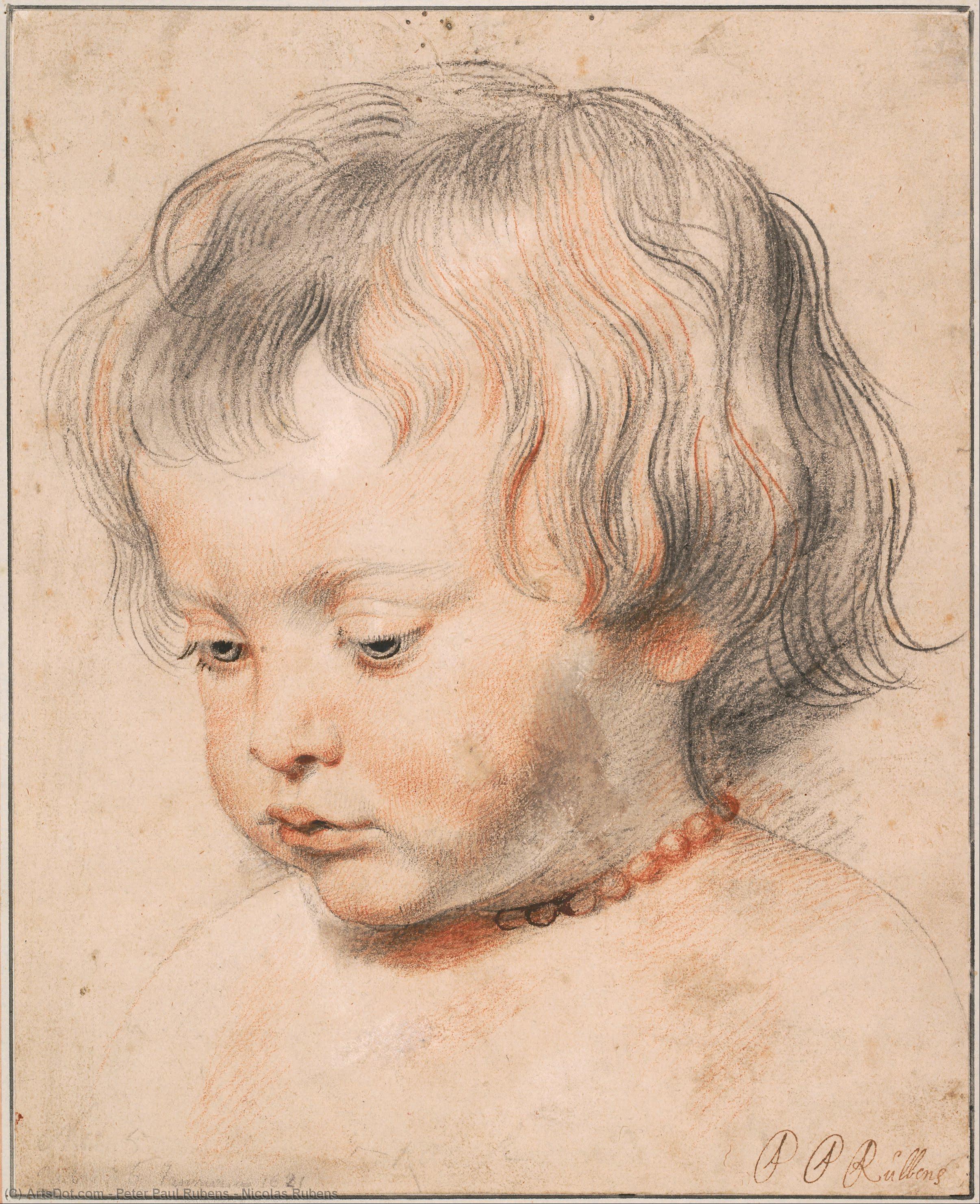
Nicolas Rubens
The painting "Nicolas Rubens" by Peter Paul Rubens is a captivating example of Baroque portraiture, showcasing the artist’s mastery in capturing the essence of his subjects. Created in 1619, this chalk drawing measures 25 x 20 cm and is a testament to Rubens' skill in conveying emotion through subtle expressions.
The Subject: Nicolas Rubens
Nicolas Rubens, the subject of the painting, was likely a young relative or family member of Peter Paul Rubens. The child’s serious expression and elegant attire suggest a sense of dignity and refinement, characteristic of Baroque portraiture. The pearl necklace around the child's neck adds an air of sophistication, highlighting the importance of detail in Rubens’ work.
Artistic Style: Baroque
The painting is executed in the Baroque style, which emphasizes dramatic lighting, intense emotions, and highly realistic depictions. Rubens was a leading figure in this movement, known for his ability to infuse his subjects with life and energy. The use of chalk as the medium allows for delicate shading and texture, adding depth to the portrait. This technique—particularly Rubens’ masterful handling of tonal variations—creates an illusion of volume and realism that distinguishes Baroque art from its predecessors.
Historical Context
During the 17th century, portraiture played a significant role in European art, particularly among the aristocracy. Paintings like "Nicolas Rubens" served not only as representations of individuals but also as symbols of status and wealth. The Kunstsammlungen Graf von Schönborn Pommersfelden, Germany, houses an extensive collection of Baroque art, including works by Peter Paul Rubens. These commissions reflected the patronage system prevalent at the time—rulers and wealthy families sought artists to commemorate their lineage and achievements.
Relevance in Modern Art
The history of painting, as outlined on Kunstsammlungen Graf von Schönborn Pommersfelden, Germany demonstrates the continuous evolution of artistic styles and techniques. The Baroque period, with its emphasis on realism and emotion, laid the groundwork for subsequent art movements. Artists today often revisit Baroque principles—such as dramatic composition and expressive color—to achieve similar effects in contemporary works.
Other Works by Peter Paul Rubens
Peter Paul Rubens was a prolific artist, creating numerous works that are now considered masterpieces of the Baroque era. Some notable paintings include:
- Nicolaas Rubens Wearing a Coral Neckless
- Albert Rubens
- Nicolas Rubens
- Girl with Fan
These works, available for viewing on ArtsDot.com showcase the artist's versatility and skill in capturing a range of subjects and emotions.
Conclusion
“Nicolas Rubens” by Peter Paul Rubens is a remarkable example of Baroque portraiture, highlighting the artist’s ability to convey depth and emotion through subtle expressions. As part of the broader history of painting, this work demonstrates the enduring influence of Baroque art on subsequent artistic movements. For those interested in exploring more about the history of painting, visit Wikipedia's History of Painting for a comprehensive overview.