A Portrait in Baroque Grandeur: Nicolas Trigault
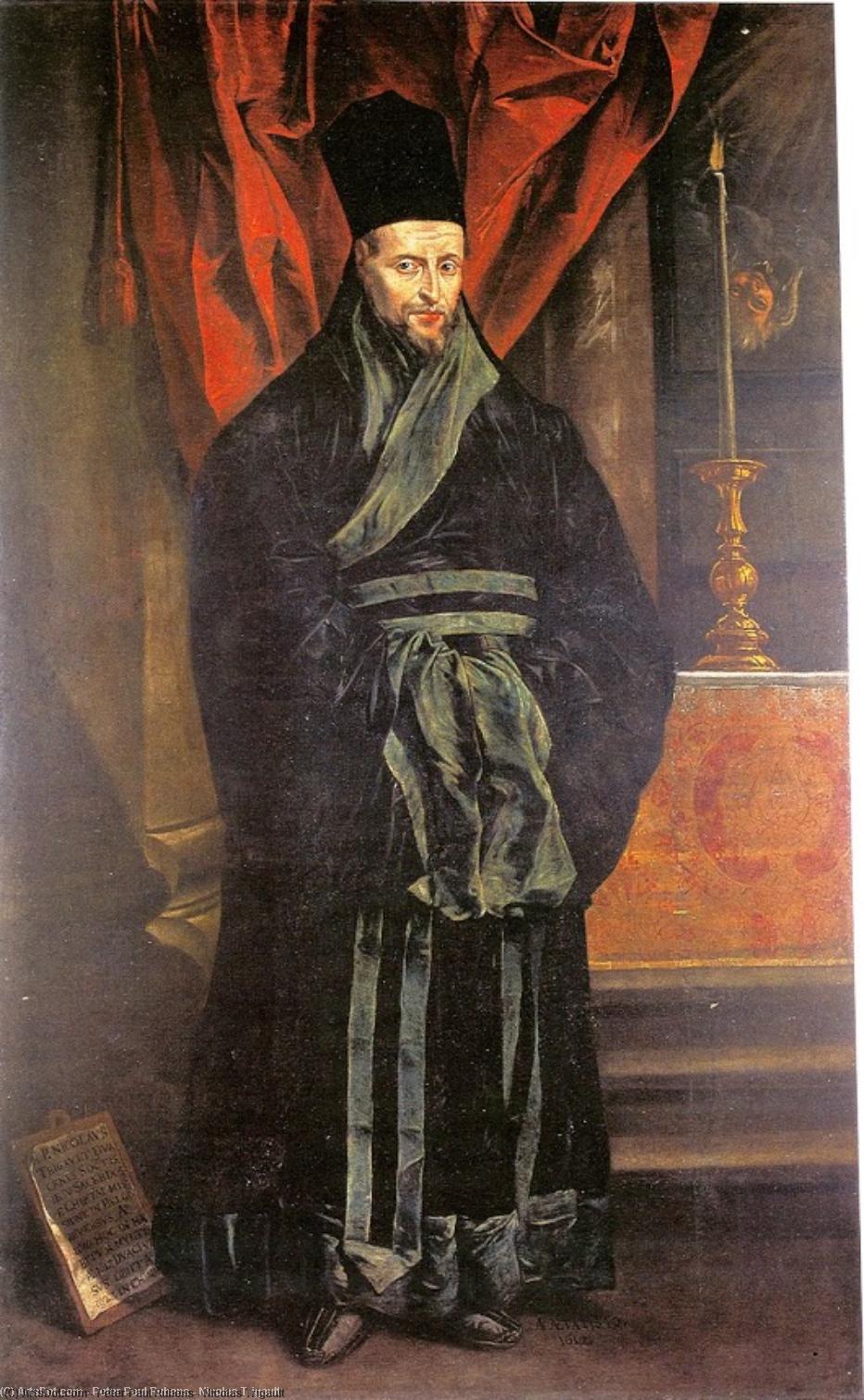
To stand before Peter Paul Rubens’ depiction of Nicolas Trigault is to step directly into the vibrant, dramatic heart of the early seventeenth century. This oil on panel, executed in 1617, is not merely a likeness; it is a carefully constructed tableau vivant, brimming with the intellectual weight and opulent drama characteristic of the Baroque period. The subject himself, portrayed in solemn black robes, commands attention as he stands beside a rich, crimson curtain—a splash of theatrical color that immediately draws the eye and sets the tone for the entire composition.
Mastery of Form and Light
Rubens’ technique here is nothing short of masterful. The handling of the oil paint allows him to achieve both profound realism in the textures—the fold of the velvet curtain, the sheen on the black fabric, the subtle stubble of the beard—and an almost theatrical dynamism. Observe the interplay between light and shadow; it is a hallmark of Baroque genius. Light seems to emanate from an unseen source, catching the edges of the man’s hat, illuminating the pages of the book held gently in his hand, and highlighting the polished gleam of the candlesticks resting upon the nearby table. This dramatic chiaroscuro effect gives the portrait an immediate sense of depth and narrative tension.
Symbolism and Intellectual Depth
The objects surrounding Nicolas Trigault are as significant as the man himself. The book he holds suggests scholarship, learning, and perhaps a dedication to theological or historical texts. Coupled with the formal setting—the rich drapery and the ceremonial candlesticks—the painting elevates the sitter from a mere individual to a figure of considerable intellectual or ecclesiastical standing. Rubens was renowned for embedding layers of meaning into his works, and here, the formality speaks to an era where portraiture often served not just to record appearance, but to proclaim status, piety, and erudition.
A Touch of Baroque Emotion
The emotional resonance of this piece is palpable. While the subject’s expression is composed, there is an underlying gravity that speaks to the turbulent times Rubens lived through—a time marked by religious upheaval and shifting political tides. The entire composition vibrates with a controlled energy; it is stately yet alive. For those who appreciate art that demands contemplation, this work offers a window into a world of heightened emotion, rich materiality, and profound human dignity. Owning a reproduction allows one to bring this sophisticated blend of historical narrative and artistic splendor into the modern home, transforming any space into a gallery worthy of such grandeur.