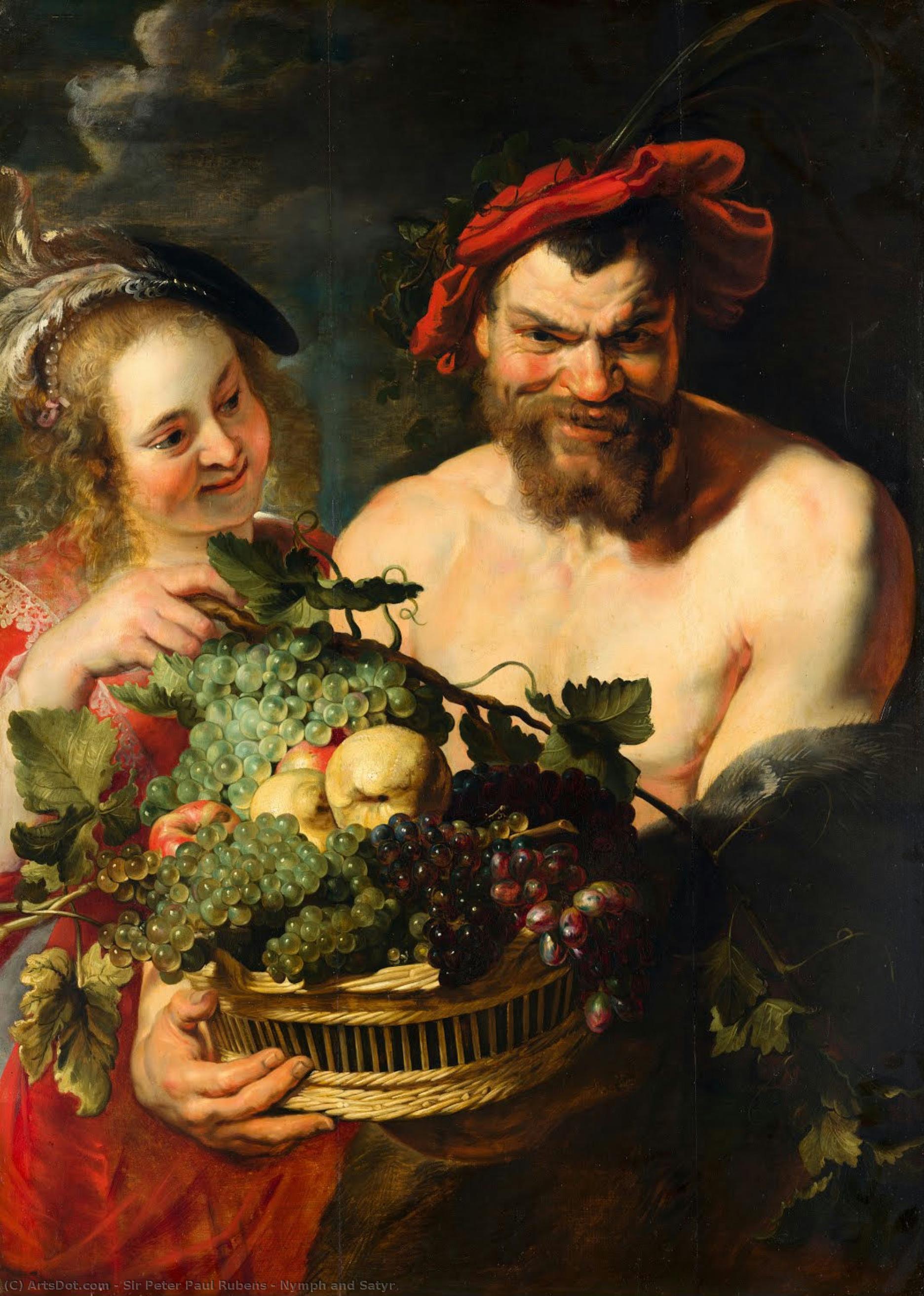
A Symphony of Mythic Desire: Rubens’ Nymph and Satyr
In the grand tapestry of the Baroque era, few threads are as vibrant or as pulse-quickening as those woven by Sir Peter Paul Rubens. His masterpiece, “Nymph and Satyr,” is not merely a painting but a visceral experience—a theatrical encounter that invites the viewer into a world where the boundaries between the divine and the earthly dissolve. At its heart, the work presents a captivating tableau of mythological intimacy: a nymph, embodying the ethereal purity of nature, and a satyr, the embodiment of untamed, carnal impulse, caught in a moment of playful tension amidst a bountiful harvest. The scene is heavy with the scent of ripe grapes and the warmth of a sun-drenched pastoral landscape, creating an atmosphere that is simultaneously light-hearted and profoundly sensual.
The technical brilliance of Rubens is on full display through his masterful command of chiaroscuro. He orchestrates a dramatic interplay between light and shadow that breathes life into the figures, making the skin of the nymph appear almost luminous against the deeper, more shadowed recesses of the forest. His brushwork is nothing short of energetic; one can sense the movement in the swirling drapery and the rhythmic arrangement of the composition. By employing a pyramidal structure, Rubens provides a sense of classical stability to an otherwise chaotic and exuberant scene, guiding the eye with effortless grace from the glistening textures of the fruit to the expressive, emotive faces of his subjects. The palette is a triumph of Baroque opulence, utilizing deep crimsons, radiant golds, and lush greens to evoke a sense of vitality that feels as though it might spill off the canvas.
Historical Grandeur and Symbolic Depth
To understand “Nymph and Satyr,” one must look toward the era of Habsburg splendor in which it was conceived. Created during a period of immense political and artistic fervor, the painting reflects the courtly desire for works that projected both regal magnificence and classical erudition. The juxtaposition of the nymph and the satyr serves as a profound allegory for the eternal struggle and eventual harmony between innocence and instinct. The abundance of the harvest—the overflowing baskets of grapes—acts as a symbol of fertility, prosperity, and the bountiful gifts of the earth, themes that resonated deeply with the aristocratic patrons of the 17th century who sought to celebrate the richness of their own era through the lens of antiquity.
For the discerning collector or interior designer, this artwork offers more than just aesthetic beauty; it provides a focal point of profound emotional resonance. A high-quality reproduction of this piece brings with it an air of historical sophistication and a sense of timeless drama. Whether placed in a sunlit gallery or a moody, classically appointed study, the painting’s ability to command attention through its rich textures and narrative depth makes it an incomparable addition to any curated space. It is an invitation to contemplate the beauty of the human condition—the delicate balance between our highest ideals and our most primal desires—wrapped in the unparalleled splendor of Rubens’ legendary hand.