Introduction to the Artist and his Work
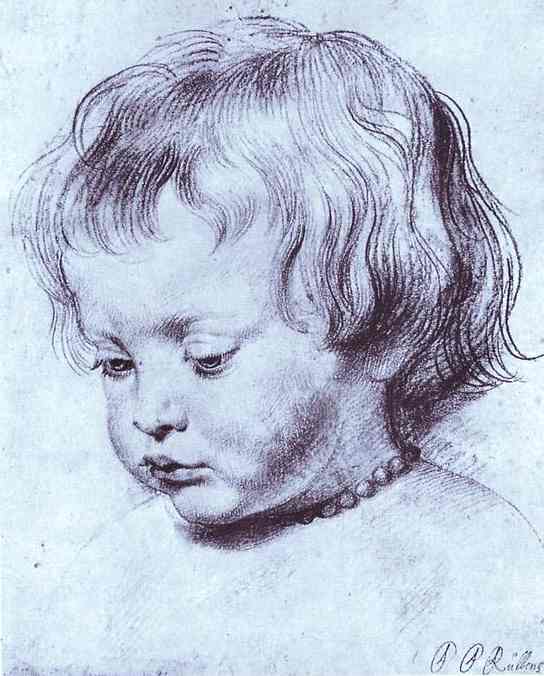
Peter Paul Rubens, born in 1577, was a Flemish artist who is widely regarded as one of the most influential painters of the Baroque period. He was known for his dynamic and sensuous style, which he used to depict religious and mythological subjects, as well as portraits and landscapes. One of his most famous works is the
Portrait of a Boy, also known as
Nicholas Rubens.
Background and Description of the Painting
The
Portrait of a Boy was painted in 1619, when Rubens's eldest son, also named Nicholas, was just ten years old. The painting shows the young boy dressed in fine clothing, with a serious expression on his face. He is depicted in three-quarter view, with his head turned slightly to the side. The background of the painting is simple, with a dark brown color that provides a stark contrast to the bright white collar and cuffs of the boy's shirt. The use of chiaroscuro, or the contrast between light and dark, creates a sense of depth and volume in the painting.
Interpretation and Significance
The
Portrait of a Boy is a powerful example of Rubens's skill as a portrait painter. The serious expression on the boy's face, combined with his formal attire, suggests a sense of dignity and maturity beyond his years. At the same time, the softness of his features and the delicate brushwork used to depict them remind us that he is still just a child. The painting is also notable for its technical mastery. Rubens's use of color and light creates a sense of depth and volume, while his skillful handling of the paint gives the surface a velvety texture. The result is a portrait that is both lifelike and visually stunning.
Conclusion
The
Portrait of a Boy by Peter Paul Rubens is a masterful example of Baroque portraiture. Its combination of technical skill, emotional depth, and visual beauty make it a work that continues to captivate viewers today. If you're interested in learning more about this painting or other works by Rubens, be sure to check out the extensive collection of handmade oil paintings reproductions available at
ArtsDot.com.
References