A Glimpse into Renaissance Ambition: Rubens’s Early Portrait
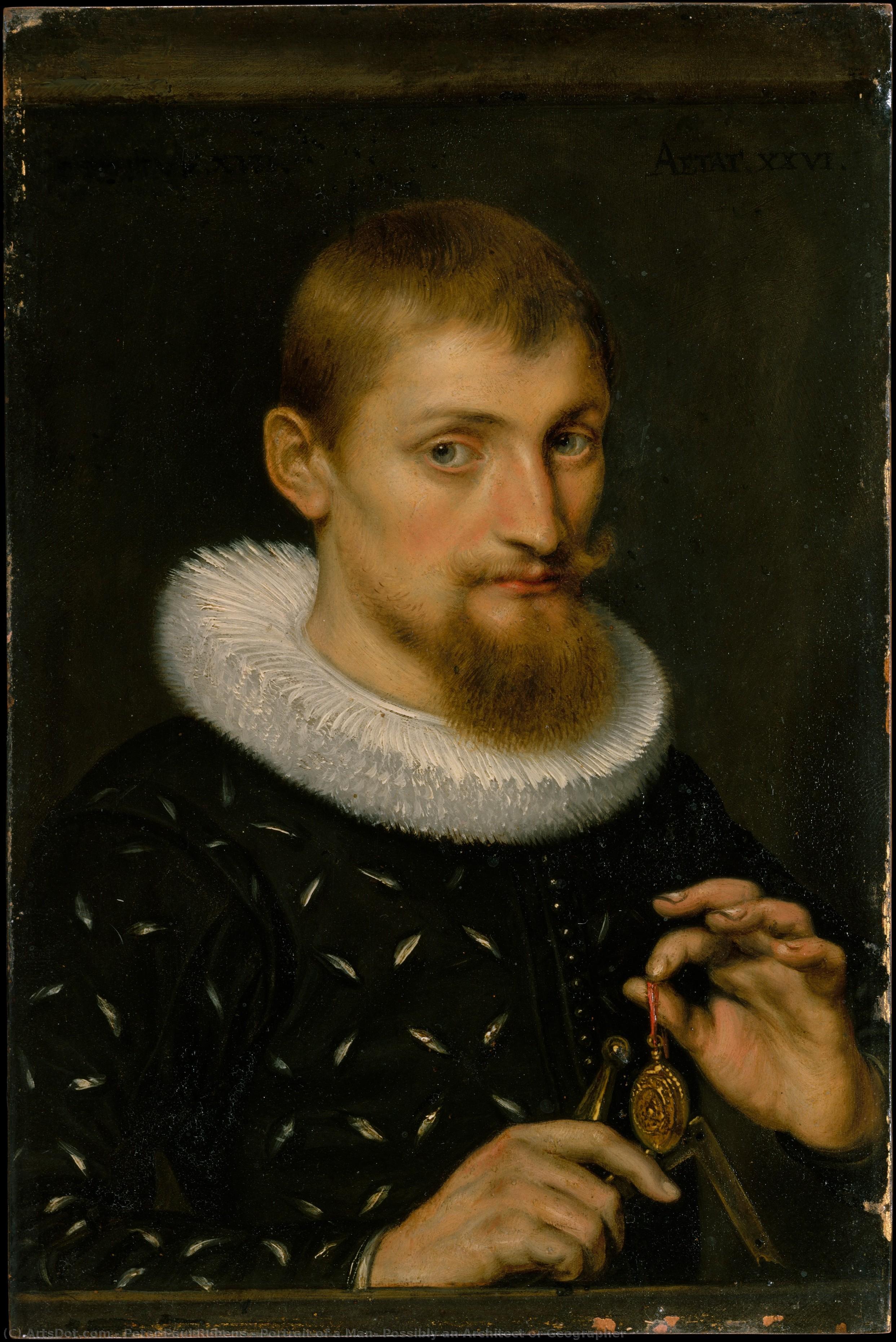
This exquisite oil on copper portrait, dating back to 1597, offers a rare and intimate window into the burgeoning artistic world of Sir Peter Paul Rubens. Often referred to as “Portrait of a Man, Possibly an Architect or Geographer,” this work represents one of the earliest known paintings definitively attributed to the master himself, predating his pivotal move to Italy and marking a crucial stage in his development as a portraitist. The painting’s quiet intensity immediately draws the viewer in; it's not merely a likeness but a carefully constructed tableau brimming with subtle symbolism and hinting at a life of intellectual pursuit.
The Man and His Tools
The subject, rendered in Rubens’s signature style – characterized by dynamic composition and rich, vibrant color – is presented in profile, his gaze direct and contemplative. He possesses the hallmarks of a man accustomed to observation and precision: short, curly hair framing a full beard and mustache, suggesting both learning and perhaps a certain worldly experience. Crucially, he holds three objects that speak volumes about his potential profession or interests. A watch, an architect’s square, and dividers – tools of measurement and design – are all carefully displayed, immediately prompting the question: was this man an architect, a surveyor, or perhaps even a geographer? The inclusion of the timepiece is particularly noteworthy; it's a recurring motif in Rubens’s work, often serving as a poignant reminder of mortality and the fleeting nature of time—a subtle meditation on human existence woven into a portrait.
Technique and Materials: A Master at Work
The choice of copper as the support is significant. This metal offered Rubens an unparalleled level of detail and durability, allowing him to achieve the remarkable luminosity and depth evident in this painting. The application of oil paint itself demonstrates his mastery; note the meticulous rendering of the lace collar, a testament to his attention to texture and surface quality. Rubens’s use of light and shadow is particularly effective, creating a sense of three-dimensionality that brings the subject to life. The dark background serves not as mere emptiness but as a carefully considered device, further emphasizing the figure and directing the viewer's focus entirely onto the man himself.
Symbolism and Context: A Renaissance Mind
The painting’s creation in 1597 places it firmly within the late Northern Renaissance period. Rubens, having received a humanist education, was deeply influenced by classical ideals of beauty and proportion. The man's attire – the black doublet with white lace – speaks to his social standing and reflects the fashion trends of the time. Beyond the immediate visual elements, the portrait embodies the intellectual curiosity characteristic of the era. The inclusion of tools suggests a mind engaged in rational thought, measurement, and perhaps even exploration—qualities highly valued during this period of burgeoning scientific discovery. The signature “Avernus” at the lower right corner remains an intriguing mystery; it could be a pseudonym or simply an indication of the artist’s workshop.
ArtsDot offers meticulously crafted hand-painted reproductions of this captivating portrait, allowing you to bring its beauty and historical significance into your home or office. Each reproduction captures the essence of Rubens's artistry, faithfully recreating the painting’s rich colors, intricate details, and profound emotional impact. Consider this piece not just as a decoration but as a window into the mind of a Renaissance man – a testament to ambition, intellect, and the enduring power of art.