A Glimpse into Baroque Grace: Unveiling Rubens’ ‘Portrait of a Young Woman’
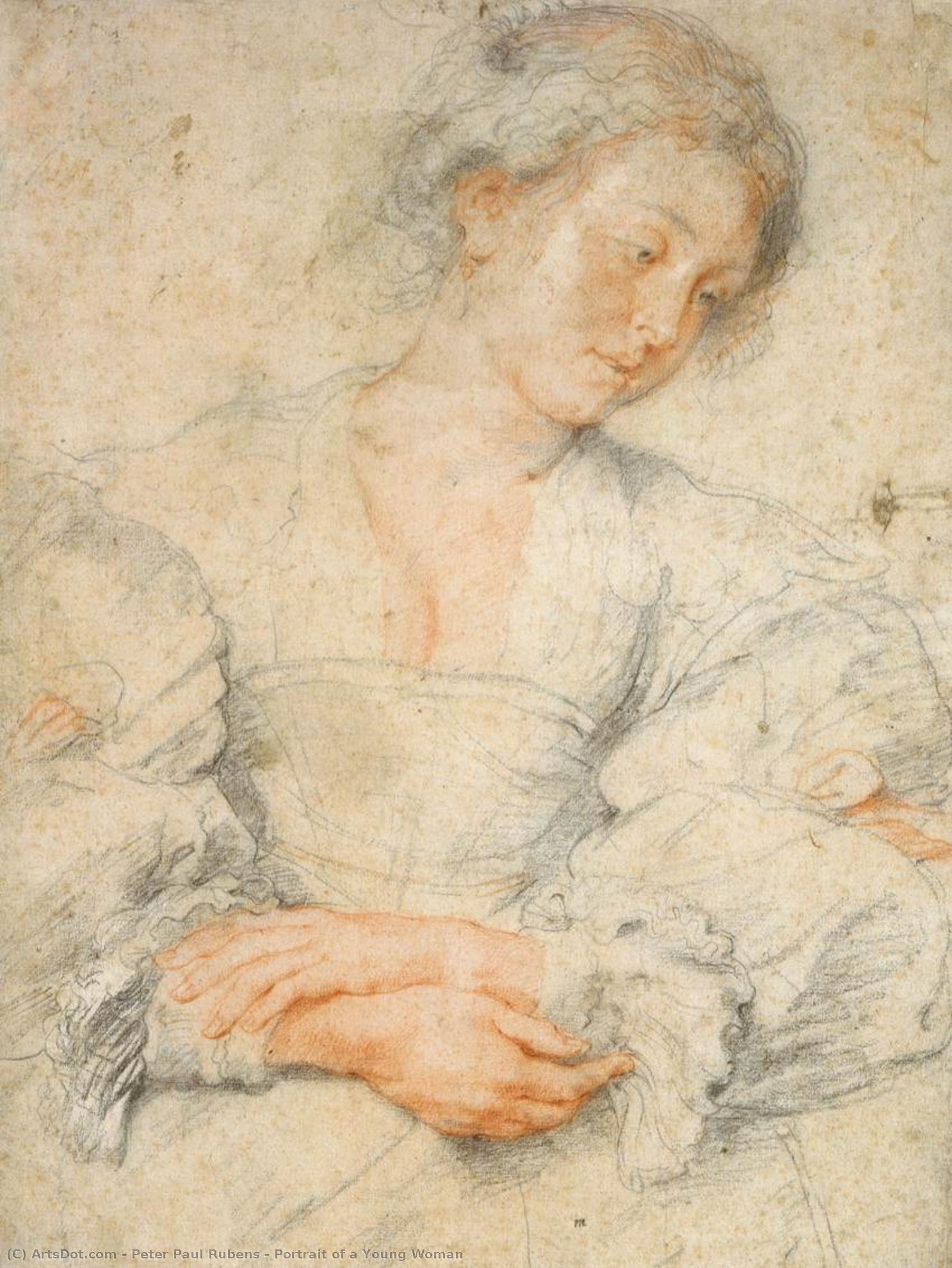
Sir Peter Paul Rubens' “Portrait of a Young Woman,” painted in 1636, is more than just a depiction of a beautiful face; it’s a window into the heart of the Baroque era and a testament to Rubens’ mastery of color, light, and psychological depth. This intimate study, rendered on paper with chalk—a technique favored by the artist for its immediacy and delicate tonal variations—captures a young woman in a moment of quiet contemplation. Her downward gaze, seemingly lost in thought or perhaps observing something just beyond the frame, immediately draws us into her world, inviting speculation about her inner life.
Rubens, born in Siegen, Germany, and shaped by a childhood marked by displacement and his father’s conversion to Calvinism, brought a profound sense of drama and emotional intensity to his work. This painting exemplifies that characteristic – it's not merely a likeness but an exploration of mood and feeling. The subtle shading around her eyes and mouth suggests a complex range of emotions, hinting at both vulnerability and resilience. The composition itself is deceptively simple: the figure occupies nearly all of the canvas, creating a sense of intimacy and drawing the viewer close.
Baroque Dynamics and the Language of Color
As a leading figure in the Baroque movement, Rubens was renowned for his dynamic compositions, vibrant color palettes, and masterful use of light. In “Portrait of a Young Woman,” he employs these techniques with exquisite precision. The muted tones of her dress—a rich, dark fabric—provide a grounding contrast to the luminous highlights that illuminate her face and hands. Notice how the chalk creates subtle gradations of tone, mimicking the way light would fall upon skin, adding an incredible sense of realism and texture. The artist’s signature use of chiaroscuro – the dramatic interplay between light and shadow – further enhances the painting's emotional impact, creating a captivating visual rhythm.
Rubens was not simply a painter; he was a scholar deeply immersed in classical mythology and philosophy. This intellectual background is evident in the subtle symbolism woven into the portrait. The downward gaze, for instance, has been interpreted as representing contemplation or perhaps even melancholy – emotions frequently explored in Baroque art. The pose itself echoes Renaissance ideals of beauty and grace, while simultaneously injecting a distinctly Baroque sense of drama and emotional intensity.
A Legacy of Portraiture and Artistic Innovation
“Portrait of a Young Woman” stands as a remarkable example of Rubens’ evolving style during the mid-17th century. It showcases his growing confidence in capturing psychological depth and his increasingly sophisticated understanding of color and light. The painting's influence can be seen in countless portraits that followed, demonstrating Rubens’ lasting impact on the history of art. The work is a testament to his skill as both a painter and a diplomat, reflecting his ability to capture not just physical likeness but also the essence of his subject.
ArtsDot offers meticulously crafted hand-painted reproductions of this iconic masterpiece, allowing you to experience the beauty and emotional power of Rubens’ “Portrait of a Young Woman” in stunning detail. Each reproduction is created by skilled artists using traditional techniques, ensuring an authentic representation of the original while capturing the vibrant colors and nuanced details that define this timeless work of art.