A Moment Frozen in Baroque Splendor
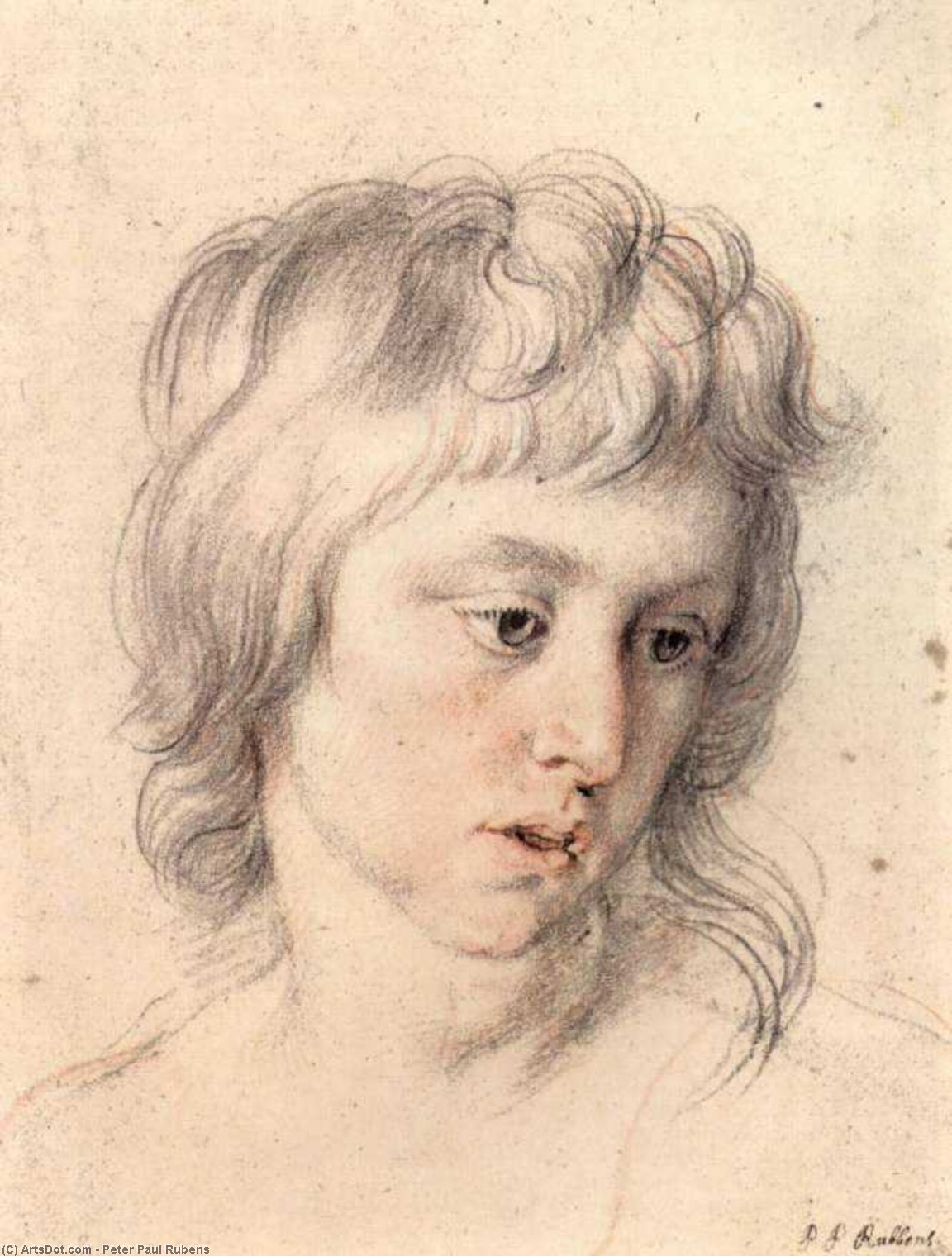
In the intimate realm of seventeenth-century portraiture, few works capture the fleeting innocence of youth with as much profound tenderness as Peter Paul Rubens’ Portrait of Boy. Created around 1630, this exquisite piece serves as a window into the soul of the Baroque era, moving away from the grand, sweeping allegories for which Rubens is often celebrated to focus on a singular, quiet moment of human reflection. The subject, a young boy with a crown of soft, chestnut curls, gazes thoughtfully toward an unseen horizon. His expression is not one of simple childhood joy, but rather a contemplative stillness that suggests a depth of character far beyond his years. This subtle psychological complexity is what draws the viewer into a silent dialogue with the sitter, making the painting feel less like a historical relic and more like a living presence.
The technical mastery displayed in this small-scale masterpiece—measuring a delicate 29 x 22 cm—is nothing short of breathtaking. Rubens, a titan of the Flemish Baroque, utilizes his characteristic brushwork to breathe life into the textures of the boy's world. The luminous white of his shirt is rendered with a sophisticated play of light and shadow, capturing the way fabric catches the glow of an ambient, soft light source. Every curl of the boy's hair is treated with a rhythmic vitality, while the skin tones possess a warm, lifelike translucency that only a master of oil painting could achieve. The artist employs a masterful use of chiaroscuro, allowing the subject to emerge from a muted, atmospheric background, thereby focusing all emotional weight onto the boy's face and his searching gaze.
Historical Resonance and Timeless Elegance
To behold this portrait is to touch the legacy of one of history's most influential cultural architects. Born in Siegen and shaped by the turbulent religious landscapes of Europe, Rubens brought a unique sense of drama and resilience to his art. In this particular work, we see the softer side of his genius—the ability to translate the monumental energy of the Baroque into an intimate, domestic scale. For the discerning collector or interior designer, this painting offers more than mere decoration; it provides a focal point of profound elegance. Its compact dimensions make it an ideal choice for curated gallery walls or as a sophisticated accent in a study or library, where its quiet intensity can be appreciated in close proximity.
Integrating a high-quality reproduction of this Rubens masterpiece into a contemporary space allows for a seamless blend of historical grandeur and modern refinement. The painting’s neutral palette and classical composition harmonize beautifully with both traditional period interiors and minimalist modern aesthetics. It serves as an anchor of sophistication, evoking a sense of timelessness and intellectual depth. Whether one is drawn to the technical brilliance of the Flemish masters or the emotional resonance of a child's quiet contemplation, this portrait remains an enduring testament to the power of art to capture the ephemeral beauty of the human spirit.