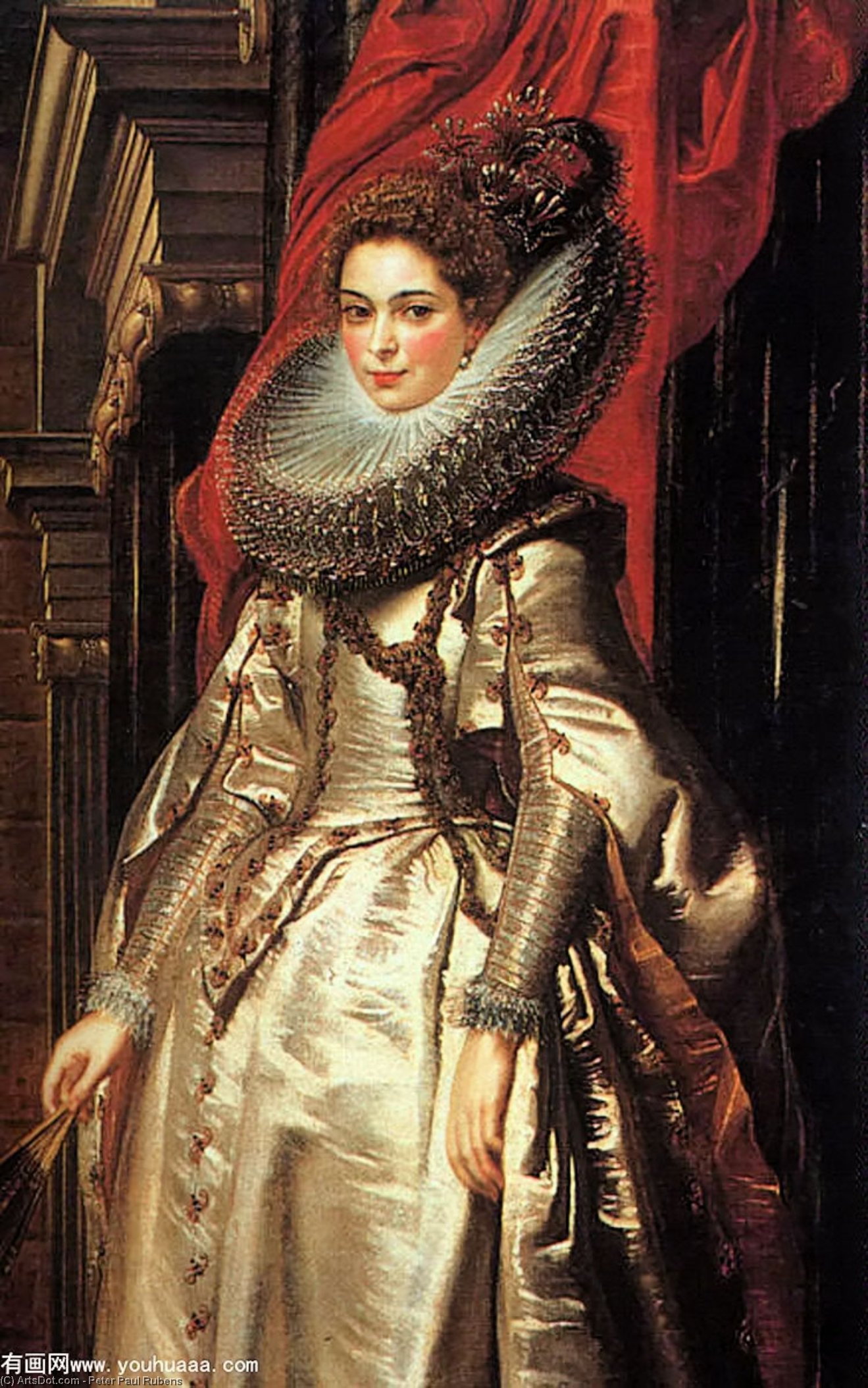
A Glimpse of Genoese Grandeur: Peter Paul Rubens’ Portrait of Marchesa Brigida Spinola Doria
The National Gallery of Art in Washington holds within its walls a captivating testament to the height of Baroque artistry – Peter Paul Rubens' 1606 portrait of Marchesa Brigida Spinola Doria. More than just a likeness, this painting is a meticulously crafted tableau of wealth, status, and subtle sensuality, offering a rare window into the life of an aristocratic woman in Renaissance Italy. It’s a work that speaks volumes through its carefully orchestrated composition, vibrant colors, and masterful use of light and shadow – elements characteristic of Rubens' signature style and deeply rooted in the artistic currents of his time.
Rubens, born in Siegen, Germany in 1577, was already establishing himself as a leading figure in the Flemish Baroque when he undertook this commission. His early travels to Italy proved transformative, exposing him to the innovations of masters like Caravaggio and Raphael. This exposure profoundly influenced his approach to painting, particularly his dramatic use of *chiaroscuro* – the stark contrast between light and dark – which imbues the portrait with a palpable sense of drama and depth. The Marchesa’s pose, her direct gaze towards the viewer, immediately commands attention, drawing us into her world.
The Woman and Her World
Marchesa Brigida Spinola Doria was not merely a subject; she was a person of considerable standing within Genoese society. Married to Marchese Giacomo Massimiliano Doria in 1605, she represented the powerful and influential Doria family – a lineage steeped in history and wealth. The portrait itself was created shortly after their wedding, capturing her at a pivotal moment in her life. The setting is crucial to understanding the painting’s significance; it depicts her standing before a doorway within what appears to be a grand villa or palazzo, suggesting a life of privilege and access to opulent surroundings. The red curtain and checkered pattern behind her add layers of visual richness, creating a luxurious backdrop that underscores her elevated status.
Notice the details: the elaborate ruffled collar, indicative of fashionable attire at the time; the sumptuous red dress, rich in texture and color; and the lace-up corset – a subtle yet powerful symbol of feminine elegance. These elements collectively communicate a sense of refined taste and wealth. The careful rendering of her jewelry—a glittering cascade of gems—further emphasizes her position within society.
Baroque Brilliance: Technique and Style
Rubens’ mastery is evident in every brushstroke. He employs a technique known as *impasto*, applying thick layers of paint to create texture and vibrancy, particularly noticeable in the folds of the fabric and the highlights on her skin. The colors are intensely rich and saturated – reds, blues, and golds dominate the palette—reflecting the Baroque preference for dramatic intensity. The composition is carefully balanced, with the Marchesa’s figure occupying a central position within the frame, drawing our eye to her face and posture.
Furthermore, Rubens' use of perspective creates a sense of depth and realism. The doorway behind her leads the viewer's eye into the background, while the subtle details in the checkered pattern add visual interest. The painting isn’t simply a representation; it’s an experience—a carefully constructed illusion designed to engage all our senses.
Symbolism and Legacy
Beyond its aesthetic qualities, the portrait carries symbolic weight. The Marchesa's direct gaze suggests confidence and authority – traits valued in aristocratic women of the period. Her posture, with her hands resting on her hips, conveys a sense of poise and self-assurance. The painting serves as both a celebration of her beauty and a testament to her social standing. It’s a powerful image that encapsulates the ideals of wealth, status, and feminine grace within the context of 17th-century Genoa.
Today, this remarkable portrait remains a cornerstone of the National Gallery of Art's collection, offering viewers an intimate glimpse into the world of Renaissance aristocracy. For those seeking to own a piece of art history, ArtsDot offers meticulously crafted hand-painted reproductions that faithfully capture the beauty and artistry of Rubens’ masterpiece – allowing you to bring this captivating image into your home or office.