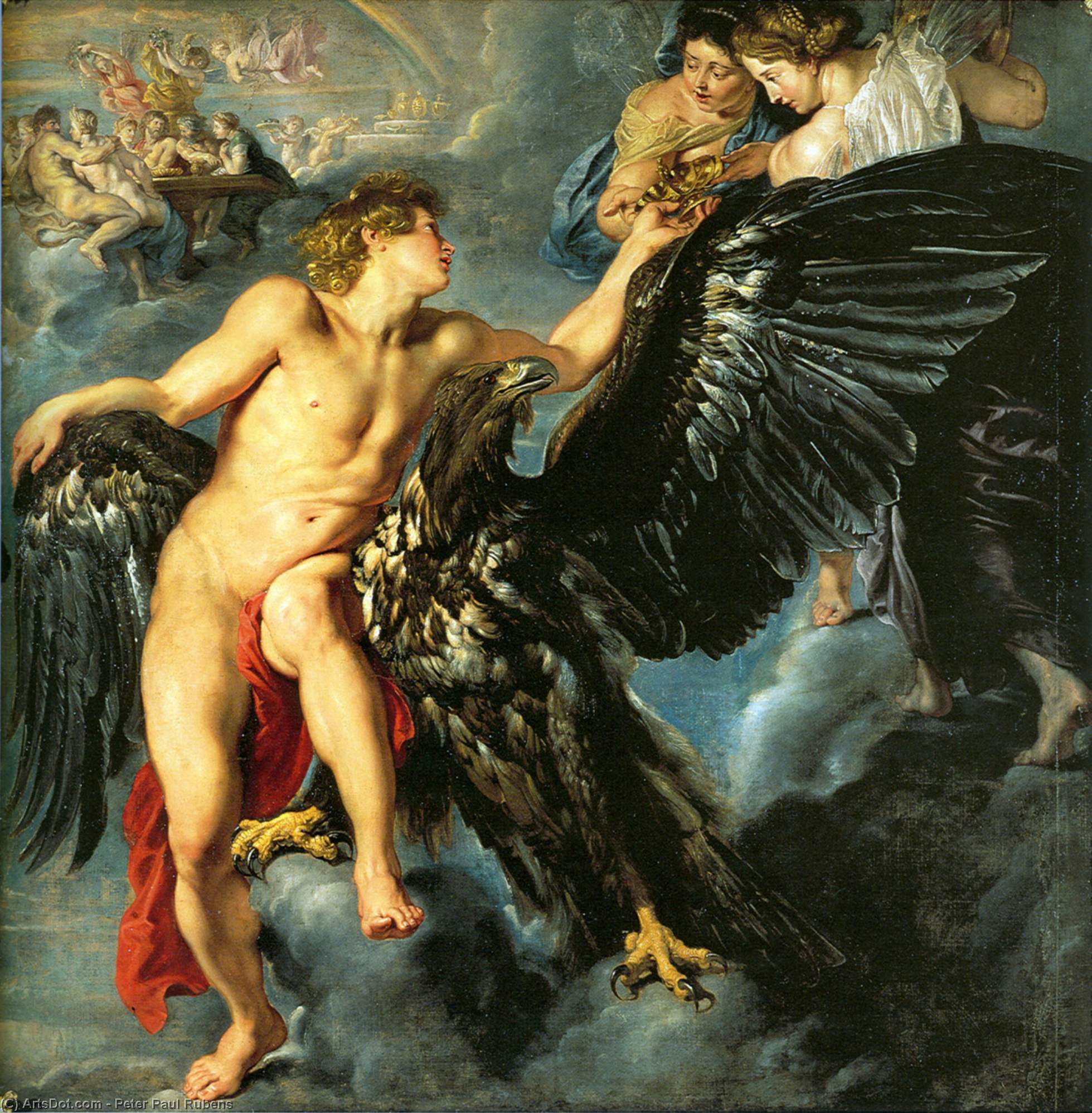
The Rape of Ganymede: A Baroque Masterpiece by Peter Paul Rubens
- Title: Rape of Ganymede
- Artist: Peter Paul Rubens
- Date: 1612
- Dimensions: 203 x 203 cm
- Location: The Museum Senate of Belgium (Belgium)
Subject and Narrative
“The Rape of Ganymede” depicts a pivotal scene from Greek mythology, immortalized by Ovid in his *Metamorphoses*. It portrays the abduction of Ganymede, a strikingly beautiful Trojan youth, by Zeus, king of the gods. Disguised as an eagle, Zeus swoops down and carries Ganymede away to Mount Olympus, where he becomes the cupbearer for the gods, serving nectar and ambrosia at their feasts. The painting captures this dramatic moment of abduction, showcasing a blend of power, desire, and divine intervention.
Artistic Style and Technique
Rubens’s signature Baroque style is vividly displayed in “The Rape of Ganymede.” Characterized by dynamic movement, rich colors, and sensual depictions, the painting exemplifies the exuberance and drama of the era. Rubens masterfully employs chiaroscuro – the dramatic contrast between light and shadow – to heighten the emotional intensity of the scene. The figures are rendered with a palpable sense of energy, their bodies twisting and turning in a whirlwind of action. The use of vibrant pigments and layered brushstrokes creates a luxurious texture that draws the viewer into the heart of the mythological narrative. Rubens’s ability to capture fleeting moments and infuse them with emotion is a hallmark of his artistic genius.
Symbolism and Interpretation
Beyond its captivating depiction of a mythological tale, “The Rape of Ganymede” is rich in symbolism. Zeus's transformation into an eagle represents his divine power and authority; the eagle being his sacred animal. The abduction itself can be interpreted as a representation of desire, conquest, and the blurring of boundaries between mortal and immortal realms. The presence of other figures – possibly Venus or angelic beings – adds layers of complexity to the scene, suggesting themes of love, beauty, and divine intervention. Ganymede’s youthful beauty and vulnerability further amplify the painting's emotional impact, evoking a sense of both awe and unease.
Historical Context and Rubens’ Legacy
Created in 1612, “The Rape of Ganymede” reflects the artistic climate of the early Baroque period. Peter Paul Rubens (1577-1640) was one of the most influential artists of his time, renowned for his prolific output and innovative style. His work significantly shaped the course of European art, inspiring generations of painters with its dynamism, sensuality, and masterful use of color. As a leading figure in the Antwerp School, Rubens’s paintings were highly sought after by royalty and nobility across Europe, solidifying his reputation as one of history's greatest artists. The painting remains a testament to Rubens’ skill and vision, offering viewers a glimpse into the vibrant world of Baroque art.