A Mythical Foundation: Exploring Rubens’ *Romulus and Remus*
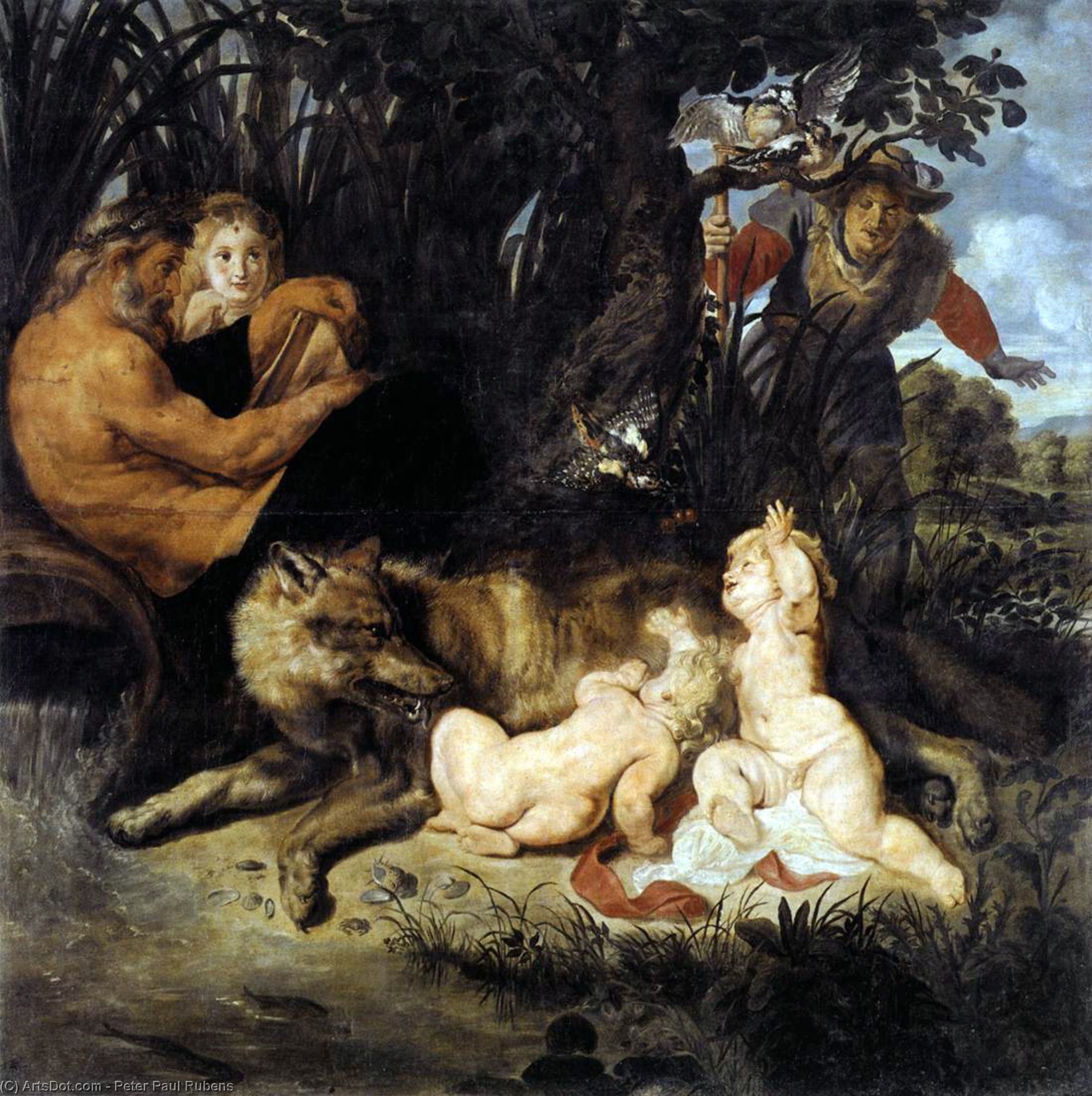
Peter Paul Rubens' 1616 masterpiece, *Romulus and Remus*, is a powerful depiction of the legendary founders of Rome. Executed in oil on canvas with dimensions of 210 x 212 cm, this work exemplifies the dynamism and dramatic flair characteristic of the Flemish Baroque period. The painting doesn’t merely illustrate a story; it invites us into a pivotal moment brimming with potential and foreshadowing.
Composition & Narrative
The scene unfolds with compelling immediacy. Twin infants, Romulus and Remus, lie nestled on the ground, their vulnerability emphasized by their small size. A protective canine figure – interpreted as either a wolf or hyena – stands guard nearby, recalling the myth’s central element of being suckled and sheltered by a she-wolf. In the background, a maternal figure observes, adding a layer of human connection to this otherwise wild setting. A bird perched on a branch introduces an additional detail, perhaps symbolizing divine providence or simply enriching the naturalistic environment. Rubens masterfully employs a pyramidal composition, drawing the eye towards the central figures and creating a sense of stability within the dynamic scene. The interplay of light and shadow sculpts the forms, enhancing their volume and emotional impact.
Rubens’ Baroque Brilliance: Style & Technique
*Romulus and Remus* is a quintessential example of Rubens' Baroque style. His technique showcases an extraordinary command of color, movement, and sensuality. The artist utilizes rich, warm tones – earthy browns, ochres, and reds – to create a visually sumptuous experience.
Impasto, the thick application of paint, is evident in areas like the wolf’s fur and the figures' musculature, adding texture and depth. Rubens’ brushwork is energetic and expressive, conveying a sense of vitality and immediacy. He doesn’t shy away from depicting physicality; the bodies are robust and realistically rendered, reflecting his study of classical sculpture.
Historical Context & Symbolism
Rubens created this work during a turbulent period in European history – the Thirty Years' War. While seemingly focused on ancient mythology, his paintings often subtly reflected contemporary concerns. The story of Romulus and Remus, with its themes of fratricide and the founding of an empire, could be interpreted as a commentary on the political struggles of Rubens’ time. The wolf is not merely a wild animal but a symbol of both primal instinct and protective nurture. The bird may represent hope or divine intervention.
Rubens was renowned for imbuing his works with layers of meaning, inviting viewers to engage in intellectual contemplation alongside aesthetic appreciation.
Emotional Resonance & Lasting Influence
*Romulus and Remus* evokes a complex emotional response. There’s tenderness in the depiction of the infants, anxiety in the presence of the wild animal, and a sense of foreboding knowing the tragic fate that awaits the brothers. Rubens' ability to convey such nuanced emotions is a testament to his artistic genius. His work profoundly influenced the development of the Flemish Baroque tradition and continues to inspire artists today. His paintings, including the famed
Marie de’ Medici cycle, demonstrate his mastery of narrative storytelling through visual art.
Owning a Piece of History
- For collectors: A high-quality reproduction of *Romulus and Remus* offers an opportunity to own a piece of art history, bringing the grandeur of Rubens’ vision into your home.
- For interior designers: This painting's rich colors and dramatic composition make it a striking focal point for any space, adding sophistication and historical depth.
- Further Exploration: Discover more masterpieces by Peter Paul Rubens, including Consequences of War, and explore related works like his Old Woman and The Stigmatization of St. Francis.
ArtsDot.com provides expertly crafted handmade oil painting reproductions, allowing you to experience the beauty and power of Rubens’ *Romulus and Remus* firsthand.