A Baroque Family Portrait Steeped in Symbolism
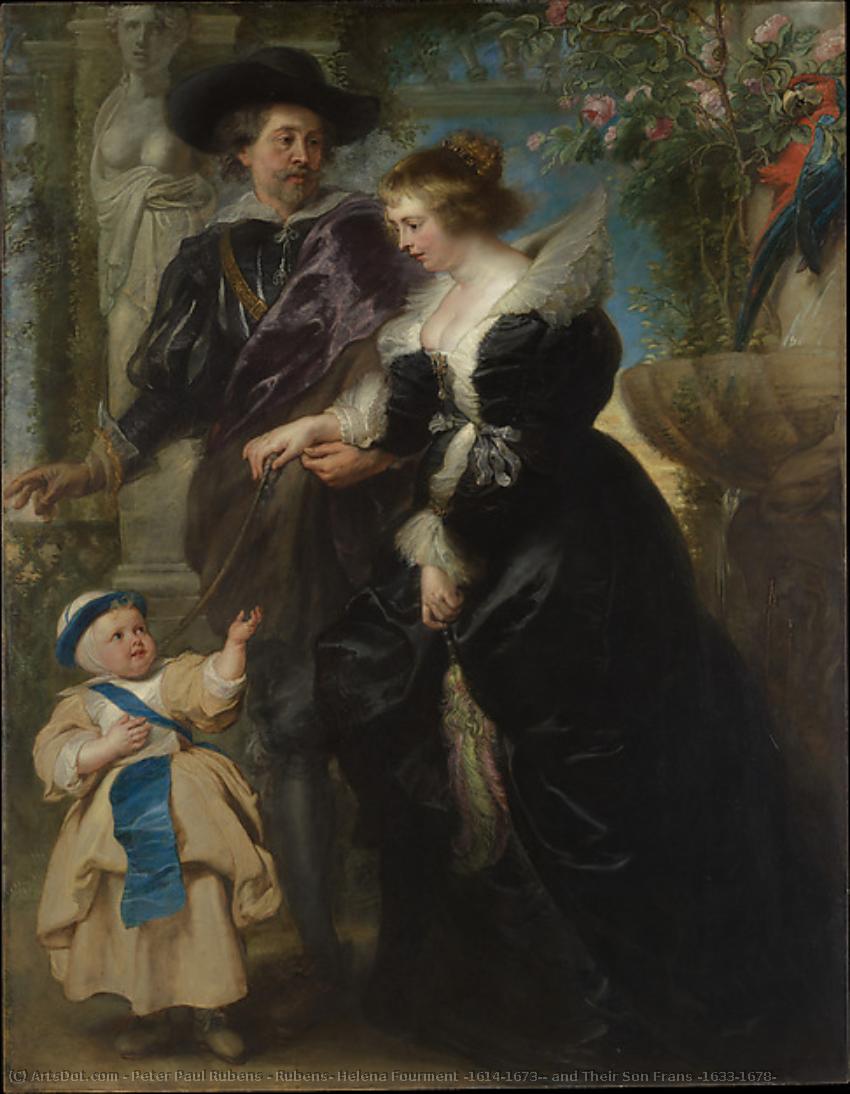
Sir Peter Paul Rubens’s “Rubens, Helena Fourment (1614–1673), and Their Son Frans (1633–1678)” is more than just a portrait; it's a carefully constructed tableau vivant, a window into the life and artistic sensibilities of one of Europe’s most celebrated painters. Completed in 1635, this intimate scene captures Rubens himself alongside his wife, Helena Fourment, and their young son, Frans, within an idealized representation of the lavish gardens surrounding his estate in Antwerp. The painting immediately draws the eye with its vibrant colors – a hallmark of Rubens's signature style – and the dynamic composition that speaks to the artist’s mastery of Baroque principles. It’s a work brimming with layered meaning, reflecting not only the family depicted but also Rubens’s own position as a prominent figure in 17th-century society.
The Artist's Intimate World
Rubens was renowned for his ability to infuse his portraits with a sense of immediacy and psychological depth. This painting is no exception. The setting, a meticulously rendered garden – likely inspired by the gardens at Oudenaarde, where Rubens maintained a country estate – immediately establishes an atmosphere of tranquility and abundance. However, it’s the interaction between the figures that truly captivates. Rubens stands proudly, his posture suggesting authority and nobility, subtly referencing his status as a nobleman through the leather strap across his chest, a detail alluding to the sword he would have carried. The ribbon tied around Frans's chest playfully positions him as his father’s heir, a visual metaphor for legacy and artistic continuation. The inclusion of the two secondary figures – one at the top right, holding a bowl, and another at the bottom left – adds an element of narrative complexity, perhaps suggesting attendants or servants within this carefully curated world.
A Study in Contrasts: Flesh and Form
Perhaps the most compelling aspect of the painting lies in the juxtaposition of Rubens’s own physical characteristics with those of his wife. The artist's weathered face, marked by the passage of time, is contrasted sharply with Helena Fourment’s youthful beauty – her hand, rendered with exquisite detail and a remarkable pearlescent quality, embodies an idealized vision of feminine grace. This deliberate contrast isn’t merely aesthetic; it speaks to the dynamic between Rubens and his muse, a relationship that profoundly influenced his artistic output. Rubens himself often modeled for his own works, blurring the lines between artist and subject, and this painting serves as a potent visual representation of that intimate connection. The physicality itself—the difference in age, texture, and color—is deliberately highlighted, creating a powerful dialogue about beauty, time, and the creative process.
Baroque Grandeur and Artistic Technique
Technically, “Rubens, Helena Fourment (1614–1673), and Their Son Frans (1633–1678)” is a masterpiece of Baroque painting. Rubens’s signature technique—known as ‘terebinthus,’ or ‘rubbing’ – is evident in the richly layered surfaces and the meticulous rendering of textures, from the velvet of the clothing to the foliage of the garden. The use of vibrant color, particularly reds and golds, creates a sense of opulence and drama, characteristic of the period. He employed a loose, painterly style, favoring broad brushstrokes and a dynamic composition that captures movement and energy. This approach was revolutionary for its time, moving away from the more rigid conventions of earlier Renaissance portraiture. The lighting is masterful, creating strong contrasts between light and shadow, further enhancing the drama and highlighting key elements within the scene.
A Timeless Legacy: Reproduction and Inspiration
ArtsDot offers meticulously crafted hand-painted reproductions of this iconic work, allowing art lovers to experience Rubens’s genius in stunning detail. Whether displayed as a statement piece in a grand salon or incorporated into a more intimate interior space, this reproduction captures the essence of the original – its vibrant colors, dynamic composition, and profound emotional resonance. Beyond its aesthetic appeal, “Rubens, Helena Fourment (1614–1673), and Their Son Frans (1633–1678)” offers a glimpse into the life and mind of one of history’s greatest artists, inviting viewers to contemplate themes of family, legacy, beauty, and the enduring power of art. Consider this reproduction not just as an image, but as a portal to a pivotal moment in artistic history.