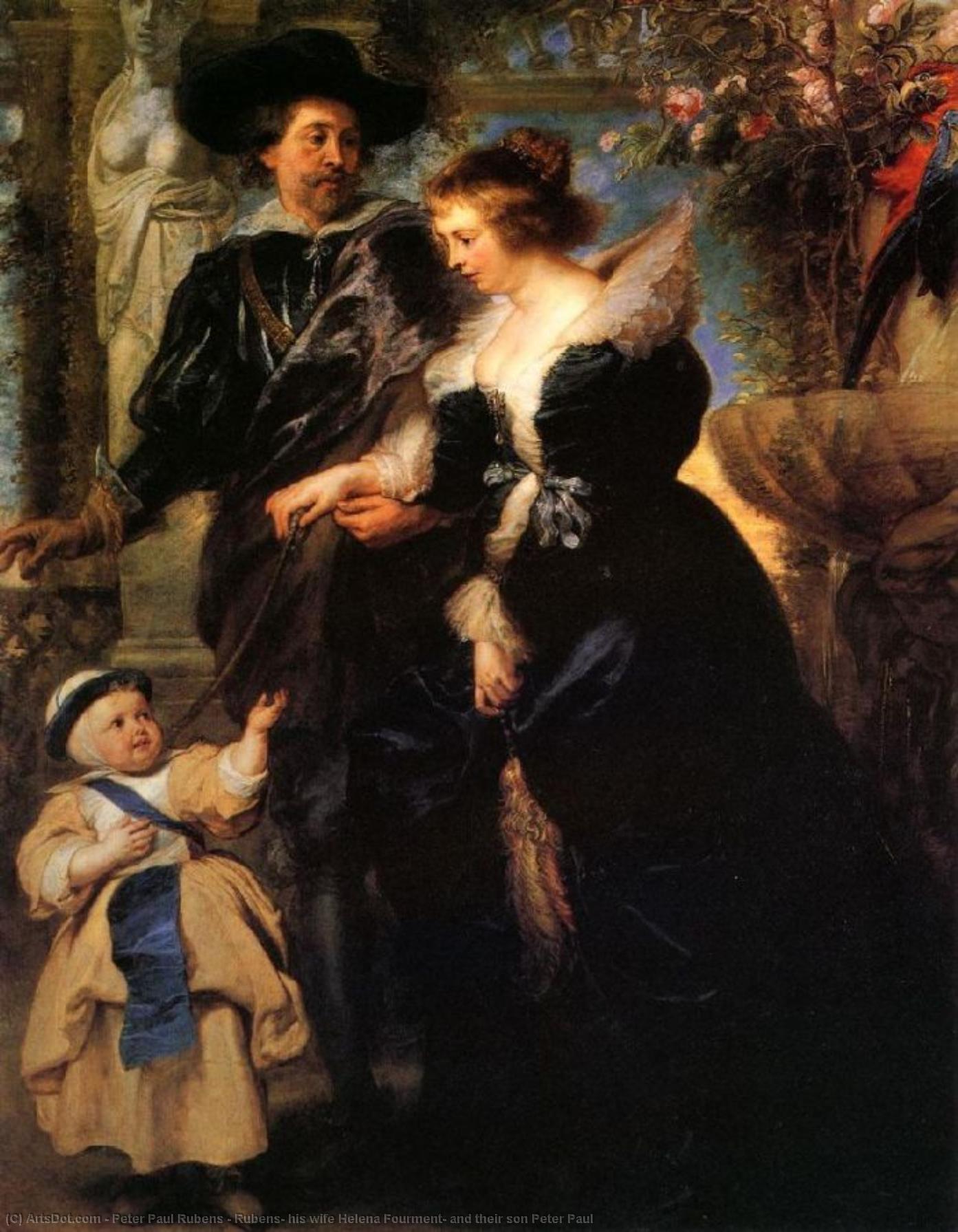
Rubens, his wife Helena Fourment, and their son Peter Paul: A Baroque Portrait of Familial Love
Peter Paul Rubens’ 'Rubens, his wife Helena Fourment, and their son Peter Paul,' painted in 1639, is a quintessential example of the Flemish Baroque style. This oil on panel painting, now residing at the Metropolitan Museum of Art in New York, offers a glimpse into the personal life of one of art history's most celebrated figures while showcasing his mastery of portraiture and composition.
Artistic Context and Composition
Rubens was a leading figure during the Northern Renaissance, renowned for his dynamic compositions, vibrant colors, and dramatic use of light. This painting exemplifies his ability to blend realism with classical influences, creating works that resonated deeply with European audiences. The scene depicts Rubens himself alongside his second wife, Helena Fourment, and their young son, Peter Paul. They stand before a building, the father gazing directly at the viewer, establishing an immediate connection, while Helena and Peter Paul look slightly off-camera, suggesting a shared moment of intimacy. A potted plant in the upper right corner and a vase below add depth to the composition and contribute to the overall sense of domestic tranquility.
Symbolism and Emotional Resonance
Beyond its surface appearance as a family portrait, this painting is rich with symbolism. Rubens’ direct gaze invites the viewer into their world, fostering a feeling of familiarity and warmth. Helena's gentle smile and Peter Paul’s curious expression convey a sense of familial harmony and affection. The inclusion of the potted plant symbolizes growth, prosperity, and beauty—reflecting the flourishing nature of the family unit. The carefully chosen details – the fabrics of their clothing, the subtle nuances in their expressions – all contribute to the painting's emotional depth.
Artistic Techniques and Legacy
Rubens’ skill as an oil painter is evident in the remarkable realism achieved through his meticulous attention to detail. He masterfully employed chiaroscuro—the dramatic contrast between light and shadow—to sculpt the figures, adding volume and dimension. The rich colors and fluid brushstrokes characteristic of Baroque art are also prominently displayed. 'Rubens, his wife Helena Fourment, and their son Peter Paul' stands as a significant work within Rubens’ oeuvre and a testament to his ability to capture not only physical likeness but also the profound emotions that bind families together. It is often considered alongside other notable works such as ‘Forest Landscape at the Sunrise’ and ‘Rubens with his Family in Garden,’ further solidifying his legacy as one of history's greatest artists.