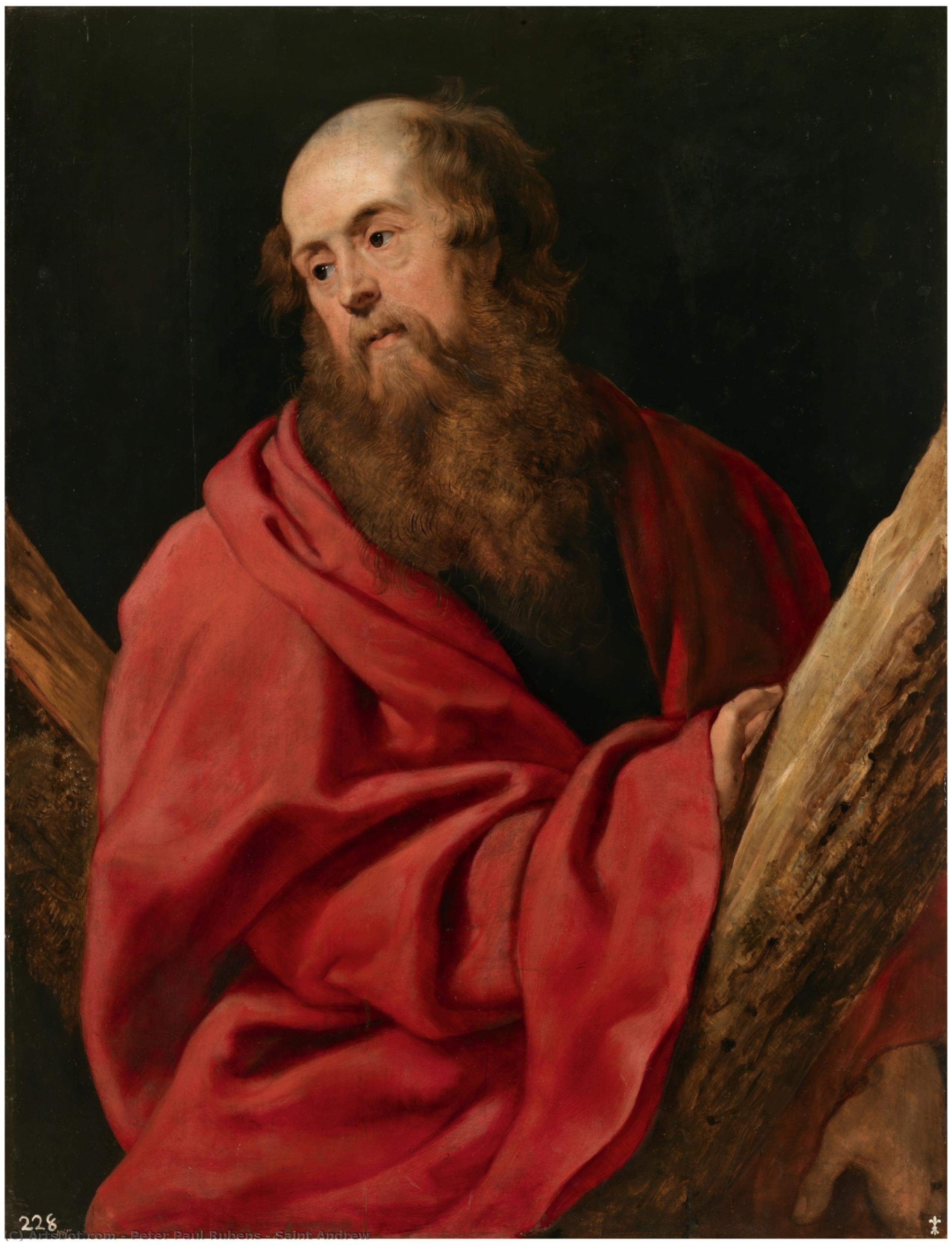
Saint Andrew

Rubens’ masterful Baroque portrait captures Saint Andrew in contemplative repose, illuminated by rich reds and embodying the humanist spirit of his era. Explore this iconic depiction and bring a timeless masterpiece into your home.


Peter Paul Rubens (1577 - 1640)

Sir Peter Paul Rubens: A Baroque master! Known for dynamic compositions, vibrant colors & iconic works like 'The Massacre of the Innocents.' Explore his life & art.

A Portrait Steeped in Faith and Renaissance Influence

  • Subject Matter: This striking portrait depicts Saint Andrew, the patron saint of fishermen and sailors—a figure deeply revered throughout Christian tradition. Rubens meticulously captures his solemn gaze and contemplative posture, conveying a profound sense of piety and intellectual engagement.
  • Style & Technique: Painted in 1612 during Rubens’s prolific period in Antwerp, this artwork exemplifies the Baroque style's characteristic grandeur and dynamism. Rubens employed oil paint on canvas with masterful brushwork—a technique known for its ability to achieve luminous colors and textural richness. The artist skillfully utilized chiaroscuro, manipulating light and shadow to sculpt form and heighten emotional impact.
  • Historical Context: Rubens’s Antwerp was a vibrant hub of artistic innovation during the Counter-Reformation, a period marked by fervent religious fervor and papal patronage. Commissions like this one served as crucial vehicles for disseminating Catholic ideals and celebrating saints—figures considered heroic exemplars of Christian virtue.
  • Symbolism: The book held by Saint Andrew is laden with symbolic significance. It represents knowledge, faith, and divine wisdom—essential components of spiritual contemplation. Furthermore, the robe’s crimson hue symbolizes royalty and martyrdom, underscoring Andrew's status as a saint who endured persecution for his unwavering devotion.
  • Emotional Impact: Rubens achieves an arresting emotional resonance through his portrayal of Saint Andrew. The artist’s careful attention to detail—the furrowed brow, the intense stare—invites viewers to contemplate themes of faith, perseverance, and inner reflection. It's a piece that speaks to the enduring human desire for spiritual solace and intellectual enlightenment.