A Portrait of Authority: Sir Peter Paul Rubens’ Saint Mathias
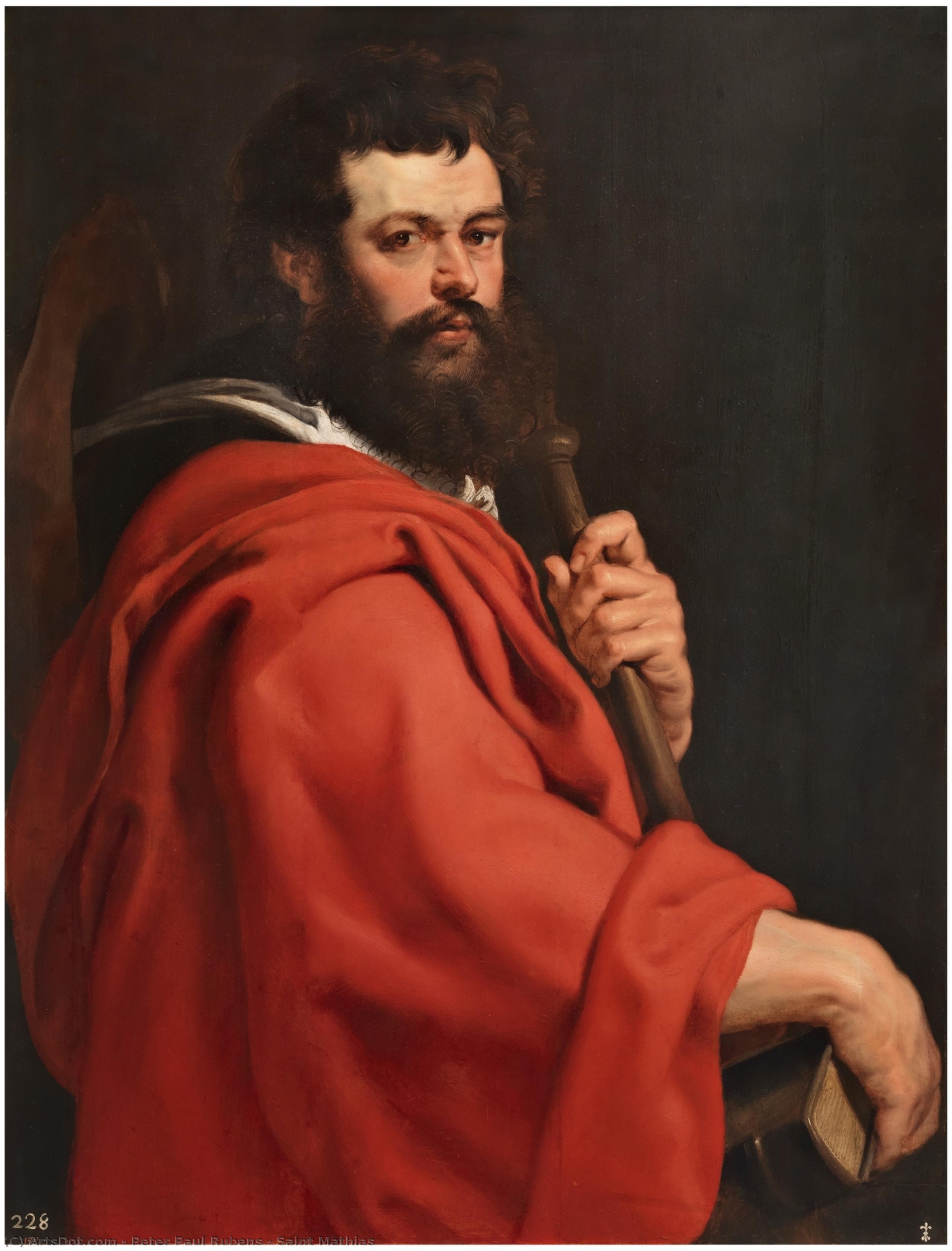
The image before us – a man cloaked in crimson, his gaze direct and unwavering – is a compelling testament to the power of portraiture within the Baroque era. Attributed to the masterful hand of Sir Peter Paul Rubens, this painting transcends a simple likeness; it embodies authority, piety, and the very spirit of a period defined by dramatic emotion and opulent display. The subject, identified as Saint Mathias, is rendered with an almost sculptural quality, his robust features – accentuated by a meticulously crafted beard and mustache – projecting an air of dignified solemnity. Rubens’s skill in capturing texture is immediately apparent in the rich folds of the red robe, hinting at the wealth and status associated with religious leadership during this time.
- Subject & Identity: The figure represents Saint Mathias, a prominent apostle within the Christian tradition. While specific details regarding his life and significance are not explicitly depicted, the portrait’s inherent solemnity aligns perfectly with the devotional practices of the 17th century.
- Composition & Technique: Rubens's signature technique – known for its dynamic composition and rich color palette – is fully realized here. Note the careful use of light and shadow, creating a sense of depth and volume that draws the viewer’s eye directly to the subject. The dark background serves not as an absence of detail, but rather as a powerful tool to isolate and elevate Mathias from his surroundings.
The Baroque Vision: Rubens and the Power of Emotion
Rubens was a pivotal figure in the development of Baroque art, moving away from the more restrained styles of the Renaissance towards an intensely expressive and theatrical aesthetic. His work was deeply influenced by the Counter-Reformation, reflecting the Catholic Church’s desire to reassert its authority through grand, emotionally charged imagery. This painting exemplifies this shift; Mathias isn't simply a religious figure, he is presented as a powerful symbol of faith and conviction. The intensity of his gaze, combined with the dramatic lighting, invites contemplation and reinforces the viewer’s sense of reverence.
- Color & Light: Rubens masterfully employs color to evoke emotion. The dominant red symbolizes passion, sacrifice, and divine authority – colors frequently associated with religious figures during this period.
- Texture & Form: The artist's attention to detail is evident in the rendering of textures—the velvet-like sheen of the robe, the rough quality of the book held in Mathias’s hand—adding a tactile dimension to the image and enhancing its realism.
Symbolism and Context
The inclusion of the large book suggests learning, wisdom, and perhaps even divine revelation. It is a common motif in religious portraits, signifying the subject's connection to scripture and their role as interpreters of faith. The dark background further emphasizes the figure’s importance, creating a sense of isolation and contemplation. Painted during Rubens’s prolific career (1577-1640), this work reflects the artist’s deep engagement with religious themes and his ability to capture both the physical presence and spiritual essence of his subjects.
Historical Context: The painting likely dates from the mid-17th century, a period of intense religious fervor and artistic innovation within Europe. Rubens's work was commissioned by wealthy patrons – often the Church itself – and served to promote religious ideals and solidify power structures.
Emotional Impact & Artistic Value
More than just a portrait, this piece is an experience. Rubens’s Saint Mathias invites us into a moment of quiet contemplation, prompting reflection on faith, authority, and the enduring human desire for meaning. Its dramatic composition, masterful technique, and rich symbolism make it a truly exceptional work of art. A hand-painted reproduction offers a unique opportunity to bring this Baroque masterpiece into your home or office, adding a touch of timeless elegance and profound artistic resonance to any space.