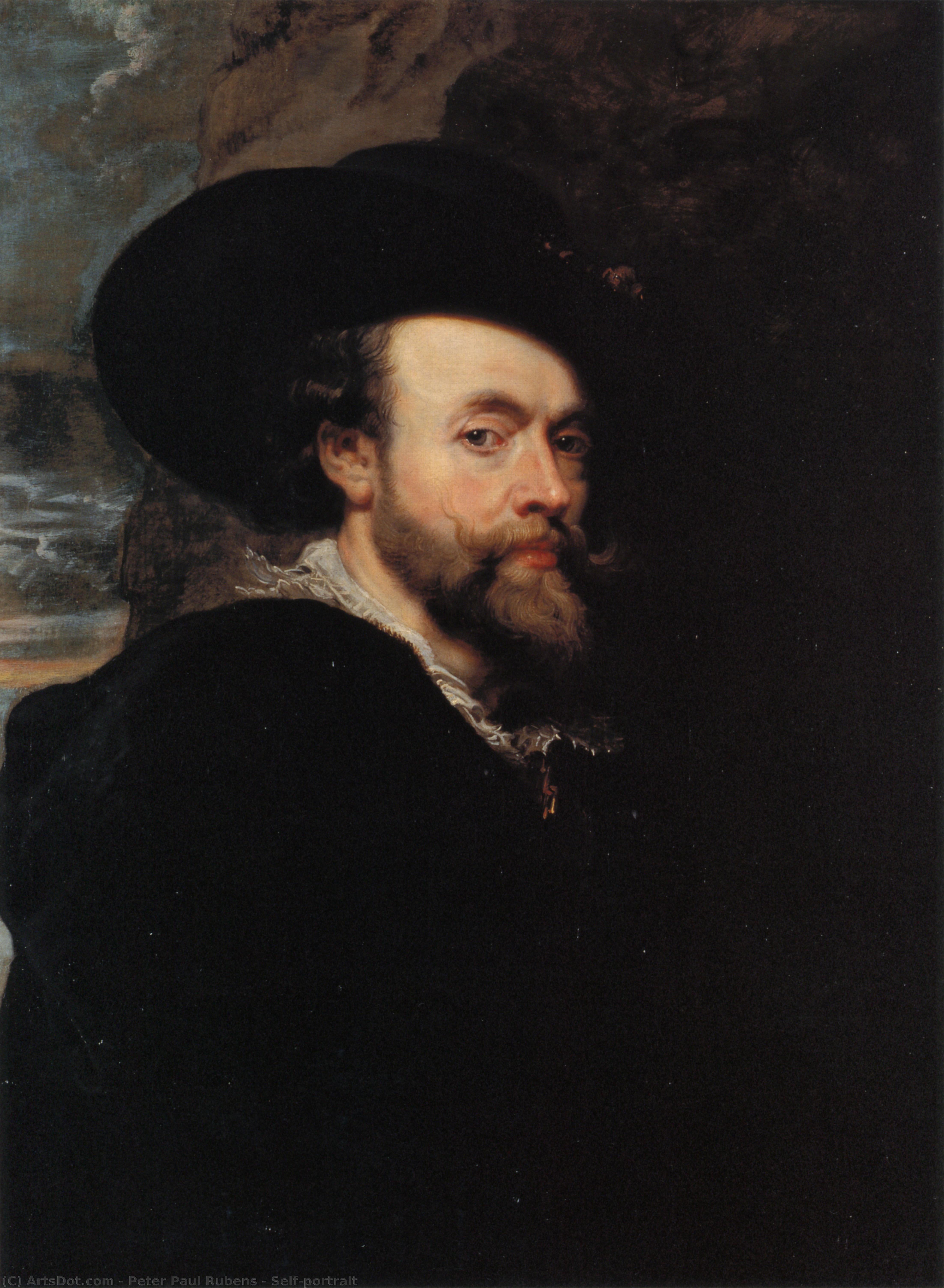
Self-Portrait
Peter Paul Rubens, one of the most influential artists of the Flemish Baroque tradition, created a captivating self-portrait in 1623. This painting is not only a reflection of his artistic prowess but also a window into the era’s cultural and social context. It stands as a testament to Rubens' mastery of technique and his profound understanding of human psychology—a visual meditation on identity and ambition within the grandeur of Baroque art.
Artistic Style and Technique
Rubens’ self-portrait exemplifies the Baroque style, characterized by dramatic lighting, intense emotions, and highly detailed realism. The artist’s use of oil on canvas allowed for rich textures and vibrant colors, enhancing the overall visual impact. Notice the masterful chiaroscuro—the interplay between light and dark—which sculpts Rubens' figure with remarkable precision. Thick impasto strokes contribute to a palpable sense of movement and volume, conveying both physical presence and psychological dynamism. The painting measures 62 x 86 cm, making it a significant piece that commands attention.
Historical Context
Painted during a period when Rubens was at the height of his career, having established himself as a prominent figure in European art—particularly serving as court painter to Philip IV of Spain and Charles I—the self-portrait reflects the cultural influences of its time. Rubens’ work often referenced classical and Christian themes, mirroring the intellectual fervor of the Baroque era. The painting was conceived during a turbulent period marked by religious conflict and political maneuvering; Rubens sought to project an image of confidence and authority—a deliberate statement of artistic accomplishment amidst the complexities of European politics.
Artistic Influences
Rubens’ style was profoundly impacted by artists like Caravaggio, whose dramatic use of tenebrism – stark contrasts between light and dark – instilled in Rubens a technique that elevates emotion and creates an unforgettable visual experience. Furthermore, Rubens absorbed the expressive gestures and sensual qualities prevalent in Baroque art, channeling these influences into his portrayal of himself. The artist’s gaze is direct, unwavering, conveying both introspection and assurance—a characteristic found throughout Rubens' oeuvre.
Other Notable Works
Rubens’ body of work includes numerous masterpieces that showcase his versatility as an artist. One notable example is
Portrait of Nicolas de Respaigne, which exemplifies Rubens’ ability to capture the essence of his subjects with elegance and precision—a skill honed through years of experience and observation. This painting is part of the collection at Staatliche Kunstsammlungen in Kassel, Germany.
Museums and Collections
The National Gallery of Australia, where Rubens’ self-portrait is displayed, houses a diverse range of artworks representing pivotal moments in European art history. Similarly, the Museum Santi Alessandro e Vincenzo in Ponteranica, Italy, features works by renowned artists like Lorenzo Lotto and Hans Von Aachen—artists who similarly embraced Baroque aesthetics and explored themes of spirituality and human emotion.
Conclusion
Peter Paul Rubens’ self-portrait is a cornerstone of Baroque art—a captivating blend of technical skill, psychological insight, and artistic ambition. Through his masterful use of light, color, and composition, he created a piece that continues to resonate with audiences today. For those interested in exploring more of his work or delving deeper into the stylistic innovations of the Baroque period,
Peter Paul Rubens: Self-portrait and
Peter Paul Rubens: Portrait of Nicolas de Respaigne offer invaluable resources for furthering one’s understanding of this extraordinary artist and his enduring legacy.
References
-
Peter Paul Rubens
-
National Gallery of Australia
-
Museum Santi Alessandro e Vincenzo
-
The Museum Santi Alessandro e Vincenzo (Ponteranica, Italy)
For a deeper understanding of the history and evolution of art, refer to
History of Art and
Art of Europe.