A Divine Encounter in Baroque Splendor
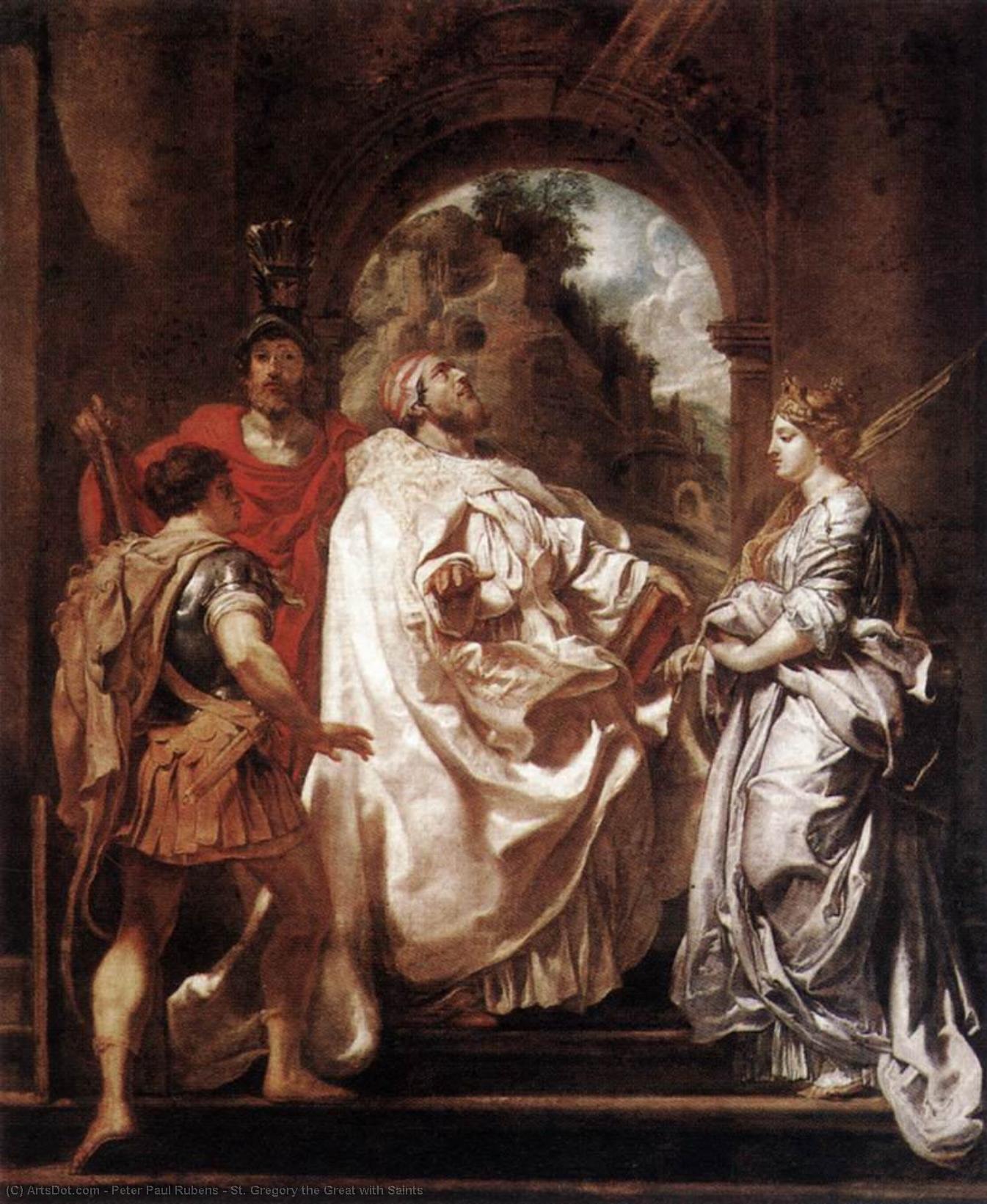
To stand before Peter Paul Rubens’ St. Gregory the Great with Saints is to be swept into the very heart of the Counter-Reformation, where the boundaries between the earthly and the divine begin to dissolve. Painted between 1606 and 1607, this monumental masterpiece serves as a breathtaking window into a moment of profound spiritual ecstasy. The composition centers on Pope Saint Gregory I, surrounded by a celestial assembly of saints including Papias, Maurus, Domitilla, Nereus, and Achilleus. They are not merely figures in a scene; they are participants in a sacred ritual, gathered in reverence around the miraculous image of the Madonna and Child. Rubens captures a sense of breathless anticipation, as if the viewer has just stumbled upon a private, holy epiphany occurring within the shadows of an ancient Roman setting.
The emotional weight of the piece is anchored by its masterful use of chiaroscuro. Rubens, deeply influenced by the dramatic lighting of Caravaggio, employs a sophisticated interplay of light and shadow to sculpt the figures from the darkness. Light does not merely illuminate the scene; it sanctifies it, cascading over the white robes and gilded textures to highlight the intense devotion etched upon each face. This technique creates a palpable sense of depth and volume, making the heavy drapery and the muscularity of the saints feel almost tangible. For the collector or designer, this dramatic tension offers an unparalleled focal point, capable of commanding attention and lending a sense of historical gravity to any sophisticated interior.
The Mastery of Flemish Technique
Beyond its religious narrative, the painting is a triumph of Rubens’ technical virtuosity. The artist was a master of the Flemish Baroque style, characterized by an exuberant energy and a sensory richness that few could replicate. His brushwork is nothing short of miraculous; through meticulous layering and delicate glazing, he achieves a luminous surface that seems to glow from within. One can almost feel the weight of the heavy fabrics and the smoothness of the skin tones, which possess a warmth and vitality that breathe life into the canvas. Every fold of cloth and every subtle facial expression is rendered with an accuracy that speaks to his profound understanding of both anatomy and light.
The historical context of the work adds another layer of profound meaning for the discerning enthusiast. Commissioned for the Chiesa Nuova in Rome, the painting was designed to serve as a visual instrument of faith, symbolizing the triumph of Catholicism during a period of intense religious upheaval. The movement within the composition—the swirling gestures and the dynamic arrangement of bodies—reflects the era's desire to move the soul through beauty and motion. Owning a high-quality reproduction of such a work is more than an aesthetic choice; it is an invitation to surround oneself with the enduring legacy of one of history's greatest cultural architects, bringing a piece of the Baroque's golden age into the modern home.