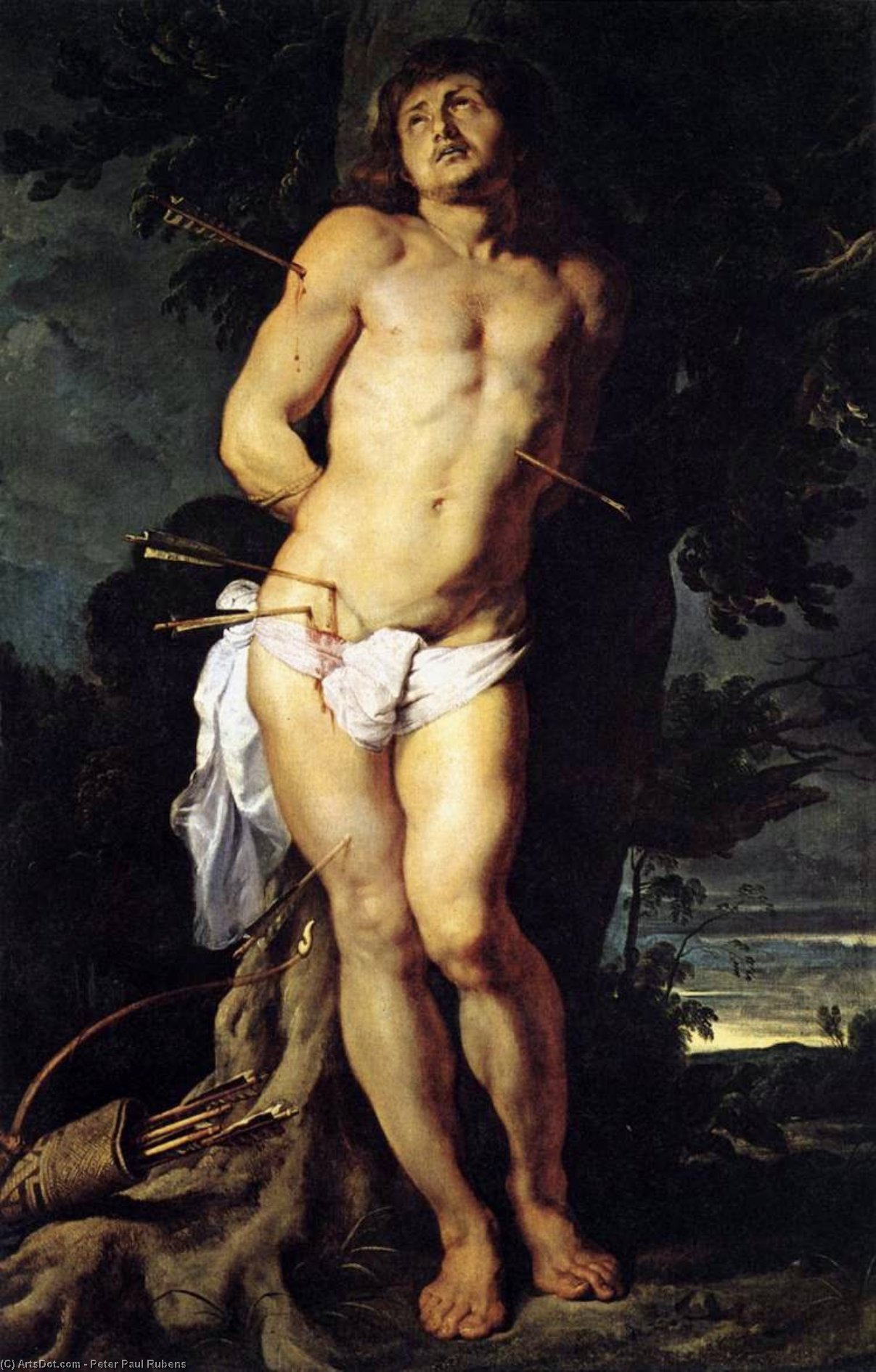
The Visceral Drama of Faith: Rubens’ St. Sebastian
To encounter Peter Paul Rubens’ St. Sebastian is to step directly into the heart of the Baroque era, where the boundaries between the divine and the mortal blur through intense emotion and physical struggle. Created around 1614, during a period of profound artistic maturation for the Flemish master, this monumental work serves as a breathtaking testament to the power of chiaroscuro. Rubens does not merely present a scene of martyrdom; he orchestrates a sensory experience that captures the very essence of human vulnerability and spiritual fortitude. The saint, bound to a rugged tree and pierced by arrows, becomes a focal point of both agony and grace, inviting the viewer to contemplate the profound cost of conviction.
The composition is a masterclass in theatricality, a hallmark of Rubens’ unique ability to engineer spectacles on canvas. Through a sophisticated manipulation of light and shadow, the artist sculptively defines the muscular anatomy of the saint, drawing the eye toward the torso where the arrows have struck. This dramatic lighting serves a dual purpose: it highlights the physical trauma inflicted upon the body while simultaneously illuminating the heroic dignity that remains unbowed by pain. The stark contrast between the luminous skin of St. Sebastian and the deep, brooding shadows of the surrounding landscape creates a sense of isolation, emphasizing his solitary struggle against the forces of persecution.
A Symphony of Texture and Technique
Beyond the immediate emotional impact, the painting reveals Rubens’ unparalleled technical prowess. His brushwork, though controlled, possesses an inherent vitality that breathes life into every element of the scene. One can almost feel the rough, weathered bark of the tree, the cold hardness of the rocks upon which the saint rests, and the soft, yielding texture of the flesh. This meticulous attention to detail is not merely decorative; it is essential to the painting's realism, grounding the spiritual narrative in a tangible, visceral reality. The landscape itself, though desolate and bleak, provides a necessary atmospheric weight, acting as a silent witness to the unfolding martyrdom.
For the discerning collector or interior designer, this piece offers more than just historical significance; it provides a profound aesthetic anchor. The dynamic movement within the composition—the tension of the bound limbs and the directional energy of the arrows—creates a sense of motion that can transform the atmosphere of a room. Whether placed in a grand gallery or a sophisticated private study, a high-quality reproduction of this masterpiece brings with it an air of intellectual depth and classical beauty. It is a work that demands attention, sparking conversation through its complex interplay of light, shadow, and the enduring human spirit.