Susanna Fourment: A Baroque Masterpiece by Peter Paul Rubens
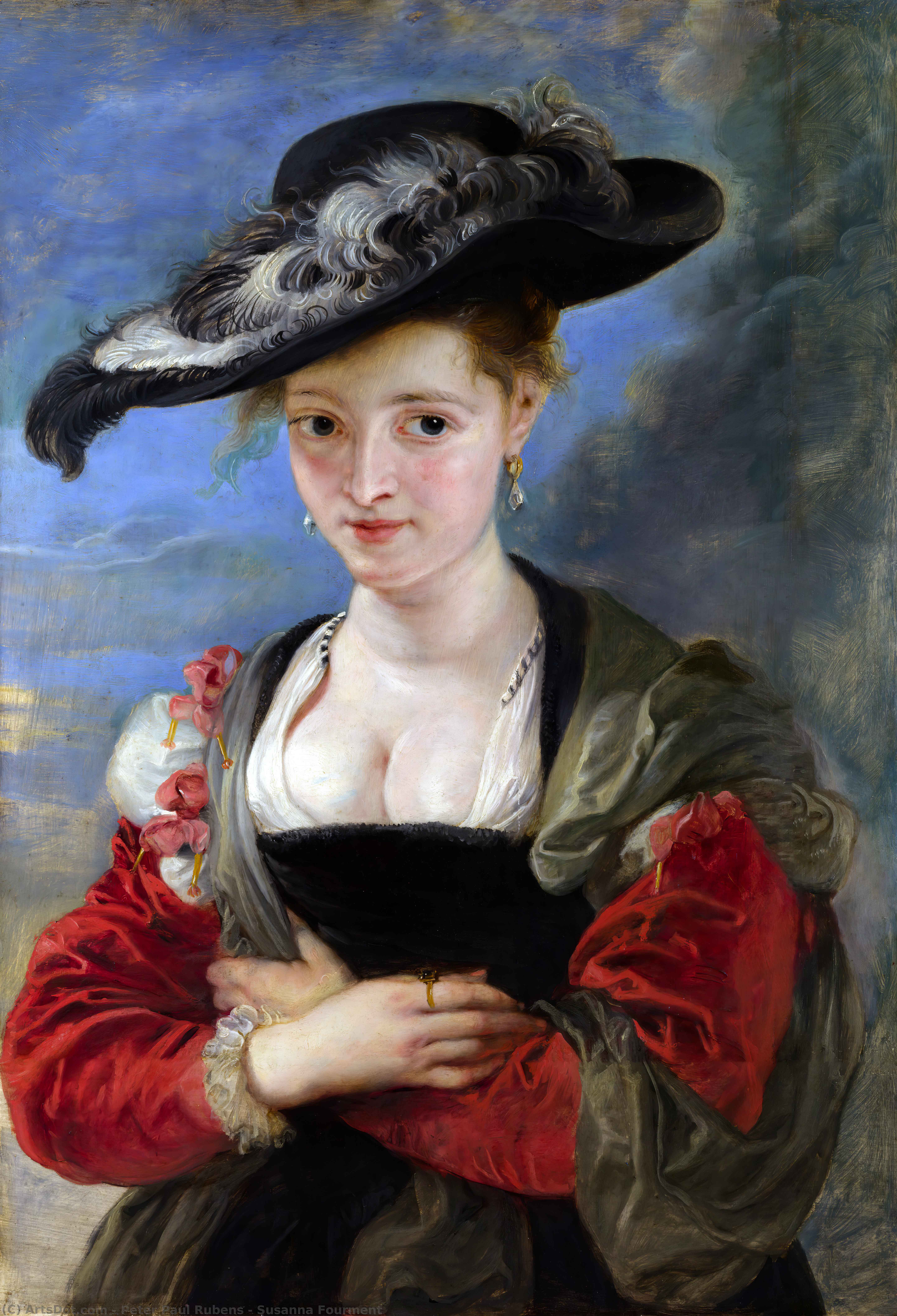
This captivating portrait, painted around 1625, offers a compelling glimpse into the world of 17th-century Flemish aristocracy through the eyes of one of history’s most celebrated artists – Peter Paul Rubens. Often referred to as “Le Chapeau de Paille” (“The Straw Hat,” though incorrectly so, as it's actually felt beaver!), this work transcends a simple likeness and becomes an exploration of beauty, status, and subtle emotional depth.
A Portrait of Grace and Mystery
The subject is believed to be Susanna Lunden (née Fourment), potentially the older sister of Rubens’ future wife, Helena Fourment. She is presented with a direct yet gentle gaze that invites intimacy without fully revealing her inner thoughts. The elaborate felt beaver hat – a symbol of sophistication and wealth at the time – dramatically frames her face, while opulent red sleeves hint at her privileged social standing. A delicate ring on her finger subtly suggests marital status or personal commitment, adding layers to her story.
Rubens’ Signature Baroque Style
Executed with Rubens' characteristic mastery of color and light, this painting exemplifies the dynamism of the Baroque period. His brushwork is remarkably fluid and confident, rendering delicate skin tones and the rich textures of fabric with breathtaking realism. Notice how the luminous quality of her skin contrasts beautifully against the softly muted, cloudy background, drawing the eye directly to her face and upper body. The subtle interplay of light and shadow creates a three-dimensional effect, imbuing Susanna with an almost palpable presence.
Historical Context & Symbolism
Rubens’ prolific career flourished during a period of immense artistic and cultural change in Europe. This portrait reflects the values and aesthetics of the Dutch and Flemish aristocracy – their appreciation for luxury, fashion, and refined beauty. The hat itself, despite its misnomer, was an expensive status symbol made from beaver felt. The composition isn’t merely decorative; it's a statement about identity, societal roles, and the emerging emphasis on individual personality within a structured world.
Emotional Resonance & Artistic Legacy
Beyond its technical brilliance, “Susanna Fourment” evokes a sense of quiet contemplation and admiration. Her poised yet approachable demeanor invites viewers to connect with her on an emotional level, prompting questions about her life and the era she inhabited. Rubens’ ability to capture both physical beauty and psychological nuance is what elevates this portrait beyond mere representation.
Display Recommendations
This exquisite reproduction will add a touch of historical elegance and artistic sophistication to any space. Consider displaying it:
- In a formal living room or study: Its rich colors and classic composition complement traditional décor.
- As a focal point in a dining room: The portrait’s refined aesthetic enhances the ambiance of elegant gatherings.
- Paired with complementary artwork: Consider surrounding it with other Baroque-era paintings or sculptures to create a cohesive artistic statement.
The painting's size (79 x 64 cm) makes it versatile enough for various wall spaces, and its timeless appeal ensures it will remain a cherished piece for generations.