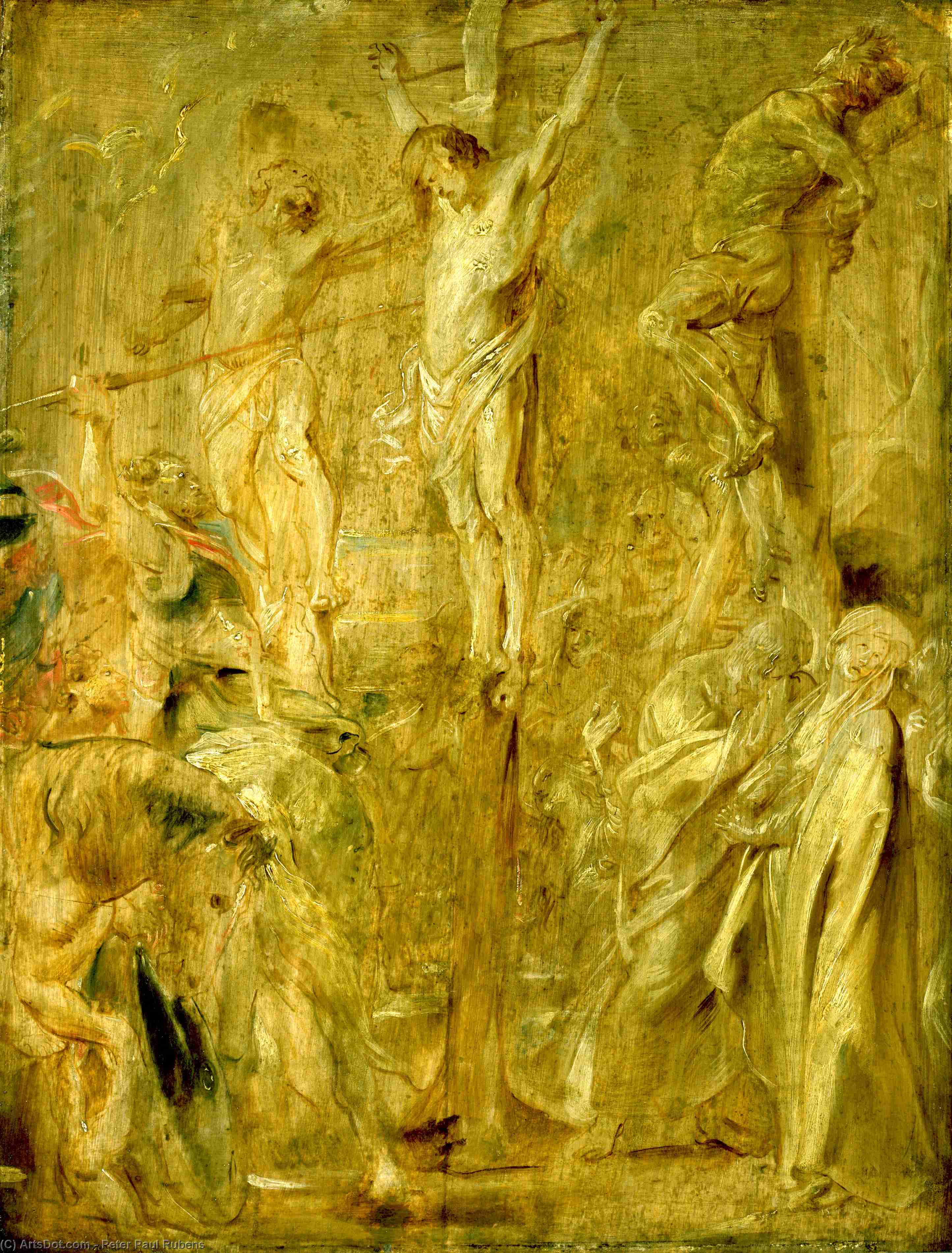
The Coup de Lance: A Dramatic Depiction of Faith and Suffering
Peter Paul Rubens’s "The Coup de Lance" is a powerful and emotive painting that captures a pivotal moment in Christian history. This masterpiece, housed in the Musée des Beaux-Artes, Antwerp, exemplifies Rubens's skill in depicting dramatic scenes with intense emotional depth. The artwork portrays the aftermath of Christ's crucifixion, focusing on the poignant interaction between Joseph of Arimathea receiving Christ’s pierced side after the lance thrust.
Composition and Symbolism
The painting is set against a backdrop of turmoil, yet Rubens masterfully balances chaos with a sense of solemnity. The central figure of Christ, though deceased, retains a dignified presence. Joseph of Arimathea, depicted receiving Christ’s side, embodies compassion and reverence. Surrounding them are other figures – mourners, Roman soldiers, and onlookers – each contributing to the narrative's emotional weight. The inclusion of symbolic elements like the bowl catching the blood, and the draped cloths, adds layers of meaning, underscoring the religious significance of the scene. The composition is tightly packed with figures, creating a sense of immediacy and drawing the viewer into the heart of the action. The positioning of each figure contributes to the overall narrative, guiding the eye through the emotional landscape of grief and faith.
Artistic Technique
Rubens’s use of color and light is characteristic of his Baroque style, emphasizing movement and emotion. The vibrant hues, particularly the rich reds and golds, create a sense of drama and intensity. Dramatic lighting highlights Christ's form and casts shadows on the surrounding figures, enhancing the pathos. Each figure is meticulously rendered, with expressions that convey their individual reactions to the event unfolding before them. Rubens’s technique involves layering paint to build up texture and create a luminous effect; this impasto style adds depth and dimension to the scene. The swirling drapery further contributes to the dynamism of the composition.
Historical Context
"The Coup de Lance" is part of Rubens's extensive oeuvre, which includes numerous religious and historical paintings. His work was highly influential in the Flemish Baroque tradition, reflecting his deep understanding of classical and Christian themes. This painting, like many others by Rubens, demonstrates his ability to blend erudite references with powerful storytelling. The artwork reflects the Counter-Reformation’s emphasis on emotional engagement with religious narratives, a key characteristic of Baroque art.
Emotional Impact and Relevance Today
“The Coup de Lance” remains a significant work in the history of art, offering insights into the religious and cultural landscape of its time. The painting evokes feelings of sorrow, compassion, and reverence. For those interested in exploring this masterpiece further, ArtsDot.com provides high-quality reproductions that capture the essence of Rubens's original work, allowing viewers to experience the drama and emotional depth of this iconic Baroque painting.