A Dialogue in Oil: Unpacking Peter Paul Rubens’s “The Four Philosophers”
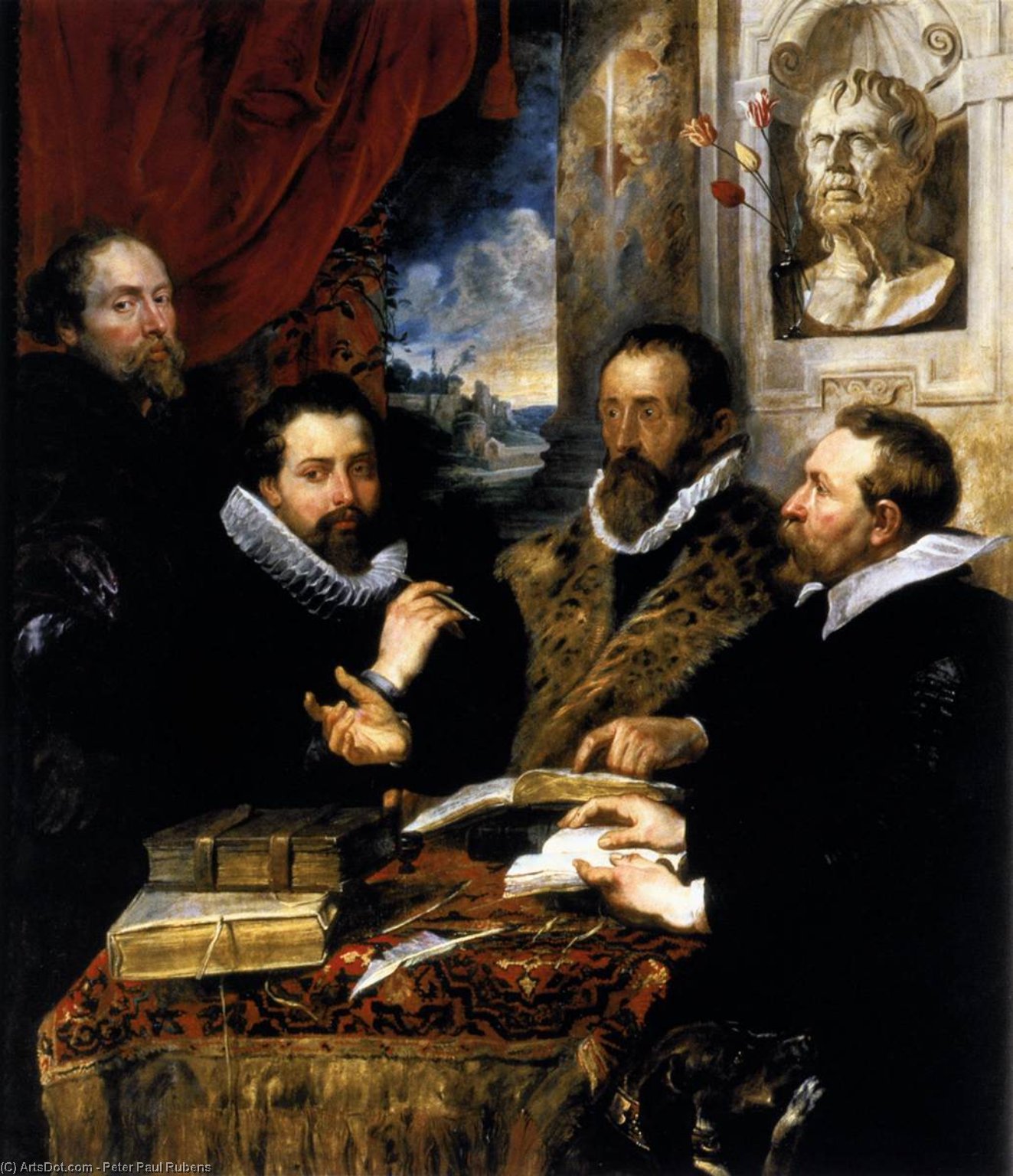
Peter Paul Rubens' "The Four Philosophers," painted in 1611-12, isn’t merely a portrait; it’s a carefully constructed tableau of intellectual engagement and humanist ideals. This oil on panel masterpiece, now residing within the Galleria Palatina of the Palazzo Pitti in Florence, offers a captivating glimpse into the burgeoning Neostoic philosophy of the early 17th century – a movement that sought to revive classical learning and ethical principles. The painting immediately draws the eye with its dynamic composition, a hallmark of Rubens’s signature style, where figures are arranged not statically but within a lively, almost theatrical space. It's a scene brimming with conversation, debate, and the pursuit of knowledge, all rendered with an astonishing level of detail and emotional intensity.
The Setting: A Chamber of Thought
The backdrop to this philosophical exchange is a richly appointed room – a deliberate choice by Rubens that speaks volumes about the subjects’ status and intellectual pursuits. Bookshelves overflow with volumes, some open, inviting contemplation, others closed, suggesting ongoing research and study. Scattered papers hint at heated discussions and the messy process of scholarly thought. A red curtain, a common element in Rubens's portraits, adds a touch of drama and theatricality, while a classical statue – likely Seneca – stands as a silent witness to the intellectual ferment within. The lighting, masterfully employed by Rubens through his signature *chiaroscuro* technique, dramatically highlights the faces of the philosophers, drawing our attention to their expressions and gestures, creating an atmosphere of focused intensity. This skillful manipulation of light and shadow not only adds depth but also underscores the importance of illumination – both literal and metaphorical – in the pursuit of wisdom.
Symbolism Woven into the Canvas
Rubens’s genius lies not just in his technical skill, but in his ability to imbue his paintings with layers of symbolic meaning. The knife positioned near one of the open books is a potent symbol – it represents the cutting through of ignorance and prejudice, suggesting that these philosophers are actively dismantling flawed thinking. The cup on the right side of the table symbolizes the nourishment of both body and mind, reflecting the holistic approach to learning championed by Neostoicism. The very arrangement of the figures—Rubens himself at the center, flanked by his brother Philip (who tragically died shortly after the painting’s completion), Justus Lipsius, and Johannes Woverius – is laden with significance. It's a visual representation of the transmission of knowledge from master to student, a testament to the enduring legacy of classical thought. The inclusion of Seneca’s bust further reinforces this connection to antiquity, grounding the scene in the traditions of Greek philosophy.
Rubens’s Baroque Brilliance and Lasting Relevance
“The Four Philosophers” is a prime example of Rubens's mastery of the Baroque style – characterized by its dramatic lighting, dynamic composition, and rich color palette. His use of *tenebrism*, particularly in highlighting the faces of the philosophers, creates a powerful sense of immediacy and draws the viewer into their intellectual discourse. Beyond its aesthetic merits, the painting holds profound relevance today. The theme of reasoned dialogue and the pursuit of wisdom remains as vital now as it was during Rubens’s time. It serves as a poignant reminder that critical thinking, open debate, and the exchange of ideas are essential for progress and understanding in our increasingly complex world. Reproductions of this iconic work offer a beautiful opportunity to bring this timeless message into any space, fostering contemplation and stimulating intellectual curiosity.
For more information on the artist, visit Peter Paul Rubens.
Learn about the significance of light in painting at Light in Painting.