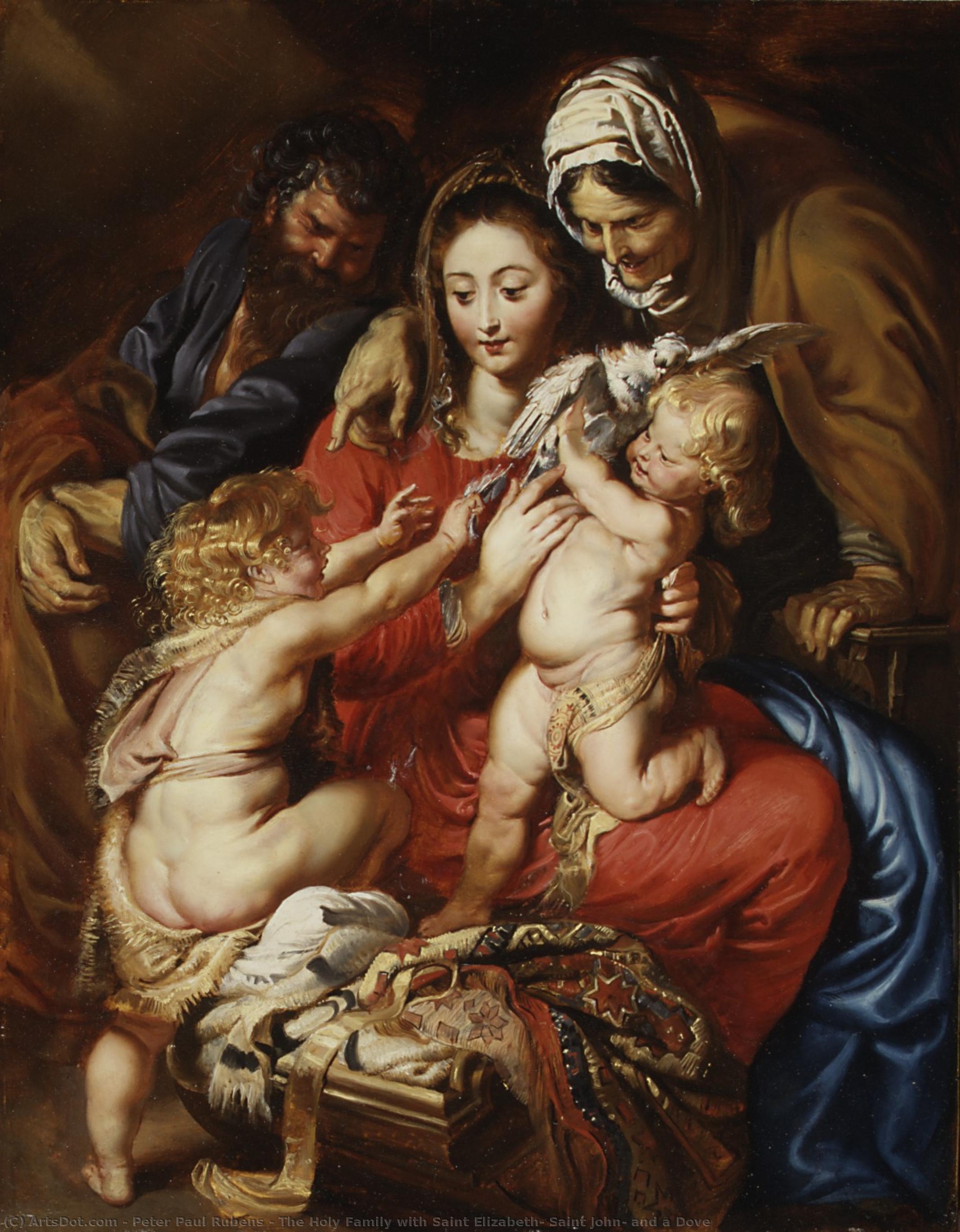
Experience the Baroque dynamism of Sir Peter Paul Rubens’s "The Holy Family with Saint Elizabeth, Saint John, and a Dove," painted in 1608, showcasing a dramatic depiction of the Nativity scene with rich detail and symbolism. Discover this stunning hand-painted reproduction and bring art home.
A Testament to Baroque Grandeur: Rubens’s ‘The Holy Family with Saint Elizabeth, Saint John, and a Dove’
This exquisite panel painting, executed in 1608 by the prodigious Sir Peter Paul Rubens, offers a profound glimpse into the heart of the Early Baroque movement. Measuring 66 x 51 cm, it immediately captivates with its dynamic composition and masterful handling of color – hallmarks of Rubens’s distinctive style. The scene depicts the Holy Family alongside Saint Elizabeth and Saint John, underscored by the potent symbolism of a dove, a recurring motif reflecting Christ's sacrifice and the divine presence within the narrative. The painting’s creation coincided with Rubens’s return to Antwerp following his influential period in Rome, solidifying his position as one of the era’s foremost artistic innovators. The work demonstrates a remarkable understanding of human anatomy, evident in the expressive gestures and realistic portrayal of the figures – particularly Mary's serene composure and Joseph’s protective stance.
Rubensian Technique and Composition
- Oil on Panel: Rubens expertly utilized oil paint on a wooden panel, allowing for rich color saturation and nuanced tonal gradations.
- Dynamic Arrangement: The composition is characterized by its diagonal thrust, drawing the viewer’s eye across the canvas with a sense of movement and energy – a key element of Baroque aesthetics.
- Color Palette: The artist employs a vibrant palette dominated by warm reds, blues, and golds, creating an opulent and emotionally charged atmosphere. Notice the subtle variations in color used to define each figure and create depth within the scene.
- Workshop Production: While attributed to Rubens, this piece was likely created with assistance from his workshop, reflecting the scale of production common during his prolific career. A larger version exists at the Los Angeles County Museum, demonstrating a consistent artistic vision across multiple works.
Symbolism and Narrative Depth
Beyond its aesthetic beauty, ‘The Holy Family’ is laden with religious symbolism. The dove, prominently positioned near the top of the composition, represents the Holy Spirit – a vital element in understanding Christ's incarnation and sacrifice. Mary, Joseph, and Jesus are depicted not as static figures but as participants in a vibrant, human drama. Saint Elizabeth, offering sustenance to the infant Jesus, embodies maternal devotion, while Saint John, often associated with prophecy and divine knowledge, adds another layer of spiritual significance. The inclusion of three infants – Mary’s child, Elizabeth’s son, and Joseph’s – reinforces the theme of lineage and salvation.
Historical Context and Artistic Influence
Created in 1608, this painting stands as a pivotal work within Rubens's oeuvre, firmly rooted in the burgeoning Baroque style. Rubens’s artistic journey, shaped by his early experiences – including his family’s exile and subsequent return to Antwerp – profoundly influenced his approach to art. His time in Rome exposed him to the innovations of Michelangelo and Raphael, which he then skillfully integrated into his own distinctive style. This piece exemplifies his ability to synthesize classical influences with a deeply personal and emotionally resonant vision, establishing him as a dominant force in 17th-century European art. The work’s creation reflects the growing importance of religious themes within artistic production during this period.