A Moment of Profound Sorrow: Exploring Rubens’ *The Lamentation*
Painted in 1609 during his pivotal Antwerp period, Peter Paul Rubens’s *The Lamentation* is a deeply moving exploration of grief and faith. This intimate oil on panel (34 x 27 cm), currently residing at the Staatliche Museen zu Berlin, exemplifies the dynamism and emotional intensity that define the Baroque era.
Subject & Symbolism: Witnessing Divine Loss
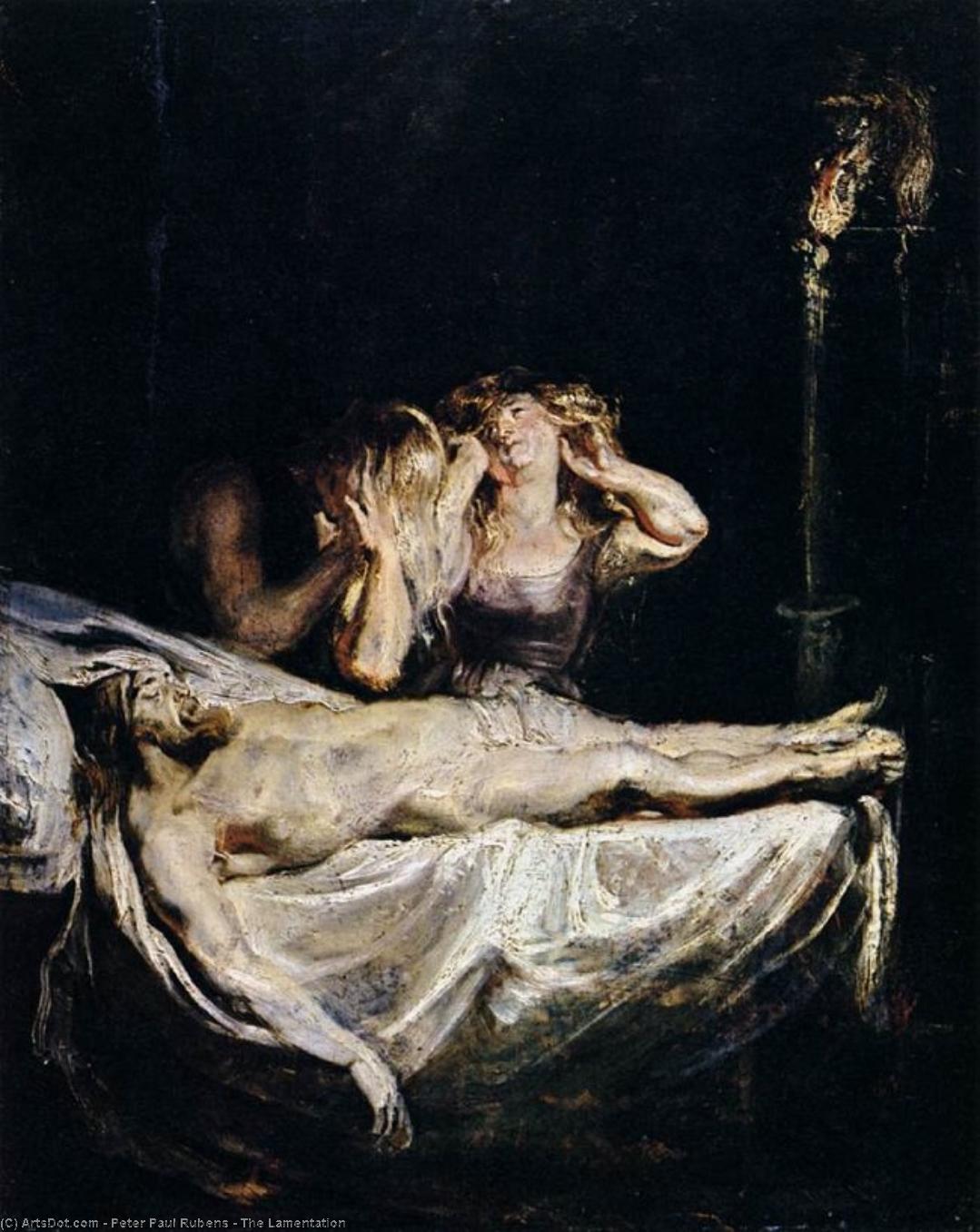
The painting captures a poignant moment of mourning. A woman, her face etched with sorrow and framed by cascading dark hair, bends over a figure presumed to be Christ after his descent from the cross – most scholars identify this as Mary Magdalene. The scene unfolds within a dimly lit interior, likely a bedroom, intensifying the somber atmosphere. The woman’s flowing garments emphasize her vulnerability and distress. This darkened setting symbolizes not only physical death but also spiritual darkness, subtly hinting at the promise of resurrection. The composition focuses on intimate human grief in response to divine loss.
Artistic Style & Technique: Baroque Mastery
Rubens was a defining figure of Baroque aesthetics, and *The Lamentation* showcases his signature style brilliantly. He masterfully employs chiaroscuro – the dramatic interplay of light and shadow – to sculpt forms, heighten emotional impact, and direct the viewer’s gaze. Notice how light illuminates the woman's face and form, contrasting sharply with the surrounding shadows. This isn’t merely decorative; it underscores the psychological weight of the scene.
- Fluid Brushwork: Rubens’s brushwork is remarkably fluid and energetic, even in this smaller work. He prioritizes capturing the essence of emotion through expressive gestures and vibrant color application over meticulous detail.
- Warm Tones: The rich, warm tones contribute to a sense of intimacy and human connection despite the tragic subject matter.
- Dynamic Composition: The composition isn’t static; it conveys movement and emotional turbulence through the woman's posture and the implied weight of her grief.
Historical Context & Rubens’ Oeuvre: A Rising Star
Rubens created *The Lamentation* during a period of significant personal and artistic growth. Having recently returned from Italy, where he studied classical art and the works of masters like Caravaggio, he was establishing himself as the leading Flemish painter of his time. His work frequently blended religious themes with mythological subjects, all executed with characteristic exuberance and sensuality.
This painting is part of a series depicting Christ’s Passion that Rubens produced. Other notable works exploring similar themes include *Lament of Christ* and his powerful altarpieces dedicated to the subject. His prolific output cemented his legacy as a pivotal figure in Baroque art, influencing generations of artists.
Emotional Impact & Display Recommendations: A Contemplative Presence
*The Lamentation* transcends its historical or religious context; it’s an exploration of universal human emotions – grief, loss, and faith. The work evokes empathy and invites contemplation on the fragility of life and the power of devotion.
- Ideal Spaces: Due to its intimate scale, *The Lamentation* is best suited for a smaller space—a study, library, or private sitting room.
- Complementary Decor: Consider pairing it with similarly toned artwork or antique furnishings to enhance its historical context.
- Lighting: Soft, diffused lighting will allow the nuances of Rubens’s chiaroscuro technique to be fully appreciated.
- Framing: Framing in a classic, ornate gold frame would complement the Baroque aesthetic and elevate the painting's presence. A slightly distressed or aged finish on the frame could further enhance its historical feel.
For those seeking to explore more of Peter Paul Rubens’s work or learn about the Staatliche Museen zu Berlin, visit ArtsDot.com for detailed information and high-quality reproductions.