The Grand Arrival: A Baroque Masterpiece
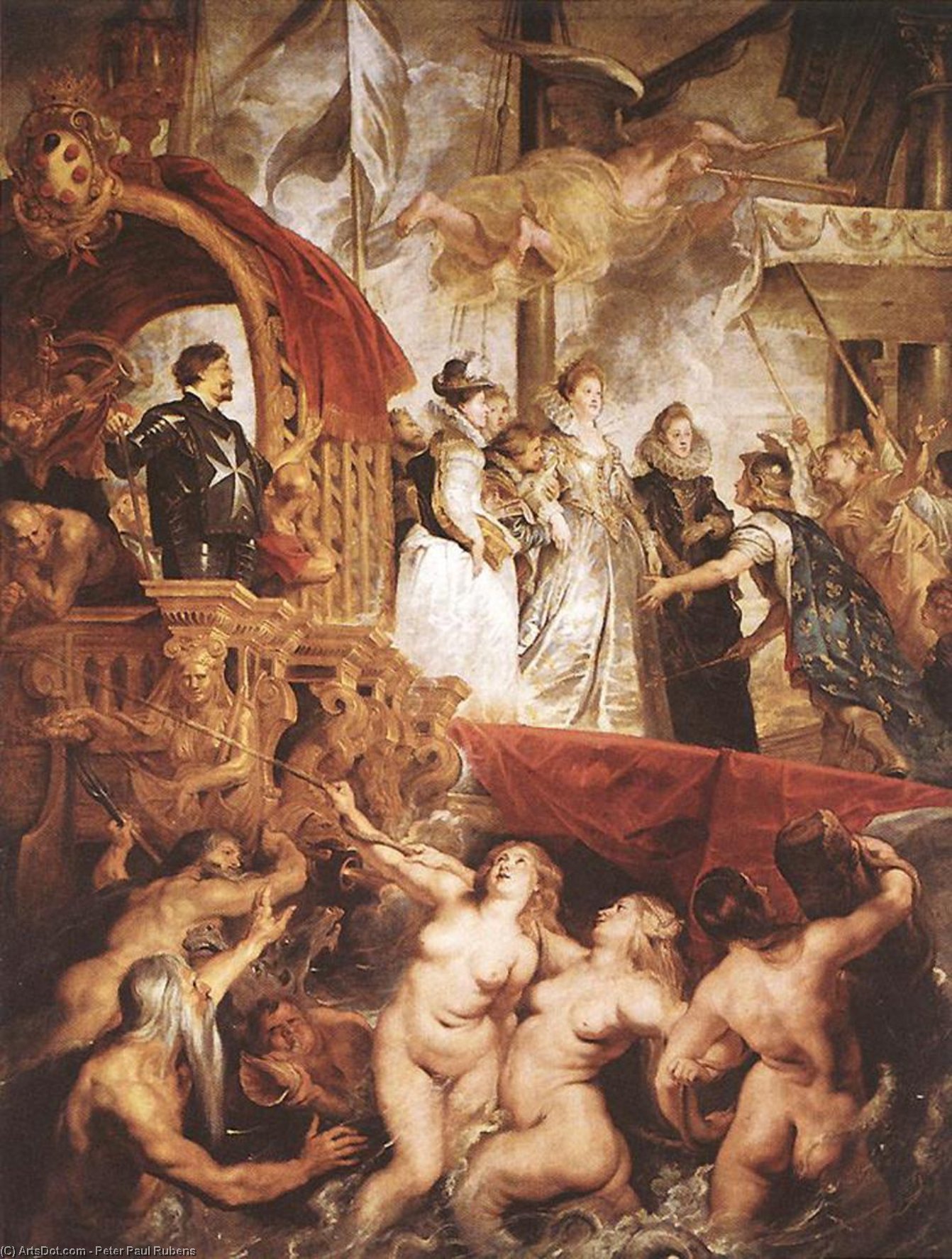
The Landing of Marie de Medici at Marseilles by Peter Paul Rubens is a breathtaking example of Baroque artistry, capturing a pivotal moment in French history with dramatic flair and rich symbolism. This monumental painting, created around 1625, is part of the Marie de' Medici cycle, commissioned to celebrate the life and reign of Queen Marie de Medici.
A Historical Allegory
The painting depicts the Queen's arrival in Marseille on November 3, 1600, a momentous event that marked her entry into France. Rubens transforms this historical scene into an allegorical narrative, reinforcing Marie's right to the throne. The composition is filled with symbolic figures: Neptune and the daughters of Nereus salute the Queen from the sea, while Fame flies overhead, trumpeting her arrival. These elements serve to establish goodwill and respect between Marie and the French people.
Baroque Drama and Dynamism
Rubens' Baroque style is evident in the painting's dynamic composition, vibrant colors, and dramatic use of light and shadow (chiaroscuro). The scene is structured around a central focal point where Marie de Medici stands on an elevated platform, surrounded by figures representing France. Below, Neptune and other mythical beings create a sense of chaos and movement, contrasting with the calm above.
Rich Colors and Intricate Details
The color palette is a feast for the eyes, blending deep reds, rich golds, and creamy whites in the upper section with cooler blues and greens below. Rubens' meticulous attention to detail brings the scene to life, from the smooth fabrics of the clothing to the rougher surfaces of the sea and rocks. The use of lines and shapes creates a network that draws the viewer's eye across the canvas, enhancing the overall sense of movement and emotion.
Emotional Impact and Symbolism
The painting is imbued with intense emotional elements, capturing expressions of awe, fear, and determination among the figures. Rubens' use of light highlights the importance of Marie de Medici and her entourage, emphasizing their regal status. The symbolic figures and French royalty symbols, such as the Fleur-de-lis, reinforce the allegorical nature of the scene, making it a powerful statement about Marie's right to rule.
Why This Painting?
The Landing of Marie de Medici at Marseilles is not just a historical record but a testament to Rubens' mastery of Baroque art. Its dramatic composition, rich colors, and intricate details make it a captivating piece for any art lover or collector. Whether you are looking to add a touch of grandeur to your interior design or seeking inspiration from one of the greatest artists of the 17th century, this painting is a must-have.
Bring the drama and elegance of Baroque art into your space with a high-quality reproduction of this iconic masterpiece. Experience the timeless beauty and historical significance of Rubens' work, and let it inspire your surroundings.