A Divine Reunion: The Emotional Grandeur of Rubens
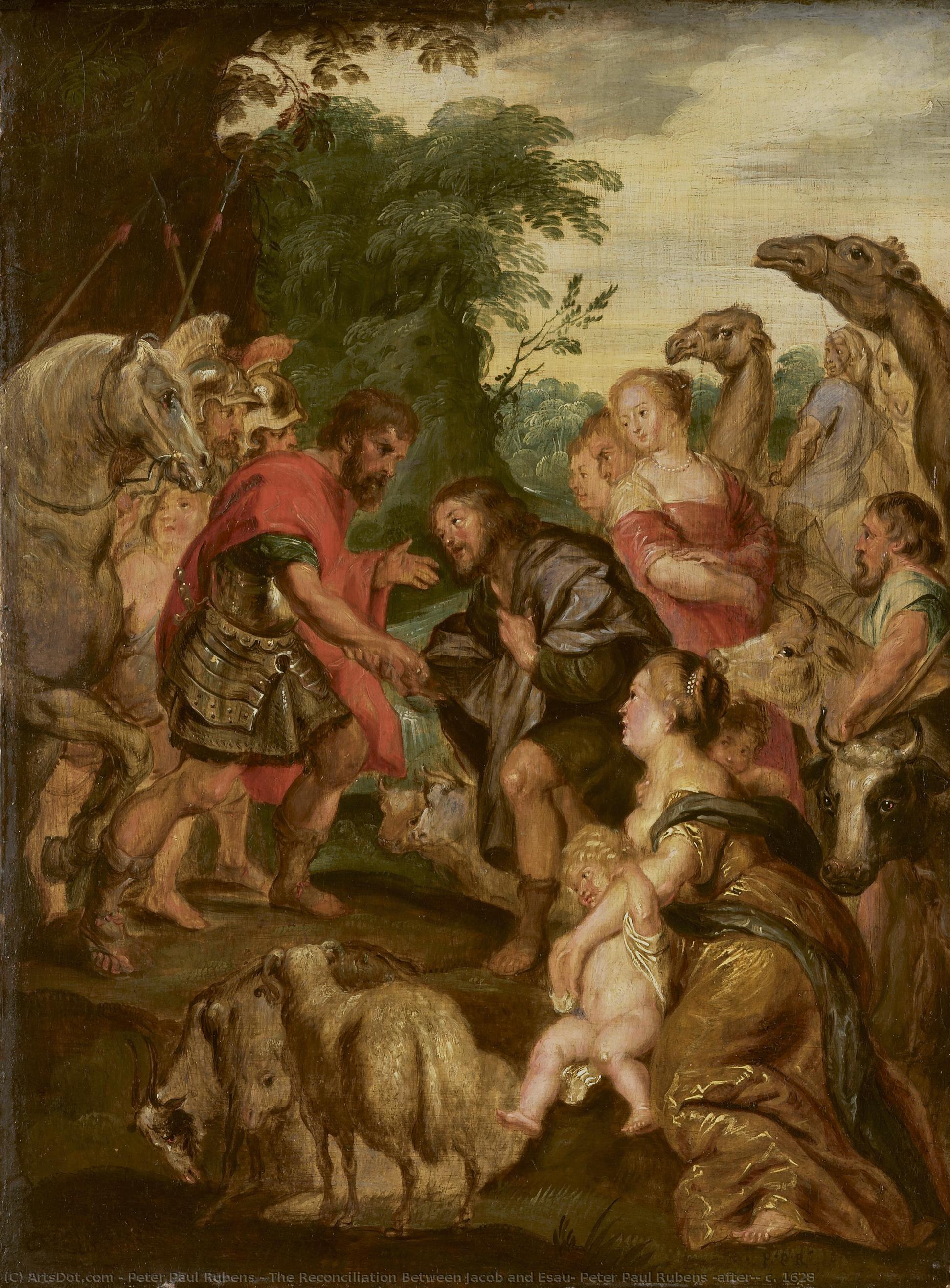
In the sweeping theater of the Flemish Baroque, few moments capture the raw, transformative power of human emotion as exquisitely as The Reconciliation Between Jacob and Esau. This masterful work, a profound interpretation after the legendary Peter Paul Rubens, invites the viewer into a sacred moment of peace following years of bitter familial strife. The painting does not merely depict a biblical meeting; it orchestrates a sensory experience where the tension of past animosity dissolves into the warmth of forgiveness. As we gaze upon the central figures, we are drawn into the very heart of Genesis, witnessing the profound relief that accompanies the mending of a broken bond.
The composition is anchored by the physical and spiritual connection between the two brothers. Jacob, draped in a cloak of vibrant, pulsating red, reaches out with an outstretched hand—a gesture that serves as the painting's emotional heartbeat. Opposite him stands Esau, clad in cool, contemplative blues, his presence providing a balanced weight to the scene. This interplay of warm and cool tones does more than create visual harmony; it mirrors the psychological transition from the heat of conflict to the calm of reconciliation. The surrounding figures, including a woman tending to a child and observers peering through the shadows, act as a silent chorus, heightening the sense that this private reunion is a monumental event of cosmic significance.
Mastery of Light and Baroque Dynamism
To behold this piece is to witness the pinnacle of tenebrism and chiaroscuro. The artist employs a dramatic contrast between deep, enveloping shadows and brilliant, localized light to sculpt the figures with a near-tactile presence. This technique does not merely illuminate the scene; it breathes life into the flesh, lending a luminous, pearlescent quality to the skin tones that is a hallmark of the Rubensian tradition. Every brushstroke seems designed to capture movement, from the swirling fabrics of the garments to the subtle muscular tension in the brothers' embrace.
The technical brilliance extends to the rich, saturated palette that defines the era. The use of gold, deep crimson, and azure creates a sense of opulence and divine light, making the panel feel less like a static image and more like a window into a living history. For the discerning collector or interior designer, this painting offers an unparalleled depth of texture and color. It possesses the rare ability to command attention in a grand hall while offering intimate, nuanced details that reward close, contemplative study.
A Legacy of Symbolism and Timeless Elegance
Beyond its aesthetic splendor, the artwork is a tapestry of symbolic meaning. The presence of camels in the foreground hints at the arduous journeys and the nomadic life of the patriarchs, grounding the spiritual narrative in a tangible, historical reality. Even the elaborate decorative borders that frame the scene contribute to an atmosphere of classical dignity, suggesting that the story being told is one of eternal importance. The armor worn by Esau serves as a poignant reminder of the strength and potential for violence that has been set aside in favor of peace.
For those looking to infuse their spaces with a sense of history, drama, and profound human connection, this reproduction stands as a testament to the enduring power of the Baroque spirit. It is more than a decoration; it is an invitation to reflect on the themes of redemption and grace. Whether placed in a curated gallery or as a focal point in a sophisticated living space, The Reconciliation Between Jacob and Esau brings with it an aura of intellectual depth and unparalleled artistic prestige.