The Majesty of Rubens’ “Virgin and Child Adored By Angels”
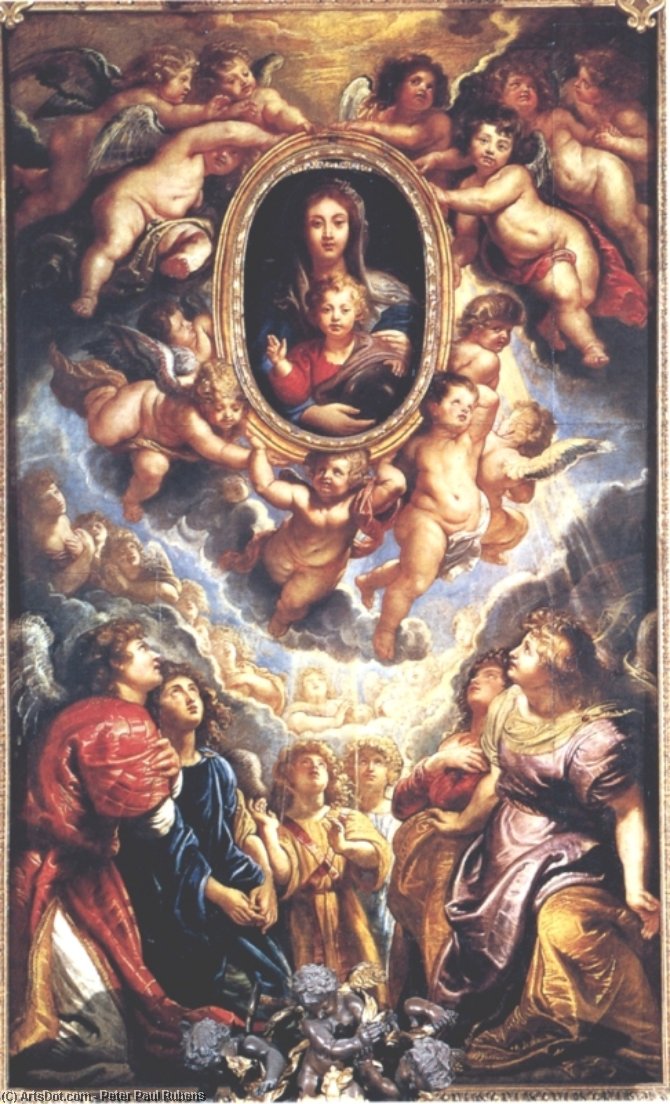
Peter Paul Rubens' "Virgin and Child Adored By Angels," painted in 1608, isn’t merely a depiction of the Madonna; it’s an immersive experience—a vibrant testament to the burgeoning Baroque style and a profound meditation on faith, joy, and divine grace. Rubens, a master of dynamic composition and luminous color, doesn't simply portray a holy scene; he orchestrates a theatrical drama, inviting the viewer into a world brimming with movement, emotion, and an almost palpable sense of wonder. The painting’s enduring appeal lies not just in its technical brilliance but also in its ability to evoke a deep emotional response—a feeling of serenity mingled with exuberant celebration.
The heart of the composition is undoubtedly Mary, seated regally on a plush cushion, her face radiating an almost ethereal calm. Her child, Jesus, nestled securely within her arms, mirrors her composure, yet hints at the divine spark that burns brightly within him. Surrounding them is a swirling vortex of cherubs—not the demure, delicate figures of earlier Renaissance depictions, but spirited, youthful beings engaged in playful activities: one strums a violin with focused intensity, another blows a harpsichord, while others dance and frolic amongst blossoming flowers. These aren’t simply decorative elements; they are integral to the painting's narrative—symbols of harmony, joy, and the burgeoning promise of life.
A Baroque Masterpiece: Technique and Style
Rubens was a revolutionary painter, pushing the boundaries of artistic convention with his bold use of color, dynamic composition, and dramatic lighting. “Virgin and Child Adored By Angels” exemplifies these qualities perfectly. The painting is executed in oil on canvas, utilizing a technique known as ‘alla prima’ – meaning it was painted directly onto the canvas without extensive underdrawing or layering. This approach results in a remarkably smooth surface and an intense vibrancy of color. Rubens employed a rich palette—deep reds, blues, golds, and greens—creating a dazzling visual feast. The use of light is particularly masterful; Rubens skillfully manipulates shadows to sculpt forms, adding depth and volume to the figures and creating a sense of three-dimensionality that was groundbreaking for its time.
The composition itself is a marvel of balance and movement. Rubens masterfully employs diagonal lines—created by the arrangement of the figures and the flowing drapery—to draw the eye through the painting, guiding the viewer’s gaze across the scene. The figures are not arranged in a static, symmetrical manner; instead, they are clustered together in a dynamic, almost chaotic group, conveying a sense of energy and vitality. This dynamism is further enhanced by the swirling patterns of the drapery and the intricate details of the cherubs' clothing.
Historical Context: Rubens and the Counter-Reformation
Rubens’ work was deeply influenced by the religious and political climate of 17th-century Europe, particularly the Counter-Reformation. Following the Protestant Reformation, the Catholic Church sought to revitalize its influence through art—to inspire piety and reaffirm its authority. Rubens, serving as a court painter for both Spain and later for Charles I of England, was commissioned to create numerous religious works that aimed to evoke emotional responses in viewers. “Virgin and Child Adored By Angels” is a prime example of this approach – it’s not simply a depiction of the Virgin Mary; it's an invitation to contemplate her divine grace and the joy of salvation.
Rubens drew inspiration from classical antiquity, incorporating elements of Greek and Roman mythology into his religious paintings. The cherubs, with their playful gestures and musical instruments, evoke images of ancient gods and goddesses—a deliberate strategy designed to connect Christian themes with a broader cultural heritage. His understanding of anatomy and perspective was impeccable, reflecting his extensive studies in the classical tradition.
Symbolism and Emotional Resonance
Beyond its technical brilliance, “Virgin and Child Adored By Angels” is rich in symbolism. The flowers surrounding the Madonna—violets, roses, and lilies—represent purity, love, and innocence. The musical instruments symbolize harmony and joy. The cherubs themselves represent divine messengers—bringing news of salvation and celebrating the birth of Christ.
Rubens’ masterful use of color and light creates a powerful emotional impact. The painting exudes warmth, vitality, and an almost overwhelming sense of joy. It's a scene brimming with hope and promise—a reminder of the enduring power of faith and the beauty of divine grace. The overall effect is profoundly moving, inviting viewers to contemplate the profound mysteries of life, love, and salvation. Reproductions strive to capture this essence, offering a window into a world where art becomes a vehicle for spiritual contemplation.