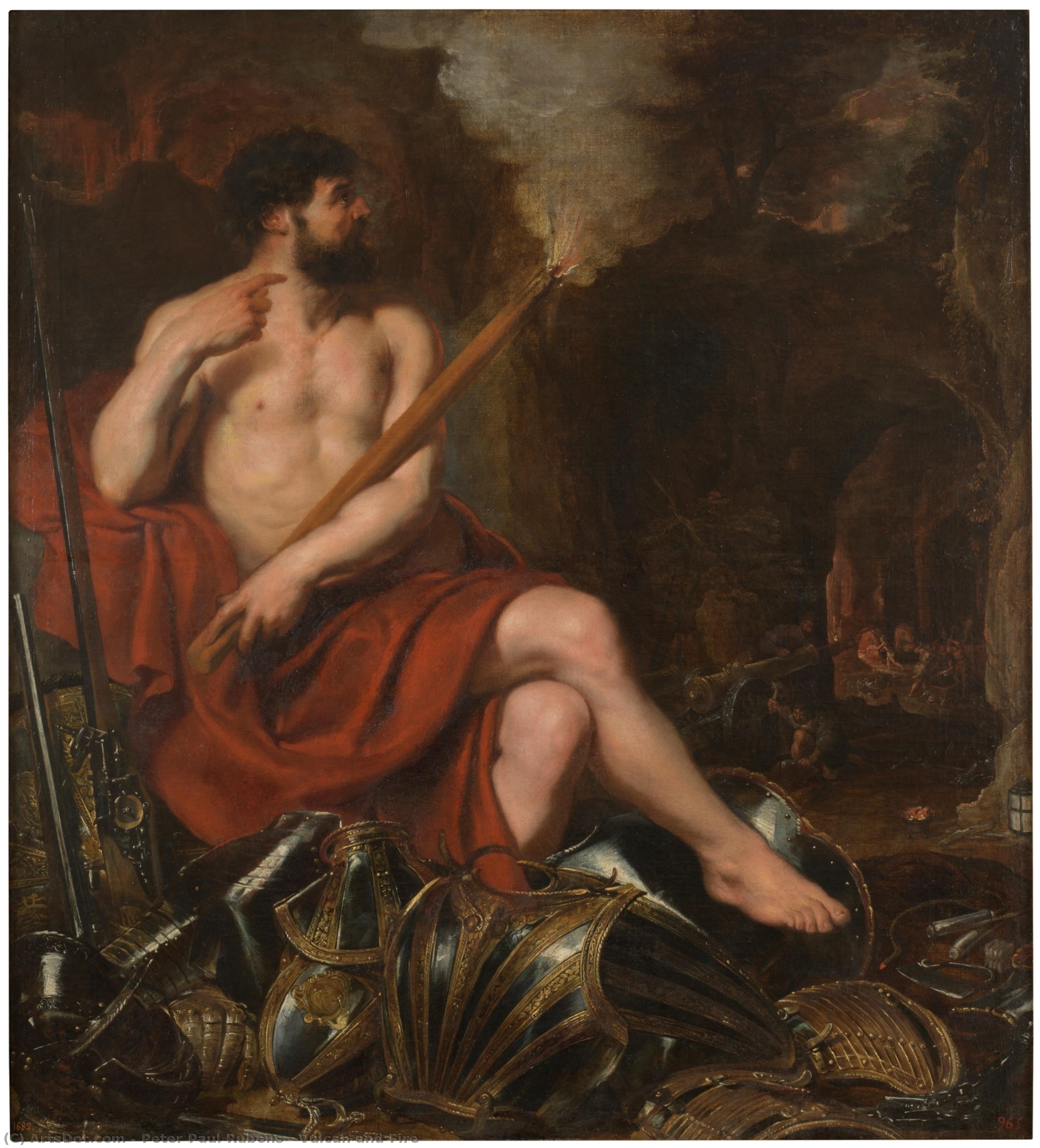
Experience the dramatic Baroque style of Sir Peter Paul Rubens’s ‘Vulcan and Fire,’ a captivating portrait of a Roman figure in red toga, brimming with dynamic energy and mythological intrigue – discover or own this stunning hand-painted reproduction.
A Baroque Vision of Roman Power: Vulcan and Fire by Sir Peter Paul Rubens
This meticulously crafted hand-painted reproduction captures the dramatic intensity of Sir Peter Paul Rubens’s “Vulcan and Fire,” a work that embodies the artist's mastery of Baroque style and his fascination with classical mythology. Measuring 140 x 126 cm, this piece transports the viewer to a world of potent figures and visceral emotion – a hallmark of Rubens’s oeuvre. The painting depicts Vulcan, the Roman god of fire and blacksmith of the gods, rendered in a powerfully realistic manner, seated upon the ground with a pipe held firmly in his hand. His red toga, a symbol of Roman authority and military might, immediately establishes him as a figure of considerable stature.
- Subject Matter: The central focus is undeniably Vulcan himself, but the composition expands to include other figures – a standing presence near the upper right corner and another positioned in the lower left. This layering creates a sense of narrative depth, suggesting an interaction or observation within this mythological scene.
- Technical Brilliance: Rubens’s signature technique—a bold use of color, dynamic brushwork, and masterful modeling—is faithfully reproduced here. Note the rich reds and oranges dominating Vulcan's attire and the fiery background, achieved through meticulous layering of glazes that create a luminous effect.
Historical Context: Rubens and the Baroque
Created during the height of the Baroque period (1577-1640), “Vulcan and Fire” reflects the artistic and intellectual currents of 17th-century Europe. Rubens, a key figure in this movement, was deeply influenced by classical antiquity, particularly Roman mythology. His work served not merely as decoration but as a vehicle for exploring themes of power, heroism, and human emotion. Born in Siegen, Germany, his early life shaped his artistic vision – the displacement experienced by his family instilled a sense of drama and emotional depth that permeates his paintings. Rubens’s diplomatic career further informed his art, exposing him to diverse cultures and perspectives.
Symbolism and Interpretation
The depiction of Vulcan is laden with symbolic meaning. As the god of fire, he represents both creation and destruction, order and chaos. The pipe he holds could symbolize his role as a craftsman, forging not just weapons but also shaping destinies. The presence of other figures adds to the complexity, perhaps suggesting a divine council or an observation of mortal affairs. The shield on the ground reinforces Vulcan’s martial prowess and authority. Rubens frequently employed allegorical elements in his work, inviting viewers to contemplate profound philosophical and religious questions.
Emotional Impact and Artistic Value
“Vulcan and Fire” is more than just a representation of a mythological figure; it's an experience. The painting’s dramatic lighting, dynamic composition, and the sheer force of Vulcan’s presence evoke a sense of awe and power. This reproduction captures not only the visual details but also the emotional intensity that defined Rubens’s artistic legacy. Ideal for grand interiors or as a statement piece in a contemporary setting, this artwork offers a window into the brilliance of one of history's greatest Baroque masters.